
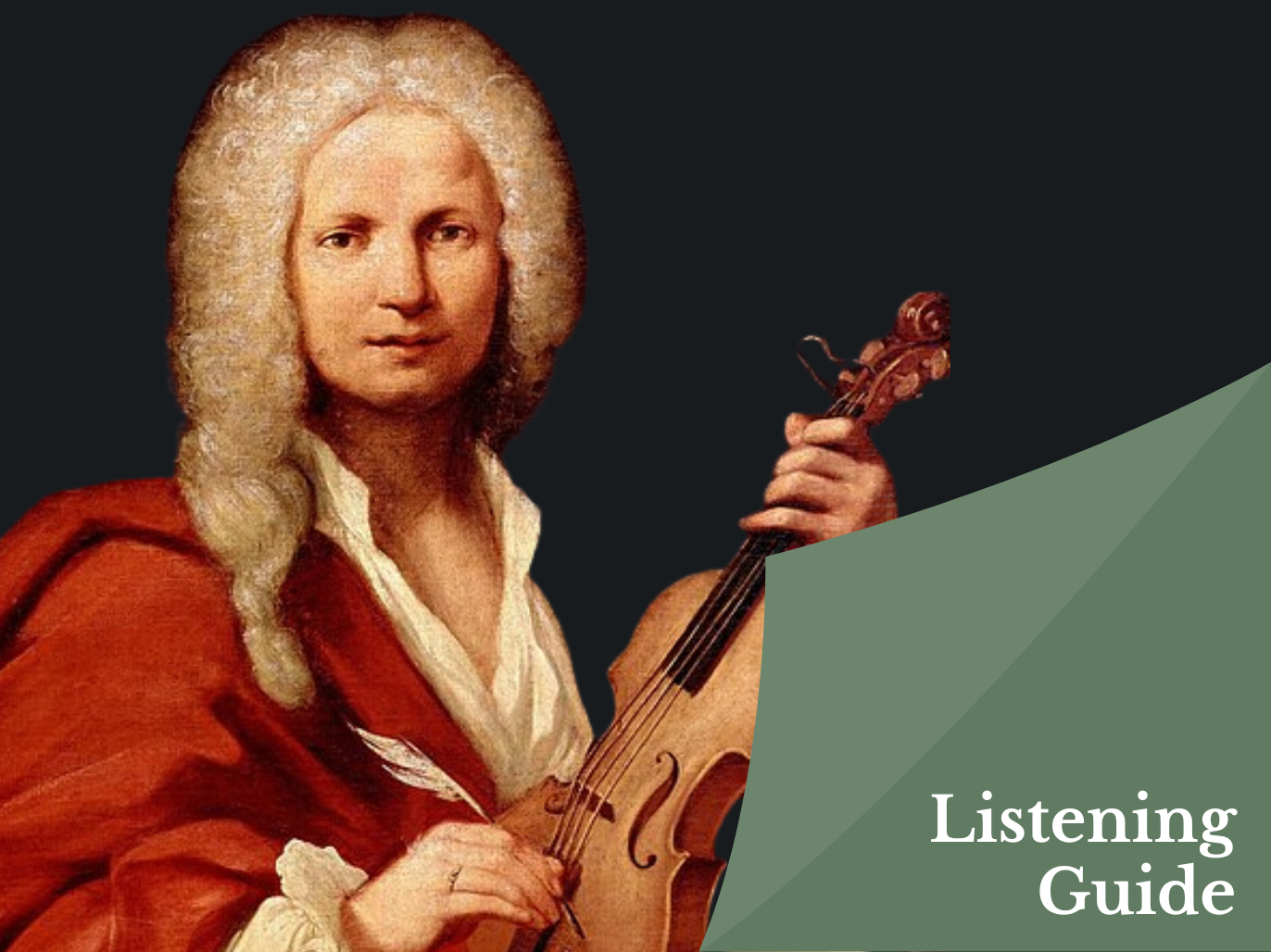
Venice. March 4, 1678. In the wake of a tremendous earthquake, a terrified mother and father hold their newborn son as the midwife baptizes him; the sickly infant is christened Antonio Lucio Vivaldi. This apocryphal tale of Vivaldi’s birth persists to this day. While the truth of the story remains suspect, it seems fitting that the composer of Le quattro stagioni (The Four Seasons), one of the most enduring musical depictions of Nature, might have entered into the world amidst one of Nature’s most awe-inspiring manifestations of power. Three hundred years after its publication, Vivaldi’s The Four Seasons permeates our sonic landscape in a way few other pieces do.
View author's page
Reading time estimated : 16 min
“The Red Priest”
Vivaldi’s father, a barber and violinist, trained his son from an early age; he quickly noticed the boy’s musical abilities. From his father, Vivaldi inherited not only a talent for the violin but a shock of curly red hair which would earn him the nickname “The Red Priest.” Vivaldi began his studies for the priesthood at fifteen, and though he was eventually ordained, respiratory issues prevented him from saying Mass. Unable to fulfill this most basic priestly duty, Vivaldi spent much of his career as a teacher, composer, and violinist at the Conservatorio dell’Ospedale della Pietà, an orphanage in Venice that provided musical education for the girls in its care. The conservatory commissioned him to compose two concertos every month; by the end of his life, Vivaldi had written nearly 500 of them.
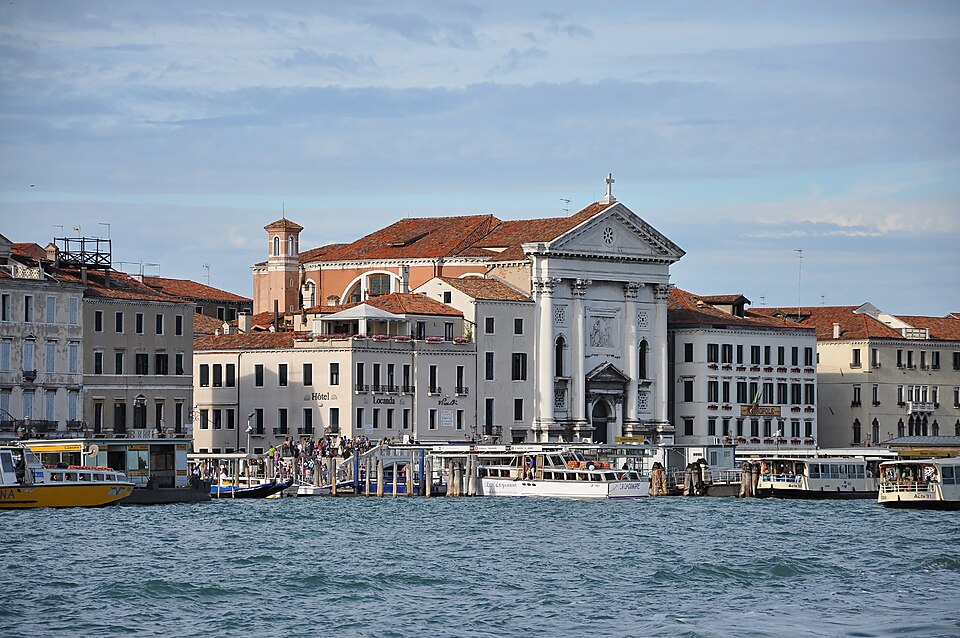
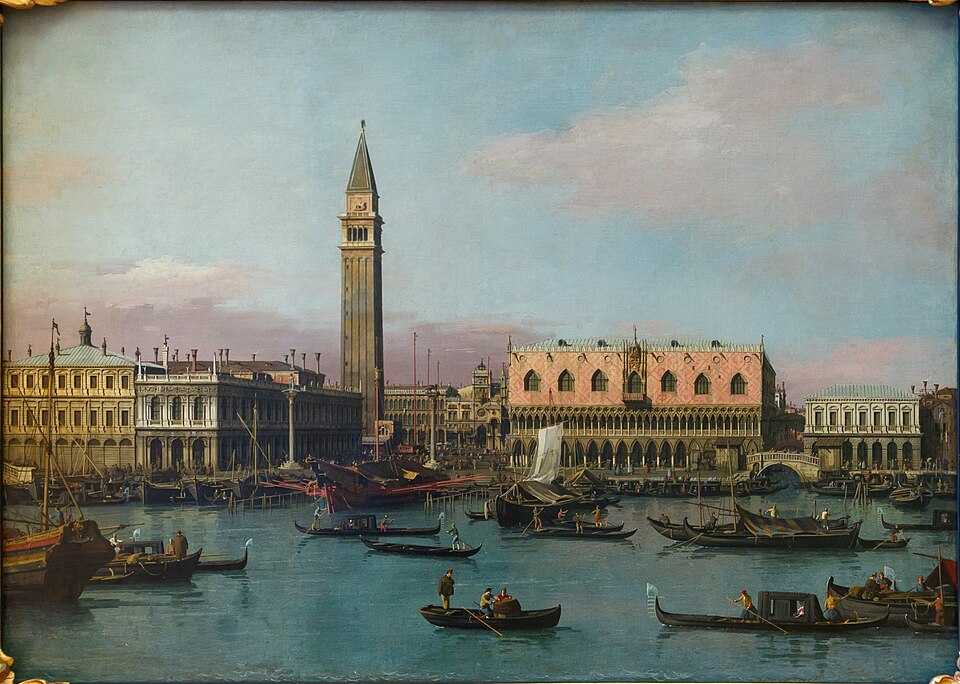
Vivaldi lived in the twilight years of the Venetian Republic, yet even in its decline, Venice remained a glorious city. Visitors journeyed from all over the world to marvel at the floating metropolis. For centuries, Venice was celebrated for its vibrant musical culture; indeed, many contemporary accounts of the city note how the canals and crowded alleys rang with song. Writer Charles Burney, one of the first music historians, described the city thusly: “The canals are crowded with musical people at night, bands of music, French horns, duet singers in every gondola. … A band of musicians consisting of two good fiddles, a violoncello and female voice stopped under the windows and performed in such a manner as would have made people stare in England but here they were as unnoticed as coal men or oyster-women are with us.”
“It’s not just scenes of different weather. He [Vivaldi] was relaying the lives of … the Italian peasants of the 17th and 18th centuries who lived and breathed and celebrated with the changing of the seasons.” — Jeannette Sorrell, music director of Apollo’s Fire Baroque Orchestra
Vivaldi published The Four Seasons in 1725. They are the first in a series of twelve concertos titled The Trial Between Harmony and Invention, Op. 8. The set includes several other vaguely programmatic works, including “The Storm at Sea,” “The Hunt,” and “Pleasure.” He dedicated the pieces to Count Wenzel von Morzin, a Bohemian aristocrat, a distant relative of Count Karl von Mozin, the first person to employ the composer Joseph Haydn as his Kapellmeister.
The decade saw the composition of some of the greatest works of the late Baroque. Johann Sebastian Bach completed Sonatas and Partitas for solo violin, including the monumental Chaconne in D Minor; the six Brandenburg Concertos; Book 1 of The Well-Tempered Clavier; and the St John and St Matthew Passions. In a twelve-month period between 1724 and 1725, George Frideric Handel wrote three of his most successful operas: Giulio Cesare, Tamerlano, and Rodelinda.
Despite no small amount of popularity in his lifetime—including the patronage of some of Europe’s most prominent royal families—medical expenses and an extravagant lifestyle left Vivaldi penniless in his final years. His music, so popular in the first third of the eighteenth century, had fallen out of fashion and went virtually unperformed through the nineteenth century; only the rediscovery of his manuscripts in the twentieth century made Vivaldi a household name.
Revolutions in Thought
Vivaldi completed The Four Seasons in the 1720s, a transitional time between periods of profound upheaval. After long years of conflict and the tumultuous rebellions of the 1600s, the 1720s ushered in a brief period of peace in Europe. The decade saw both the birth and death of revolutionary figures. In 1722, a few years before Vivaldi published The Four Seasons, Samuel Adams, a Founding Father of the American Revolution, was born in Boston. Sir Isaac Newton, a key figure in the Scientific Revolution and the Enlightenment that followed, died in 1727.
The musical world saw its own revolutions. French composer and theorist Jean-Philippe Rameau made significant advancements in music theory with the publication of his Treatise on Harmony (1722) and the monumental New System of Music Theory (1726). Within his own lifetime Rameau became known as the “Newton of Harmony,” and his ideas have formed much of the foundation of the harmonic theory of the Western classical tradition. Johann Joseph Fux published his treatise on counterpoint, Gradus ad Parnassum, in 1725; many of the greatest composers of the 18th and 19th centuries, including Bach, Haydn, Mozart, and Beethoven used Fux’s ideas in their own work.
The Program
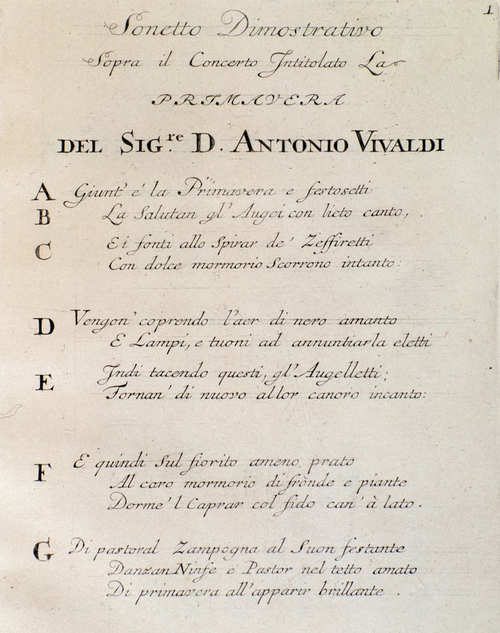
Vivaldi included a sonnet for each of the Four Seasons concertos. The author of the texts is unknown, though research suggests Vivaldi himself may have written them. These sonnets are unusually precise in their adherence to the contours of the music. Vivaldi not only includes the full sonnets at the beginning of the music, he quotes lines from them within the score itself and makes explicit textual references to specific events and characters. “It’s not just scenes of different weather,” says Jeannette Sorrell, music director of Apollo’s Fire Baroque Orchestra. “[Vivaldi] was relaying the lives of … the Italian peasants of the 17th and 18th centuries who lived and breathed and celebrated with the changing of the seasons.”
The narrative elements within The Four Seasons make them one of the earliest and most important examples of program music. Romanticism, a movement that prized Nature as a source of awe, proved a fertile ground for programmatic symphonies. Two early examples, both of which include musical depictions of storms, are Beethoven’s Symphony No. 6 in F Major, “Pastoral,” and the Symphonie fantastique of Hector Berlioz.
The Music
The Four Seasons opens with a light-hearted principal theme that rejoices in the return of spring, replete with the sounds of trickling waters and various chirping birds. I Solosti Veneti, named after Vivaldi’s birthplace, takes an unhurried approach to the famous opening movement. Their playing is lush and slower than in many other recordings, allowing the listener to truly revel in spring’s return.
Claudio Scimone, Lucio Degani, I Solisti Veneti
Jacques Loussier was known for his jazz interpretations of many works, including Bach’s Goldberg Variations. While the piano captures the joy of Vivaldi’s original orchestration, and Loussier’s jazzy detours add their own joie de vivre, even in its upper register the piano fails to capture the essence of chirping birdsong the way violins do.
Jacques Louissier (solo piano)
The Orchestra of the Royal Opera of Versailles performs a very uptempo rendition of the “Dresden” version of The Four Seasons. This arrangement includes additional woodwind instruments, which evoke birdsong to magnificent effect.
A sleeping goatherd and the persistent barking of his dog populate the second movement, a somber Largo. The final movement opens with a rustic dance, complete with the low drone of bagpipes common to peasant music across Europe.
As spring’s gentle caresses cede to the sticky, stifling heat of summer, Vivaldi turns to the pastures of northern Italy, where a farmer languishes under the Sun’s oppressive rays. Chromatic bass lines descend like slowly dripping beads of sweat, a lament for the farmer’s withering crops. The portentous call of the cuckoo heralds the ferocious North Winds, the bringer of violent summer storms. Distant peals of thunder and the ceaseless buzz of swarming insects fill the farmer’s ears in the second movement. By the start of the third, the storm has arrived in full force. Dramatic, fierce, and unceasing, Vivaldi fills this musical tempest with dizzying virtuosic effects, including rapid-fire descending scales, broken octaves, and whirlwinds of arpeggios.
Anne-Sophie Mutter is no stranger to these concertos: her 1984 recording of The Four Seasons with Herbert von Karajan and the Wiener Philharmoniker was the first classical album to go platinum. Her familiarity with the music comes through in this blistering rendition of the “Summer” finale. The relentless propulsion of the ensemble evokes a ceaseless thunderstorm. In Mutter’s telling, you aren’t watching the rain pass from beneath the shelter of a tree; you’re in the middle of the maelstrom, umbrella blown inside out and already two blocks away.
If Chloe Chua’s performing with the Singapore Symphony Orchestra is less intense, it is no less interesting. The ensemble adds clever articulations, such as exaggerated downward portamenti, to convey a sense of the storm’s ebb and flow.
Chan Yoong-Han, Chloe Chua, Singapore Symphony Orchestra
“Autumn” opens with another peasant dance, in raucous celebration of a bountiful harvest. The continuo plays off-kilter rhythms, a sonic representation of a stumbling drunkard. Besotted with wine (“the liquor of Bacchus” in the sonnet text), he eventually passes out, only to be shaken awake by a rousing refrain of the dance. By the end of the movement, many of the other revelers have joined him in sleep. In the slow-moving Adagio, muted strings swirl around one another in dreamy bliss.
Francisco Fullana and Apollo’s Fire, America’s most active touring Baroque orchestra, perform this movement with slow heaviness and a comical rubato. For these partygoers, a hangover seems inevitable.
Jeannette Sorrell, Francisco Fullana, Apollo’s Fire
The Royal Concertgebouw Orchestra plays this movement with relatively straightforward phrasing; the dreams of their drunken revelers seem untroubled.
Vesko Eschkenazy (play-conduct), Royal Concertgebouw Orchestra
After sleeping it off, the revelers take part in one last autumnal hunt. This jaunty tableau in 3/4 time includes the mimicked call of a hunting horn; triplet figures depict the party’s fleeing prey.
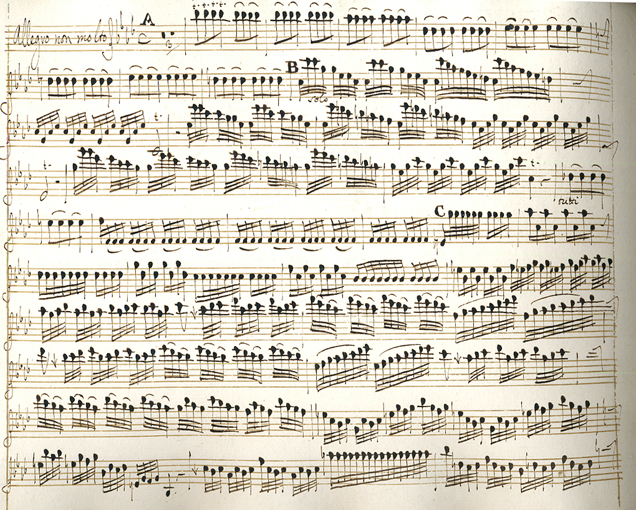
A steady rhythmic pulse unleashes “Winter,” the final concerto in the set. Beginning low in the orchestra and building upward with textures as sparse as the bare branches of dormant trees, the music portrays a shivering wanderer, trembling and stamping his feet as he dashes through a frozen soundscape. Teeth chattering, the poor wanderer battles gusts of relentless icy winds on his journey home.
At the top of her performance leading The Heifetz Baroque Chamber Orchestra, Rachell Ellen Wong declares, “If you’re expecting to hear a traditional rendition of this piece that you can hear a 1,000 different recordings of on YouTube or whatever….today ain’t it.” She makes good on her promise with this dramatic interpretation. The ensemble’s use of dynamic contrast, use of rubato, and at times jagged string articulation imbue this movement with menace. This aggressive playing truly evokes the “breath of a horrid wind” mentioned in the sonnet.
Andrés Gabetta and the Orchestra of the Royal Opera of Versailles opt for a lighter touch, creating a virtuosic whirlwind that lacks the true ferocity of a winter storm. In this rendition the storm seems to be outside, a blizzard witnessed from the comfort of a warm living room.
Andrés Gabetta (play-conduct), Orchestra of the Royal Opera of Versailles
The second movement offers welcome shelter from the storm as the wanderer arrives at his cozy cabin. Plucked strings mimic the sound of rain splattering against window panes, while the violin’s placid melody suggests the crackling of a warm fire. In the finale, the cold returns in jagged melodic fragments like shards of ice, and the comforts of home seem distant indeed as the piece closes amid fierce, blustering gales.
Early Imitators
Even before Vivaldi published The Four Seasons, his skills as composer and violinist had won him renown abroad. In France he was advertised as “the most accomplished composer in Venice.” Many of Bach’s Italianate chamber works, such as the Violin Concerto in A Minor, BWV 1041, were influenced by Vivaldi (Bach likely composed this work concurrently with The Four Seasons). Like Vivaldi’s concertos, Bach’s A Minor Concerto consists of a three-movement structure in the typical fast–slow–fast pattern. The driving energy, propulsive rhythms, and flashy virtuoso passages contained in the outer movements are common to the Italian style.
Within a year of their publication, Bach had arranged the first movement of the “Spring” concerto for one of his cantatas. Enlightenment philosopher and composer Jean-Jacques Rousseau later arranged the movement for flute. “Spring” proved especially popular in Paris, where it was such a smash that unscrupulous composers wrote similar works and tried to pass them off as works by Vivaldi.
“The Masterpiece That Took 200 Years to Become Timeless” — Jeremy Eichler, The New York Times
Obscurity and Revival
Like many Baroque composers, Vivaldi’s music fell into obscurity in the decades following his death. But while Bach experienced a famous revival in the 19th century, it took nearly two centuries for Vivaldi to experience his own renaissance. In the early 20th century, Fritz Kreisler’s Concerto in C Major, a pastiche he initially passed off as an original Vivaldi work, led to renewed interest in the Baroque composer. Kreisler’s forgery was part of a broader early music revival which continues to this day. Soon after, scholars discovered a treasure trove of manuscripts in Turin that had been passed down by the composer’s family.
Wellspring of Inspiration
The last century has seen an explosion of works inspired by The Four Seasons. These include arrangements for everything from traditional Chinese instruments to electronics, as well as entirely new pieces derived from Vivaldi’s original. Composed in the late 1960s for his quintet of piano, bandoneón, violin, electric guitar, and bass, Ástor Piazzolla’s The Four Seasons of Buenos Aires honors Vivaldi’s groundbreaking violin concertos while reinterpreting their naturalistic theme from the perspective of his native Argentina and its musical traditions.
In 2012, Max Richter premiered his Recomposed version of The Four Seasons to wide acclaim. Richter, whose bio lists producer and remixer alongside composer and pianist, truly recomposes these pieces, using twenty-first century pop music gestures such as sampling, splicing, and editing to create a new work. Richter’s handwritten notes on Vivaldi’s score make frequent reference to “slicing,” yet the result feels anything but clinical. Some movements sound quite similar to their Baroque counterparts, while in other places Richter takes liberties that render the original almost unrecognizable. Richter estimates that he discarded roughly three quarters of Vivaldi’s original material, weaving those musical gestures into a modern tapestry imbued with subtle electronics and post-minimalist loops, pulses, and harmonies.
Just last year, countertenor and impresario Anthony Roth Costanzo co-created a new work, The Seasons, incorporating Vivaldi’s vocal compositions to tell a cautionary tale of the seasons in disarray. This is but one of numerous contemporary works to harness these Baroque masterpieces to discuss climate change. Though some of this music feels familiar 300 years later, Costanzo insists, “It can reopen you up to the fact that, through emotion, you are engaged and involved in the world.”
“Scrap the Vivaldi Hold Music”
The popularity of The Four Seasons has become a double-edged sword. It was a perpetual bestseller during the golden age of album sales; British violinist Nigel Kennedy broke records for his 1989 recording of the concertos, which sold over 3 million copies. Vivaldi is credited on over 800 film and television projects on the Internet Movie Database (IMDb). The first movement of “Spring” has become a shorthand to convey wealth and status, much like the equally pleasant and catchy Minuet from the String Quintet in E major by Luigi Boccherini.
Directors frequently use “Winter” to convey high energy, such as in the opening to the Netflix series Chef’s Table. Recently, it appeared diegetically in the film John Wick 3: Parabellum, when a character puts on a Vivaldi record before unleashing a killing spree.
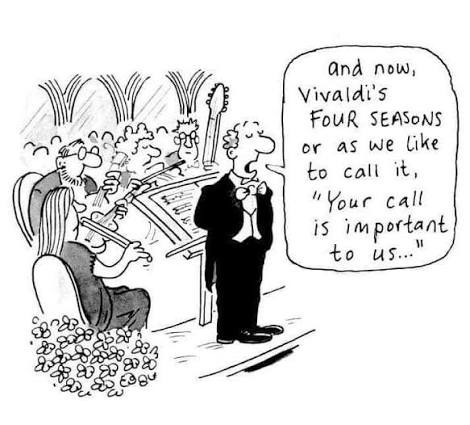
Yet as Max Richter ruefully observes, “You hear it in the supermarket regularly, you’re confronted with it in adverts or hear it as Muzak when on hold. Slowly you begin to blank it out.” In the UK, frustration with the use of Vivaldi as telephone hold music on government hotlines led to multiple petitions begging for a change (they were successful). One of these demanded simply, “Scrap the Vivaldi hold music.”
Conclusion
Despite the potential for bland ubiquity, The Four Seasons still holds tremendous appeal. Composer Fabian Müller, who has written music inspired by Vivaldi, asserts that the “strong images which this music evokes in the audience” contribute to their staying power, that even across three centuries these concertos are “in a way still astonishingly modern.” In a time of increased feelings of isolation and disconnection, Anthony Roth Costanzo reminds us that this music, “can reopen you up to the fact that, through emotion, you are engaged and involved in the world.” Modern, over-played, emotionally compelling, or all of the above, the endurance of these pieces may rest in Müller’s matter-of-fact observation that The Four Seasons is, simply, “good music.”
