Impact and Legacy
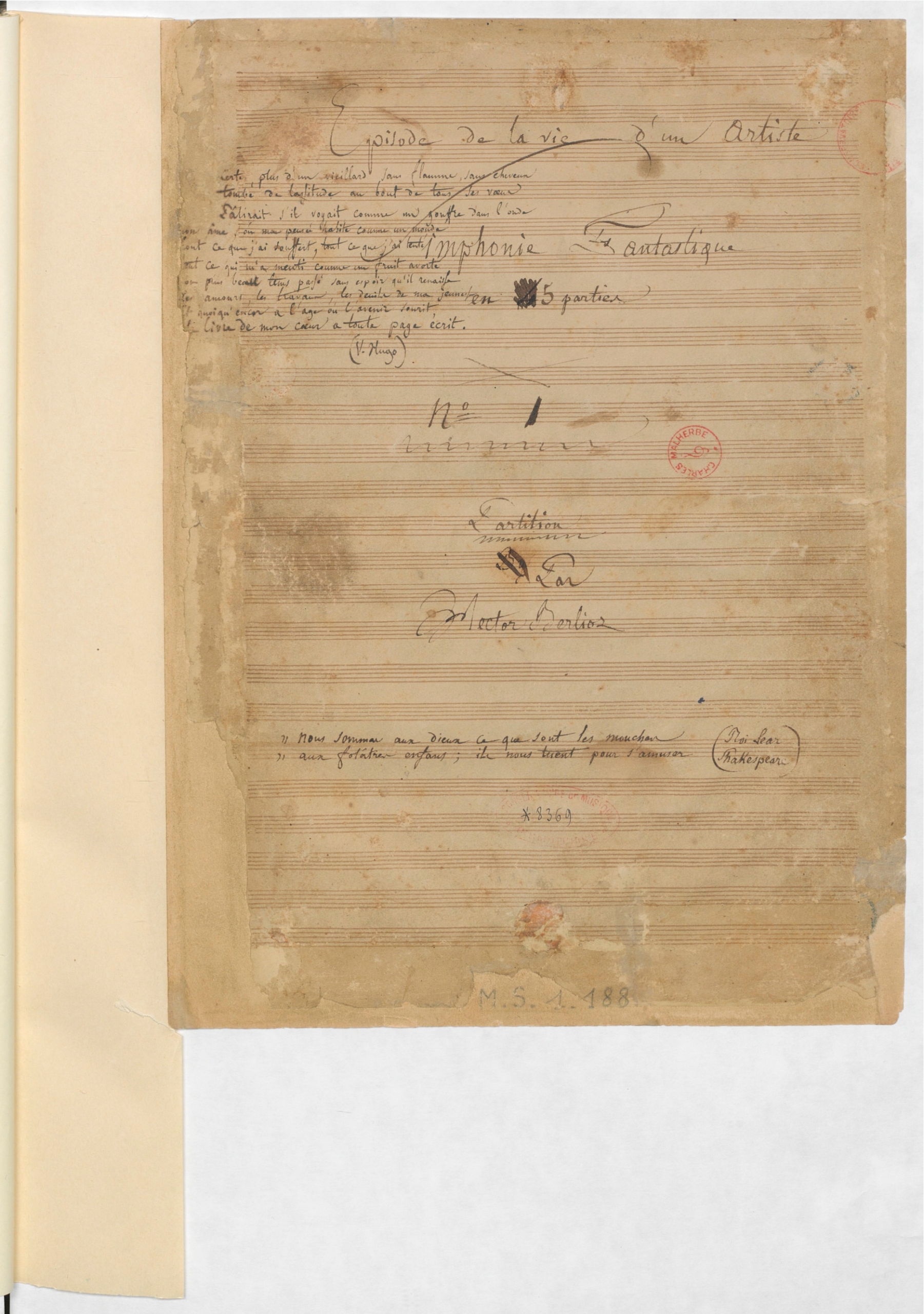
Berlioz had high hopes for his first symphony. “I mean it to stagger the musical world,” he wrote. Indeed it did. Violin virtuoso Niccolò Paganini heralded the innovative music, telling the composer, “Monsieur, you are beginning where the others [Beethoven and Weber] ended.” He was initially heralded as the third of the “Three Bs,” successor to Bach and Beethoven (only later was he supplanted by Johannes Brahms). Some reviews praised the Symphonie as “bizarre” and even “monstrous,” the pinnacle of the musically macabre. When Liszt transcribed the work for piano, he wrote, “I have worked on this as conscientiously as if I were transcribing the Holy Scriptures….”
Naturally, a work of such daring originality had its detractors. François-Joseph Fétis, an influential music critic and Berlioz’s longtime adversary, loathed the Symphonie. In a withering review he opined, “I saw that melody was antipathetic to him, that he only had a faint notion of rhythm; that his harmony, formed by an often monstrous accretion of notes, was nevertheless flat and monotonous; in a word I saw that he lacked melodic and harmonic ideas, and I judged that he would always write in a barbarous manner.” Still, even Fétis acknowledged the work’s masterful orchestration.
The use of the Dies Irae in the finale cemented the melody’s associations with death and the supernatural: countless composers from Camille Saint-Saëns and Sergei Rachmaninoff to Hans Zimmer and John Williams have since incorporated the theme into their works. Wendy Carlos and Rachel Elkind adapted Berlioz’s orchestration for synthesizer for the opening scene of Stanley Kubrick’s horror film The Shining. The Symphonie’s embrace of the macabre and supernatural opened the doors for other musically creepy works like Saint-Saëns’s Danse macabre, Mussorgsky’s Night on Bald Mountain, and Rachmaninoff’s Isle of the Dead.
The Symphonie fantastique forever changed the course of symphonic history. Without it, the tone poems of Liszt and Strauss might never have come to be. Mahler’s programmatic symphonies and the “symphonic sketches” of Debussy, these too were influenced by Berlioz’s deeply descriptive program. His mutable use of the idée fixe theme inspired thematic transformation in Liszt’s Faust Symphony and the Wagnerian leitmotiv.
Berlioz exalted Beethoven for revealing to him a “new world of music.” Nearly 200 years after the premiere of the Symphonie fantastique, it’s clear that he did the same for his contemporaries, his successors, and listeners like us.