Britten’s War Requiem: “My Subject is War, and the Pity of War”:

James Jolly revisits Britten’s War Requiem, born from Coventry’s destruction and consecration. Latin ritual meets Wilfred Owen’s trench poems in a searing memorial that still warns, consoles, and endures.

View author's page

By James Jolly

Reading time estimated : 6 min

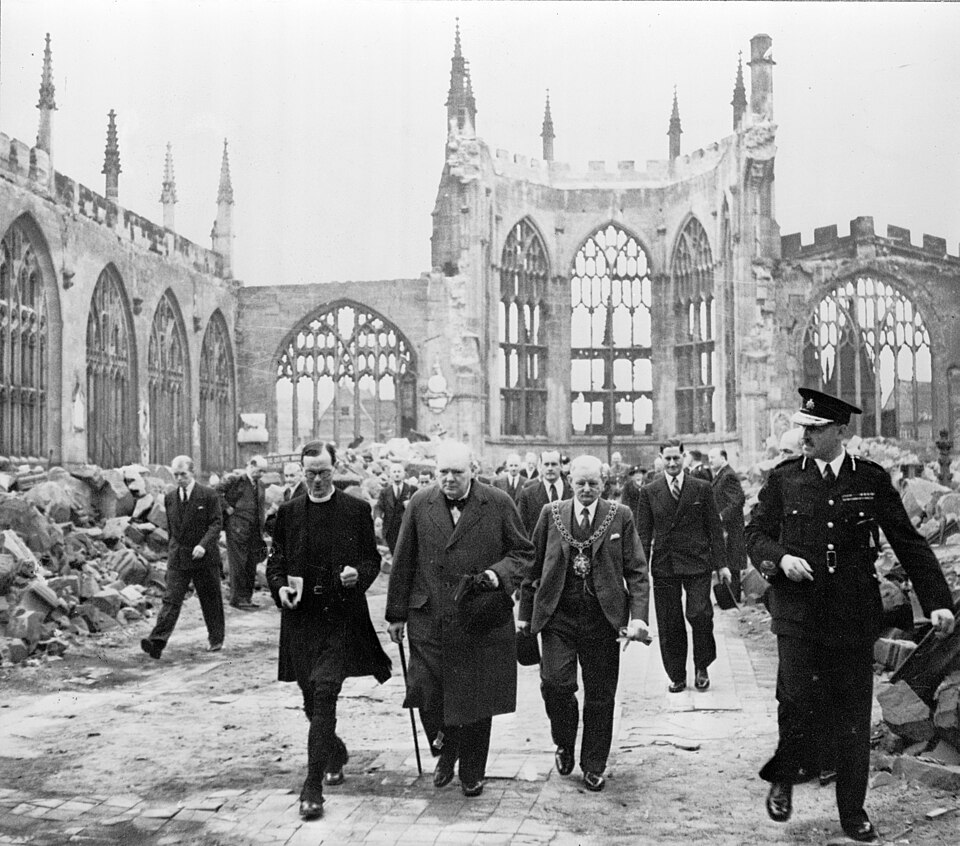
On the night of 14 November 1940, German bombs pulverised the British city of Coventry in an infamous raid that the Luftwaffe command had named Operation Moonlight Sonata. An estimated 568 people were killed and 4,300 homes destroyed, along with St Michael’s Cathedral, a 14th-century structure. Within 24 hours of the aerial onslaught, the British government announced that the damaged cathedral would be rebuilt.

When designs were invited in 1951 for a new building, there was no suggestion that the cathedral should either be in the Gothic style or blend in with the surviving tower and spire. This opened the possibility for a modernist approach, and that was exactly what the Scottish architect Basil Spence’s winning design proposed. It also included commissions from artists such as Graham Sutherland and John Piper. The foundation stone would be laid in March 1956 by the young Queen Elizabeth II.

Coventry Blitz


The new building was consecrated on 30 May 1962, and the occasion was marked by an arts festival that gave us Michael Tippett’s opera King Priam and, the day after, a work that immediately captured the public’s imagination: War Requiem by the 48-year-old Benjamin Britten, widely regarded as the UK’s most gifted living composer – though not without controversy, as Britten had been a pacifist during the war, which in some circles was tantamount to treason. It was the Decca recording, made in 1963 with the composer conducting the London Symphony Orchestra, that introduced the world to this extraordinary work. Within six months of its release, it had sold over 200,000 copies – an unheard-of figure for a classical recording at the time.

medici.tv’s boundless archive contains a performance of Britten’s War Requiem from Amsterdam, with that city’s great Royal Concertgebouw Orchestra and a trio of Dutch choruses conducted by Gianandrea Noseda. When Britten wrote the piece, he envisaged a specific trio of soloists laden with deep meaning: the British tenor Peter Pears (Britten’s life partner), the German baritone Dietrich Fischer-Dieskau, and the Russian soprano Galina Vishnevskaya, representing a musical reconciliation between the three front-line nations of the mid-20th-century European conflict. (Vishnevskaya was refused permission to travel to the work’s premiere by the Soviet Minister of Culture – the Soviets considered the War Requiem a political statement that amounted to propaganda for West Germany. Heather Harper stepped in at very short notice and gave a memorable performance. Vishnevskaya did eventually receive dispensation to travel and appears on the Decca recording with Britten conducting.) In Amsterdam, that tradition is retained with a British tenor, Mark Padmore, a German baritone, Michael Volle, and a Russian soprano, Elena Stikhina (who, coincidentally, studied at the Galina Vishnevskaya Centre for Opera Singing in Moscow).

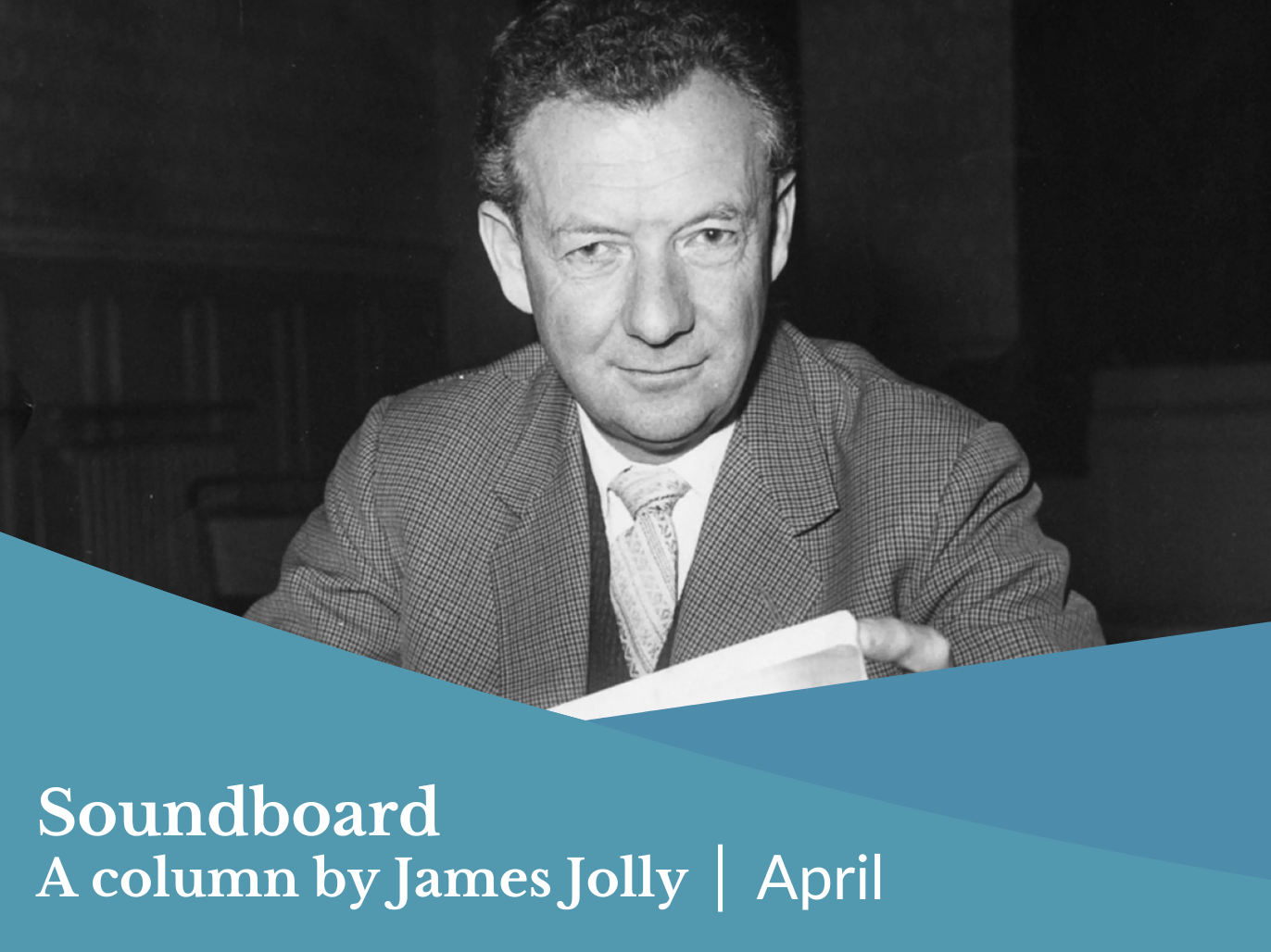
Britten had been pondering a large-scale, commemorative choral work on pacifist themes for some time, with near misses including a proposed oratorio about Hiroshima and a requiem for Gandhi. The Coventry commission was, in a sense, what he had been waiting for. He wrote in 1961: “I am writing what I think will be one of my most important works”.

Britten decided the work would be a ‘memorial to the dead of all wars’, selecting the text of the Latin Requiem Mass, with individual sections interspersed with nine poems by the First World War poet Wilfred Owen. Owen was serving as the commander of a rifle company when he was killed in action on 4 November 1918 – just one week before the Armistice. Britten conceived the bold plan of confronting the Missa pro defunctis – a timeless, supra-personal ritual in a dead language – with the Owen poems – words written in English in 1917 and 1918 in hospital and in the trenches.

The Owen verses are highly charged and powerful, sometimes directly at odds with the religious texts of the Mass. The music for these sections is less grand than the Latin settings – more personal for Britten and closer to his own musical style at the time.

Britten organised the performers into three distinct but overlapping groups: full orchestra, chorus and soprano soloist for the Latin texts; a chamber ensemble with tenor and baritone soloists for Owen’s verses; and a distant boys’ choir. (The combined forces perform together only once: towards the end of the piece, when they join before the final “Requiem aeternam”.) The children’s choir sections are ethereal and haunting, used to poignant effect throughout, particularly when the focus is on the horrific loss of young life.

As an epigraph for the work, Britten chose words by Owen that not only animate this extraordinary work of imagination but also chimed with the Zeitgeist of the early 1960s: “My subject is War, and the pity of War. The Poetry is in the pity… All a poet can do today is warn.”

Sixty-four years after its premiere, the War Requiem’s message – which will never cease to be relevant – is as powerful as ever. Unlike many large-scale creations, it has never been dulled by repetition and retains its ability to touch the heart and prompt reflection on how we live with our fellow man. It has received numerous recordings, and in performance it remains an intensely moving work of art: a fusion of the contemporary and the ancient, a plea for peace in our time, all too aware of what conflict brings on a human level.

Written by James Jolly

Editor Emeritus of Gramophone

James is Editor Emeritus of Gramophone, having previously been Editor. For 25 years he organised and hosted the Gramophone Classical Music Awards which in 2021 reached an audience of over 300,000 via its live stream. He makes a weekly interview podcast for Gramophone, talking to the leading classical musicians of our day. For many years a regular voice on BBC Radio 3, he has twice presented the Tchaikovsky Competition from Moscow and St Petersburg for medici.tv; in 2019, hosting all the piano rounds and the three gala concerts. He filmed a series of in-depth interviews for medici.tv with 12 of music’s movers and shakers,…

View author's page