
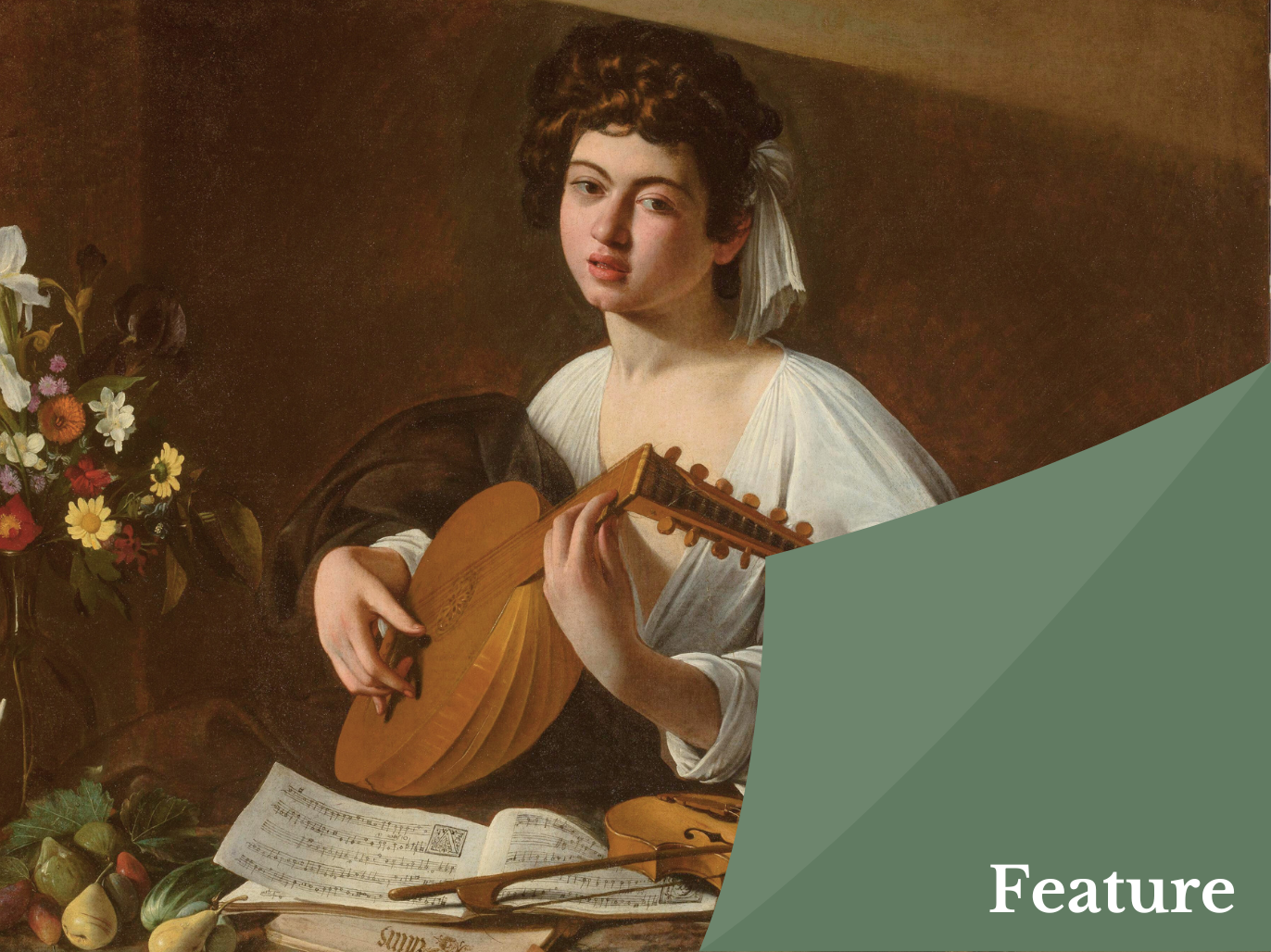
Playing With History: How Historically Informed Performance Rewrote the Sound of Classical Music

The Historically Informed Performance (HIP) movement didn’t just revive old instruments; it reimagined how music from every era should sound. In doing so, it reshaped orchestras, opera houses, and audiences’ ears alike.

View author's page

By Andrew Mellor

Reading time estimated : 14 min

Many years ago, the young Simon Rattle met the old Herbert von Karajan, Music Director of the Berliner Philharmoniker (a job Rattle would get decades later). ‘Here in Berlin we have two sounds’, Karajan reportedly told Rattle, ‘one for Mozart, and one for Brahms.’ 

Karajan was probably being optimistic. Listen to his Mozart and Brahms recordings with the Berliner Philharmoniker and it sounds more like the orchestra had just one sound: a rich, thick, warm, sustained and rather splendid one. It sounds magnificent, if a little of-its time. But was it right to use the same techniques and aims for playing Mozart, Vivaldi and Handel as those used for playing Brahms, Mahler and Schoenberg? 

In the second half of the twentieth century, various groups of musicians and academics began to disagree with Karajan (whose ideas were not just his own – they were pervasive at symphony orchestras across the world). The result was the most significant development in the performance of classical music: the Historically Informed Performance movement (HIP for short).

HIP combined a number of disciplines – archaeology, historical study, the re-thinking of instrumental technique and even the rebuilding of instruments themselves. It would change the way we approach, play and hear centuries’ worth of music. 

The central philosophy of the HIP movement, in direct opposition to Karajan’s philosophy of ‘two sounds’, is that versatility and contextual knowledge make for better performances. This comes from the belief that music from different periods in history – even different periods in a composer’s life – benefit from differently sounding instruments and different approaches to playing them. Added to that, the HIP movement suggested that if we play on instruments specific to the time of composition, the music wouldn’t just sound better, it would also engender better playing techniques. 

The HIP movement started out as a plaything for lone eccentrics. When people like David Munrow were propagating these ideas, the movement was seen as radical and marginal. But it soon started to attract individuals from inside the music world who saw the appeal in a different way of doing things – among them the cellist and conductor Nikolaus Harnoncourt.

For the first time in nearly a century, breakaway groups of musicians started to use violins and cellos strung with animal gut instead of metal, with brass instruments without valves and with narrow-bore woodwind instruments. The mostly Baroque music they played sounded entirely different; many musicians of the time reported feeling as though they were hearing very familiar works ‘as if for the first time.’

The HIP Boom

The HIP movement started to gather momentum at the perfect time, and soon drifted into the mainstream. This was the 1970s and 80s, when the advent of cassettes and CDs was creating a boom in studio recordings. 

A new breed of orchestra was born – effectively ‘private’ HIP ensembles that earned their fees from commercial recording. In keeping with orchestral configurations from the Baroque and Classical eras, they were far smaller than symphony orchestras. Record labels wanted to re-record the repertoire using these ensembles, and the ensembles became wealthy as a result. With all that money, they could afford to be idealistic. 

In 1973, the Academy of Ancient Music was formed in England after a conversation in a pub between the conductor Christopher Hogwood and an executive from Decca records, Peter Wadland. The idea was to form a small orchestra that could play Baroque and Classical music on period-specific instruments and record the results. The very same year, three other early music groups were founded in England alone: The Tallis Scholars, The English Concert and the Taverner Consort and Players. All but the latter are still going. 

Nine years later, Germany saw the establishment of the Akademie für Alte-Musik Berlin (AKAMUS) and France Les Musiciens de Louvre. They were joined by ensembles including Concerto Italiano (1984), the Orchestra of the Age of Enlightenment (1986) and the Freiburg Baroque Orchestra (1987).

When the musicians in these groups talked about hearing familiar music ‘as if for the first time’, they were not being poetic. In the early days of the HIP movement, the instruments used often sounded very different indeed – even borderline unpleasant. Woodwinds could be squeaky and acidic (oboes especially), brass were prone to splitting notes and strings difficult to steer and tune. Listen to recordings from the period, and it sounds like some ensembles were trying to mask those struggles with an over-emphatic sense of rhythm. 

These days, the same ensembles have preserved some of their original sonic characteristics but otherwise sound far more professional and pleasant. Groups like AKAMUS and the OAE haven’t just mastered those very different instruments; they have honed a sense of ensemble interplay and warmth that many would have thought impossible forty years ago. The Academy of Ancient Music still thrusts with rhythmic verve, but it’s no longer being used to hide inadequacies elsewhere. 


Groups like the Freiburg Baroque Orchestra, meanwhile, have also pushed forward into new eras of music, beyond even Classical and Early Romantic, to embrace Wagner, Mahler and even contemporary music. They have spawned countless imitators across the world.  

The Second Wave

After the turn of the millennium, a second wave of HIP ensembles was born. B’Rock, the Australian Brandenburg Orchestra and Concerto Copenhagen all seemed to capture the spirit of the ensembles of the 1970s and 80s but with a new energy and a fresh outlook – those ‘first times’ again. The HIP movement was also moving beyond its traditional heartland of England, France, Germany and the Netherlands to all corners of Europe and North America.  

But there was another trend bound up with this new wave – a determination to open the HIP movement up to just about every era of music. ‘All instruments are period instruments,’ the Belgian conductor Jos van Immerseel told me in 2009 as he was preparing to record Francis Poulenc’s Concerto for Two Pianos on instruments from 1930s Paris with his ensemble Anima Eterna Brugge. In 2003, François-Xavier Roth founded Les Siècles, an orchestra that has made a speciality of performing music from the late nineteenth and early twentieth centuries on the sort of instruments that were in currency when it was written.  

We have heard symphonies by Mahler and Saint-Saëns on period instruments, as well as ballet scores by Stravinsky and Debussy. The results have often been startling. Baroque music was brought to life by the rhythmic vitality produced by more light, springy stringed instruments, plangent winds and piercing brass. 

The idea of a more transparent, less thick orchestral sound was important to Baroque and Classical music, but it proved even more so when music from the turn of the twentieth century was played on period-specific instruments. Suddenly, we could hear horizontal textures far more in music that had previously sounded like it was built from colossal blocks of strong colour. Just listen to this performance (below) of music by Stravinsky from Les Siècles, and hear how varied and beguiling the orchestral textures sound.

The effect of the HIP movement on the world of opera has been just as profound. Some opera houses including Glyndebourne and the Royal Danish Opera work with period-instrument orchestras every season. This has contributed to the huge revival in operas by Baroque composers, notably Handel, Monteverdi and Rameau, and a quest to rediscover more like them from composers who are not so well known. Naturally, it has had a huge effect on solo and choral singing too. 

The desire to hear opera with orchestras of period instruments has stretched all the way to Wagner and Debussy. Kent Nagano’s recent performances of Wagner’s Ring on period instruments prompted much discussion. Some missed the weight of the music to match that of the drama; others found the sound intensely refreshing, a sprinkling of woodland magic onto Wagner’s highly considered orchestral textures.  

Coming Full Circle

Not everyone has been carried along on the HIP bandwagon. The late British conductor Sir Colin Davis was a noted sceptic. In 2012, he told a newspaper that period-instrument orchestras had ‘hijacked this repertory to give themselves something to do.’ He took particular aim at another late British conductor and knight of the realm, Sir Roger Norrington

Norrington had founded one of England’s first HIP groups, the London Classical Players, and was a pioneer of ‘pure tone’ playing – playing and singing without vibrato. I interviewed him a few days after Davis’s comments, and he responded with typical candour: ‘When I hear a period instrument orchestra like the OAE or the Philharmonia Baroque Orchestra play Bach or Handel, it sounds wonderful to me’, he told me. ‘I don’t have any theories about it, it just sounds great. It sounds fantastic.’

In the latter half of his career, Norrington stopped working with specialist HIP ensembles, and started working with European civic and radio symphony orchestras. This was as sure a sign as any that things had come full circle since Karajan made his comment to Rattle. 

In fact, you might say that the biggest effect the breakaway groups of the 1970s and 80s had on the institutions they broke away from, was to bring real change to those institutions themselves. There has been a complete change in mindset at the vast majority of symphony orchestras around the world, who use techniques and approaches pioneered by the HIP movement when playing music of the Baroque, Classical and Early Romantic eras. 

For the last two decades or more, the Berliner Philharmoniker has had many more ways of playing than just ‘Mozart mode’ and ‘Brahms mode.’ Its musicians can play Baroque music with serious style and its musicians can even handle Baroque instruments. Rattle was getting it to do so as long ago as 1993. But the truth is, the approach to Baroque music has changed the way the orchestra plays Classical and Early Romantic music too. Perhaps even all music. 

This has proved pervasive. Listen to the strings of the Atlanta Symphony Orchestra in the excerpt from Handel’s Messiah played at this Christmas concert (below), and hear how much they resemble those of the Academy of Ancient Music. 

Or watch this concert (excerpt below) from the Frauenkirche in which the Staatksapelle Dresden – a deeply traditional orchestra and not one you’d normally associate with extreme stylistic flexibility – proves it can play Handel in the Baroque manner in excerpts from Messiah

Messiah is a good example of our changing relationship to great works from music history – and how we treat them. In British performances of Messiah in the 1960s and earlier, it was usual to joyfully ignore any notions of history or authenticity and include all sorts of instruments that Handel didn’t write for and some he didn’t even know: horns, clarinets and added percussion. The result was a texture that felt broad and grand, but not particularly exciting or invigorating. These days, we hear the piece played with lightness, subtlety, articulation and energy – and far fewer performers. But we don’t seem to lose any of the grandeur in the music. That much is evident in this recent performance (excerpt below) from the late John Nelson and The English Concert.

We think we’re hearing Messiah more ‘authentically’, but in truth we can’t be sure what authentic really is – if such a thing even exists. We’re hearing the music as musicians have conceived it now, at a time when all sorts of influences shape performances and the decisions made in their preparation. 

In reality, the way we play music from all periods is influenced as much by the musical fashions of our time as it is by our constantly-shifting understanding of how composers conceived that music and what instruments they used. How will we be playing and singing Messiah, in fifty years from now? Differently from how we play and sing it today, that’s for sure. 

Written by Andrew Mellor

Journalist and critic

Andrew Mellor is a British writer, critic, and broadcaster based in Copenhagen. After studying music at the University of Liverpool, he began his career with the Manchester Camerata and the London Philharmonic Orchestra before training as a journalist at Classic FM magazine and Gramophone. Since moving to Denmark in 2015, he has become a leading voice on Nordic music and culture, contributing regularly to Opera and Opera Now.

A regular critic for the Financial Times and a presenter for medici.tv and the Danish Broadcasting Corporation, Andrew Mellor also writes extensively for orchestras, festivals, and record labels around…

View author's page