Evans was an expert in pitching charts for the French horn, flugelhorn and tuba; his voicings were clear and golden, his harmonies unexpected. The heavy use of mutes would soon become commonplace in jazz.
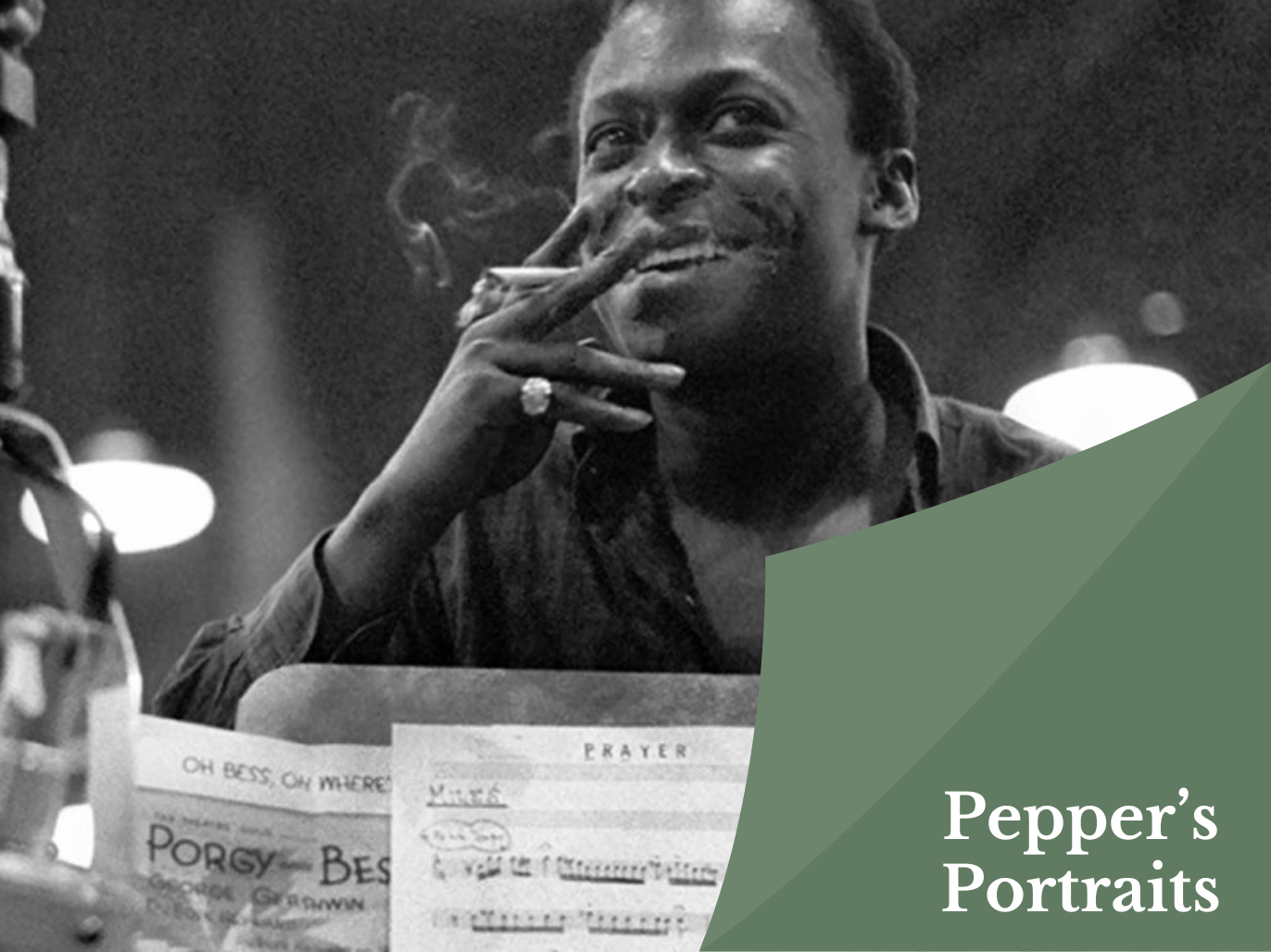
Their shared classical interests are evident in their three albums for Columbia. Miles Ahead includes musical quotations of composers as broad as Berg, Delibes and Weill. Porgy and Bess saw Evans provide charts detailing as little as a scale and no chords, reflecting Davis’s desire to depart from the “thick” textures of earlier jazz and instead “return to melody”. Sketches of Spain presented arrangements of Rodrigo and de Falla. Drawing on the dynamic subtlety, textural interplay and instrumental timbres of classical music, this was a big step closer towards so-called “Third Stream” music, where jazz and classical overlap. Little surprise the man who coined that historic phrase, Gunther Schuller, was their French horn player.
Even before these three more directly “classical” albums, there were moves that raised eyebrows in jazz circles. 1957’s Birth of the Cool excluded the tenor sax entirely; this feels rather like eschewing drums in a pop record, or violins in a symphony (though Stravinsky’s 1930 Symphony of Psalms did just that)!
It was the setting up of said sections that also proved so daring. Big band jazz in the days of Glenn Miller and Duke Ellington was based on the ping-pong between sections, an idea thrown from saxes to trumpets and back; the parallel with classical orchestras here is clear. But Davis didn’t think of his group in terms of multiple sub-sections; he saw his ensemble as one unit, more about the blend than the bounce, the combination over the conversation. Interestingly, Davis said his inspiration was more a choir than an orchestra: “I wanted the instruments to sound like human voices… I looked at the group like it was a choir.”
This is where the debate began around Davis’s categorisation; cue Sargeant’s article, where he argued “it is not really jazz”. True, this era of his music is one that lingers rather than drives; indulges rather than expounds. To many it suggests more hazy classical impressionism than the manic energy of bebop. Perhaps this is why Davis’s ensemble was far from a household name at this time, even in jazz; only in later years would the Nonet be recognised for its seminal impact.