
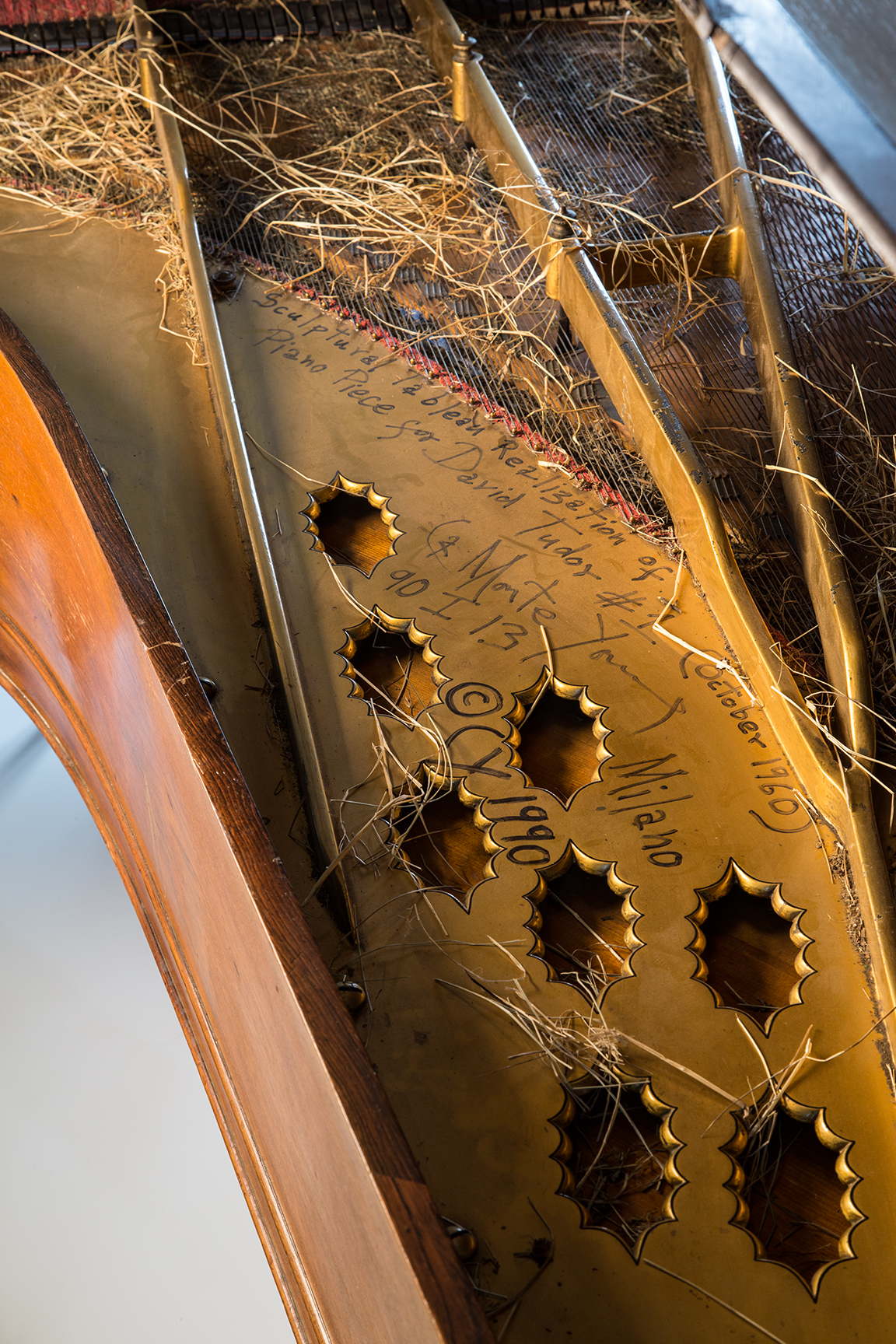
I first encountered the work of the performance art movement Fluxus in a seminar on experimental 20th-century music. One of my classmates performed a pair of works from Compositions 1960, a set of text-based pieces by avant-garde American composer La Monte Young. The instructions of the first began, “Bring a bale of hay and a bucket of water onto the stage for the piano to eat and drink.” Though silly at first glance, I was shocked and horrified when he pushed the piano into a wall and began throwing straw inside it! This Steinway costs as much as my tuition! I thought, outraged. Who’s going to pay to re-tune it? What did the piano do to deserve this? Above all, What’s the point?
View author's page
Reading time estimated : 8 min
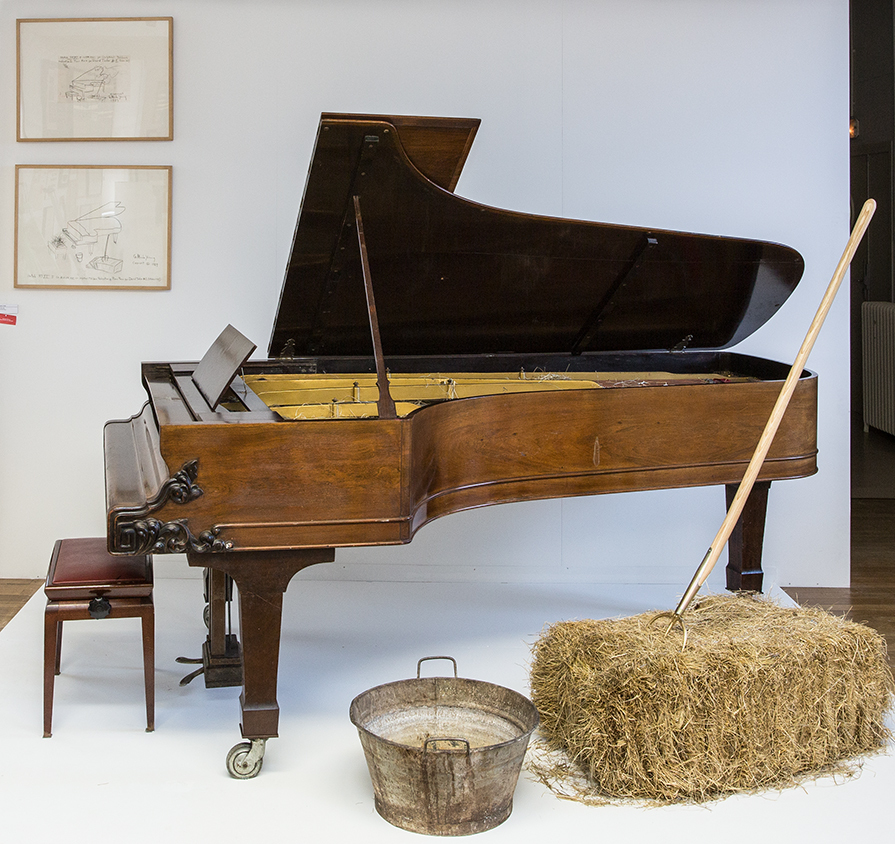
Turns out, there are many reasons for destroying pianos, whether setting them aflame, smashing them with sledgehammers, or even launching them out of trebuchets. Pianos have been demolished to memorialize fallen soldiers; to protest everything from capitalism and nuclear proliferation to cultural elitism; and for simple shock value.
Musical instruments are more than just objects. They hold tremendous cultural and symbolic value far beyond their physical forms. Instruments are deeply tied to longstanding ideas of prestige, discipline, and social class. In a way, attacking one of these valuable instruments is akin to defiling a sacred object. That’s especially true for the grand piano, one of the largest, most expensive, and most well-known Western instruments.
“The urge to destroy is also a creative urge.”
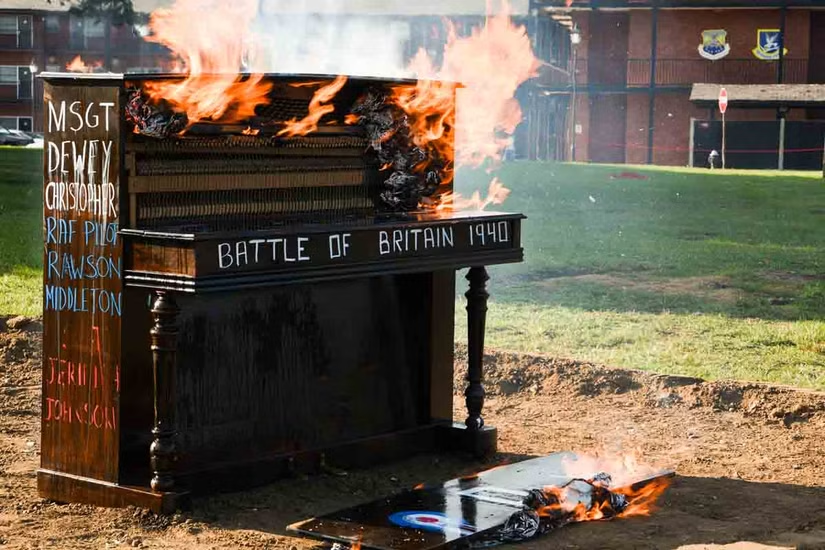
The deliberate practice of destroying pianos has a fascinating history going back more than a century. Some of the earliest piano burnings were done not by artists but by military personnel, not for protest but as funereal pyres. Beginning in the First or Second World War, members of the British Royal Air Force torched pianos in tribute to their fallen comrades. Though the exact origins of the practice remain a subject of speculation, this tradition continues around the world to this day.
Piano annihilation as an artistic practice began in earnest in the tumultuous decades following the Second World War. The tenuous peace of the Cold War era created vibrant countercultural and civil rights movements around the world. African-American and LGBTQ civil rights movements gained traction in the 1950s and 1960s alongside protests against the war in Vietnam. In France, the series of uprisings known as May 68 ushered in a new wave of social activism. A year later, hippie culture reached its zenith with the legendary Woodstock music festival.
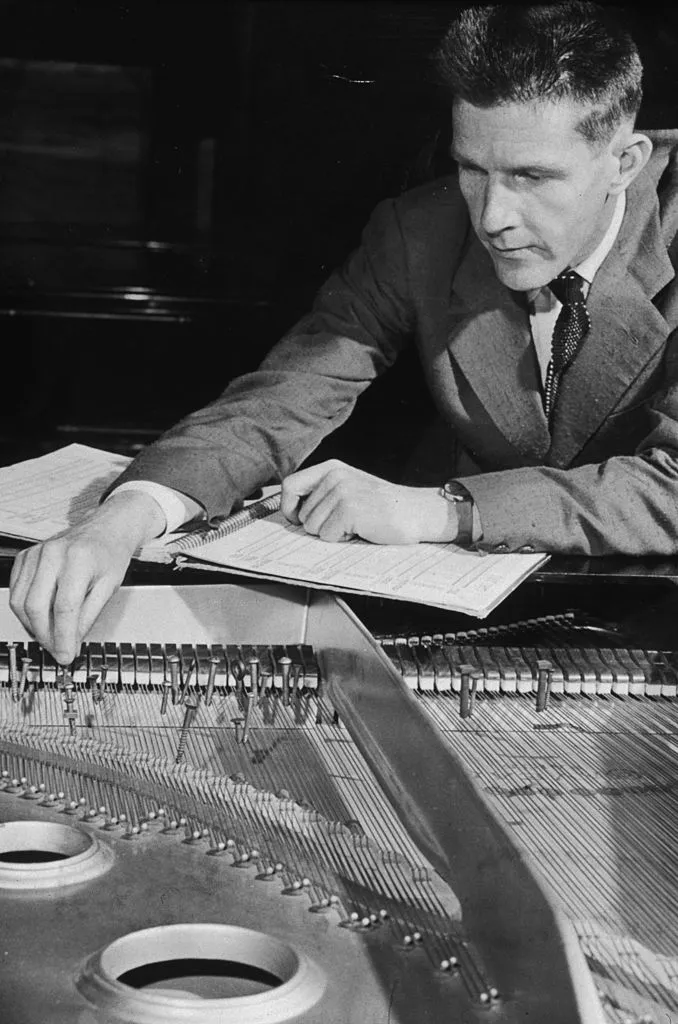
An important precursor to the artistic destruction of instruments were the prepared piano works of American avant-garde composer John Cage. A prepared piano is a standard grand piano whose sound has been altered, sometimes permanently, by placing objects like screws, bolts, rubber erasers, and felt between or on its strings. In one of Cage’s most famous pieces for prepared piano, Water Music, the player tosses a handful of playing cards onto the strings to alter the instrument’s timbre. “With just one musician,” Cage wrote, “you can really do an unlimited number of things on the inside of the piano if you have at your disposal an exploded keyboard.”
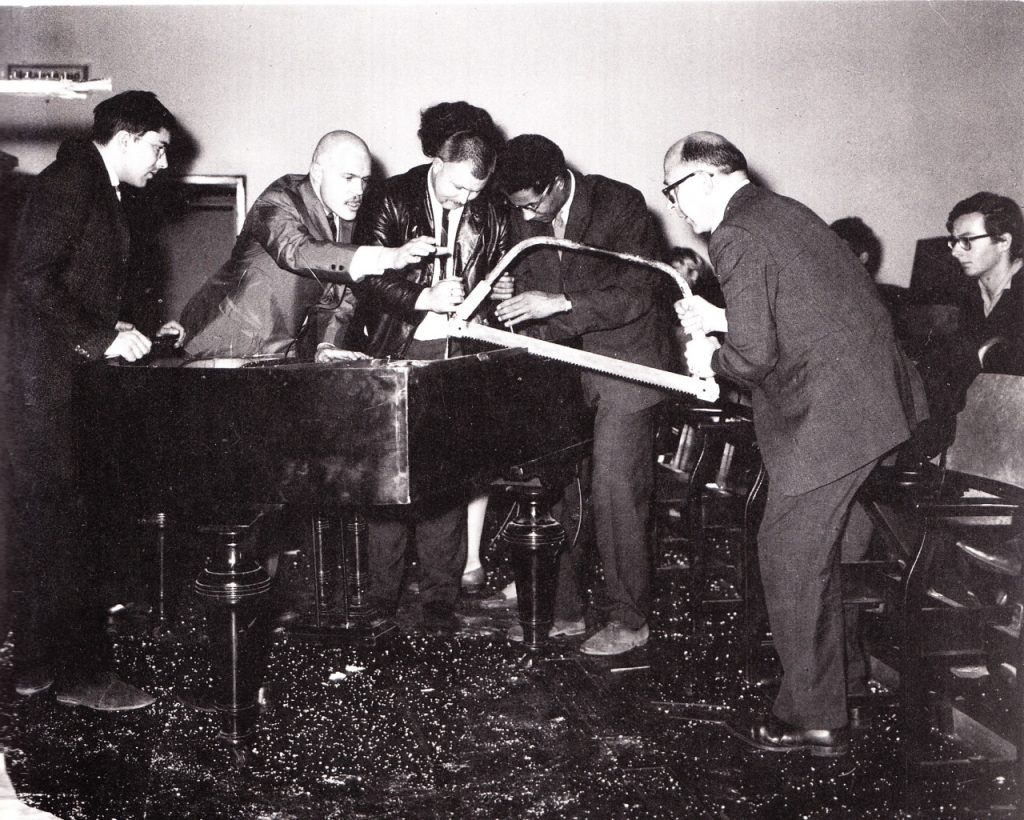
While Cage himself did not destroy instruments, his prepared works challenged conventional ideas about how the piano could be used. He directly inspired others to radically experiment with piano performance practice, including destroying them. Most famous among these were the loose collective of interdisciplinary performance artists known as Fluxus. To protest elitism in classical music, they spent much of the 1960s and 1970s creating shocking and irreverent performance “events.” At the inaugural Fluxus Festival in 1962, performers caused an uproar when their interpretation of Philip Corner’s piece Piano Activities resulted in the demolition of an old piano. The group attacked the instrument with saws, crowbars, hammers, and rocks in front of a bemused and outraged audience. The “performance” went down in history “not as an interpretation of a sonic composition,” writes Activating Fluxus, “but primarily as an attempt to challenge bourgeois sensibility through a violent act against the cultural symbol of the grand piano.”
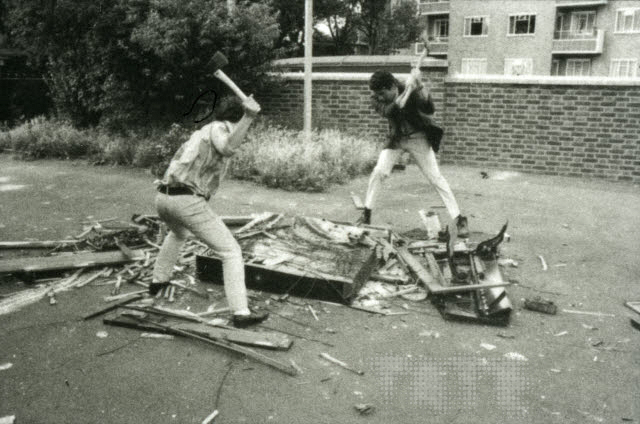
Several years after the infamous Piano Activities performance, the Destruction in Art Symposium came to London in the fall of 1966 (a then-unknown Yoko Ono was in attendance, along with other Fluxus members). Much of the symposium protested capitalism, the destruction of the environment, and imperialistic wars. That same year, artist Gustav Metzger released a manifesto capturing the essence of the destructive impulse. It reads in part,
“Rockets, nuclear weapons, are auto-destructive.
Auto-destructive art [the term Metzger coined for destructive art].
The drop drop dropping of HH bombs.
Auto-destructive art re-enacts the obsession with destruction, the pummeling to which individuals and masses are subjected.”
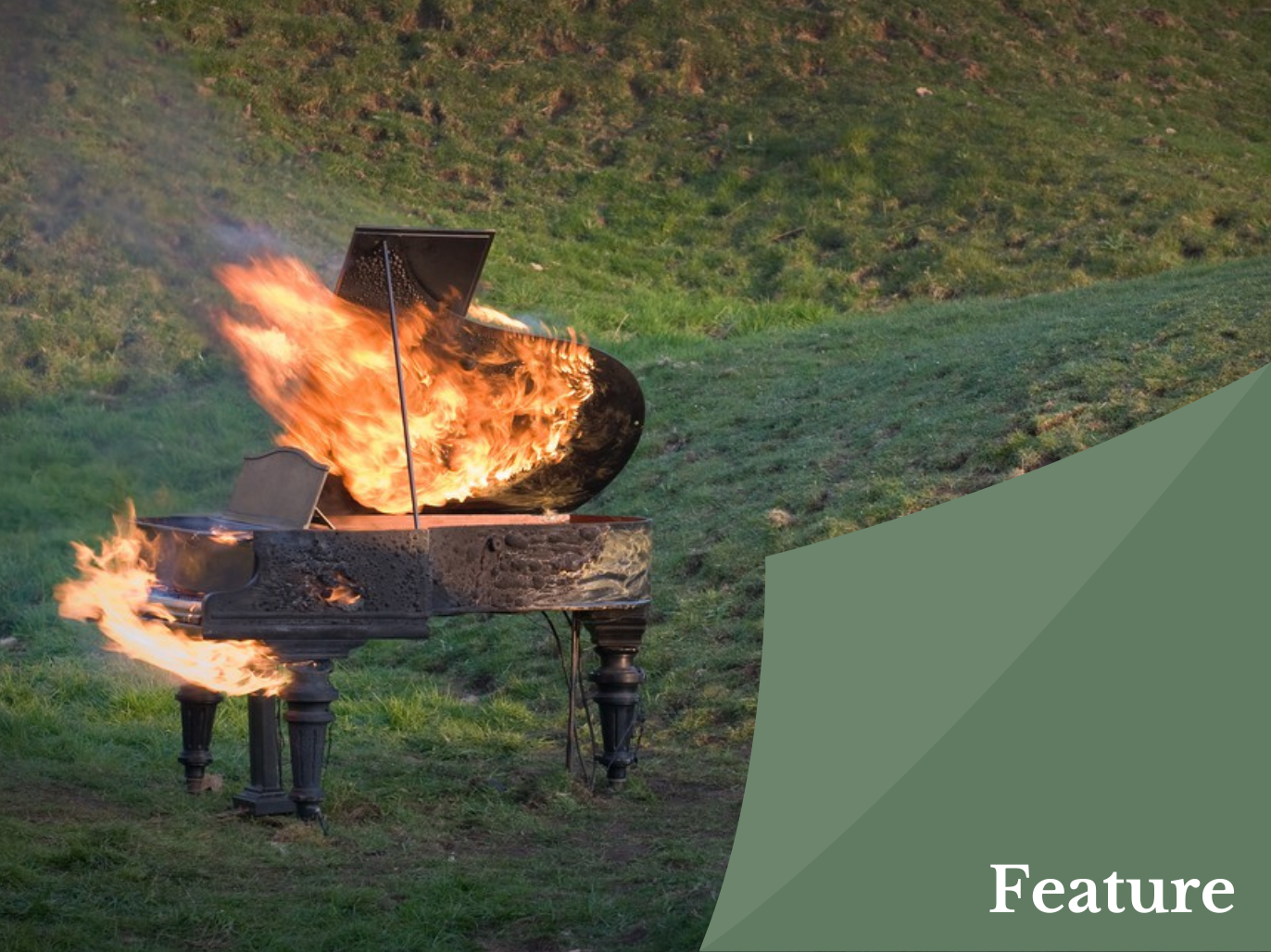
Artists carried this tradition of destructive art into the 21st century. Today, fire seems to be the preferred modus operandi. In a global culture obsessed with the moving image, the shock value of seeing a six-figure instrument going up in flames continues to grab attention. Pioneering Japanese jazz pianist Yosuke Yamashita went viral and spawned a meme for his 2008 video burning piano, which features Yamashita playing a flaming instrument while encased in a fire-resistant suit.
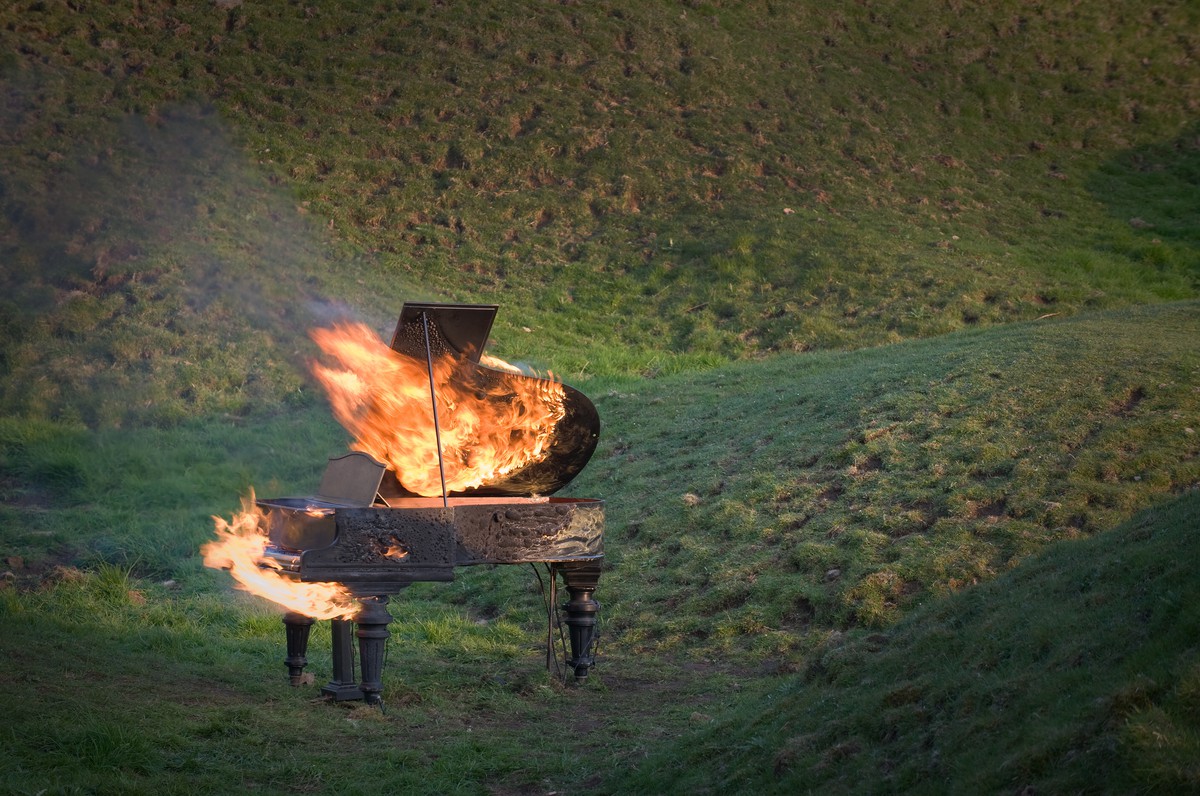
Scottish visual artist Douglas Gordon set a piano alight in his 2012 video The End of Civilisation. In this potent film, a grand piano burns near the site of Hadrian’s Wall at the English–Scottish border. Thompson views the grand piano as “emblematic of high culture as both a finely crafted instrument and a beautiful sculptural object,” and sees in its destruction a frightening symbol of societal collapse.
Pop musicians have kept these metaphorical and literal flames burning. Lady Gaga, an undisputed master of spectacle, introduced a flaming piano during a live performance of her song “Speechless.” As Gaga sang about addiction and the fear of death, her piano burst into flames around her, visually reinforcing the song’s themes of self-destruction.

More recently, French pianist Sofiane Pamart performed John Lennon’s “Imagine” on a blazing grand piano at the opening ceremony of the 2024 Summer Olympic Games in Paris. Pamart has described classical music—and his instrument specifically—as “a bit elitist, conservative in any case.” He adds, “Burning it is a way of resisting” both elitism and the piano’s centuries of entrenched history. Though some applaud the powerful visual spectacle of these immolations, others have expressed skepticism and outrage, calling Pamart’s fiery performances “immature,” “a desecration,” and “Just. Plain. Sick.”
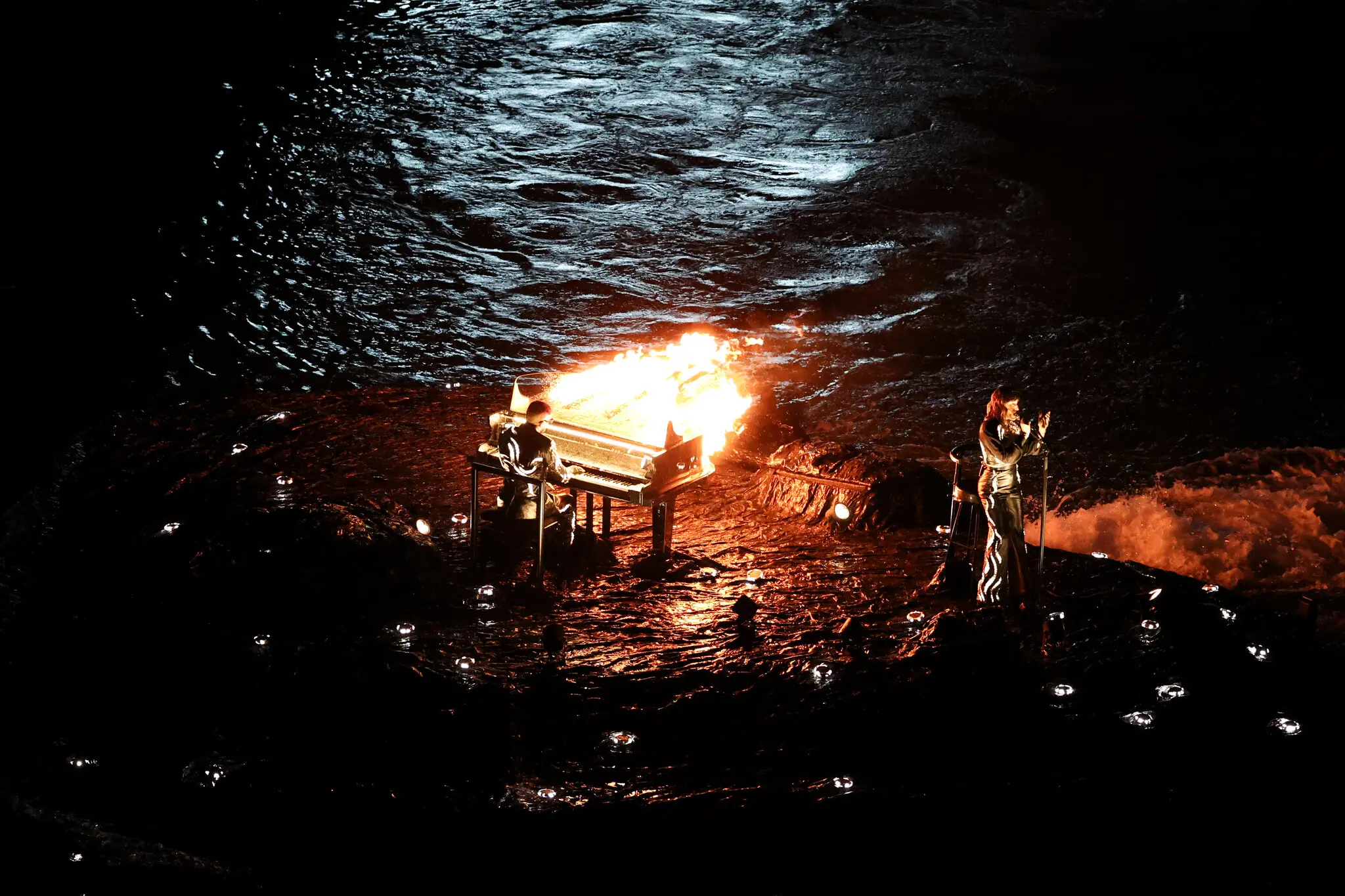
Desecration is a word typically reserved for religious icons, not musical instruments. While the piano is not a religious object, it can function as a sacred vessel loaded with as many meanings as it has strings. Legendary composer and virtuoso pianist Franz Liszt saw it as a vessel of the self: “My piano is to me what a ship is to the sailor, what a steed is to the Arab,” he wrote. “It is the intimate personal depository of everything that stirred wildly in my brain during the most impassioned days of my youth. It was there that all my wishes, all my dreams, all my joys, and all my sorrows lay.”
A grand piano isn’t merely an instrument: it signals access to wealth and class, represents centuries of technological development and craftsmanship, and embodies the countless hours generations of pianists have spent attempting to master it. Many of the greatest works of Western classical and popular music were written at the piano. In a way, the instrument allows us to commune with the musical masters of the past. Destroying one symbolizes a rupture of that communion.
Today, destroying instruments for art or entertainment is no longer novel. So why does it continue to shock and even horrify? Is it a sign that we take classical music too seriously, that we’ve put the music or the instruments themselves on pedestals? Does the demolition of such “civilized” technology uncomfortably remind us that nothing, not even civilization itself, is permanent? I doubt any one answer is correct. What is certain, however, is that the truly horrifying moment will be when the destruction of pianos causes no reaction at all.
