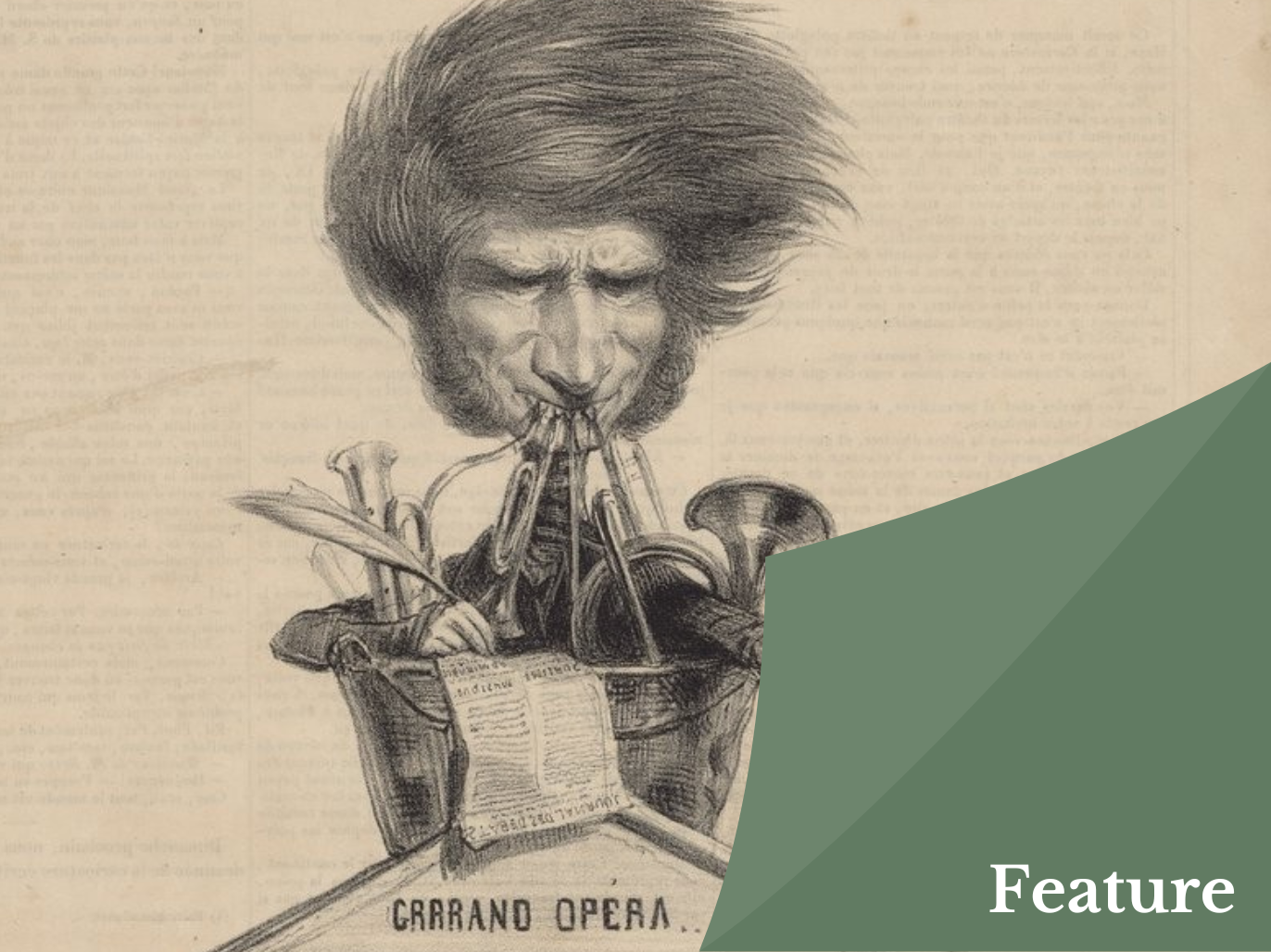
Musical Bloodsport: When Composer-Critics Pick Up the Pen

From Schumann to Debussy, from César Cui to Virgil Thomson, some of the nineteenth and twentieth centuries' greatest composers moonlighted as critics. Their prose could be as vicious as it was brilliant. What does their writing reveal about their musical personalities?

View author's page

By Maria Matalaev

Reading time estimated : 14 min

Growing up in a family steeped in Russian chamber music, I heard repeatedly that César Cui was an abominable man, “but his music is not bad.” This was the standard verdict, delivered with a shrug. The man who had savaged Mussorgsky’s Boris Godunov in print, who had dismissed Tchaikovsky’s Eugene Onegin as “stillborn and absolutely incompetent,” somehow escaped final judgment. His fourteen operas were pleasant enough, but his criticism was unforgivable. The two coexisted, awkwardly, in the same man.

Nicolas Slonimsky’s Lexicon of Musical Invective—a glorious compendium of critical assaults on composers since Beethoven’s time—is full of such characters. The book is hilarious and humbling. It reminds us that experts are often wrong, that taste is historically contingent, and that confident pronouncements age poorly.
The Schimpflexicon

Slonimsky called his collection a “Schimpflexicon,” a dictionary of abuse. His purpose was to demonstrate what he termed “Non-Acceptance of the Unfamiliar”: critics’ universal tendency to reject innovation simply because it sounds strange. In extreme cases, even hearing the music becomes optional. In December 1916, Leonid Sabaneyev published a detailed review of Prokofiev’s Scythian Suite in Moscow, praising its “wonderful barbaric music” while complaining that the composer had conducted “with barbaric abandon.” There was only one problem: the performance had been cancelled. Sabaneyev had reviewed a concert that never took place.

Others had the courtesy to attend, though their reviews have aged no better. On Beethoven’s Ninth Symphony: “The Finale is to me for the most part dull and ugly… Oh, the pages of stupid and hopelessly vulgar music! The unspeakable cheapness of the chief tune, ‘Freude, Freude’!” That was Philip Hale, eminent American music critic, writing in 1899.

On Tchaikovsky’s First Piano Concerto: “This elaborate work is as difficult for popular apprehension as the name of the composer.” One wishes that Boston Transcript critic had lived to see the opening theme become the popular song “Tonight We Love.”

These critics weren’t fools. Many were learned musicians. Slonimsky puts it well: “Many of them are men of great culture, writers of brilliant prose, who, when the spirit moves them, excel in the art of imaginative vituperation.” The problem is precisely that they’re talented enough to make their wrong opinions sound utterly convincing.

Yet the most revealing critical texts are those written by composers themselves. Here, one hears not only judgments, but ways of listening taking shape on the page.

Schumann and His Doubles

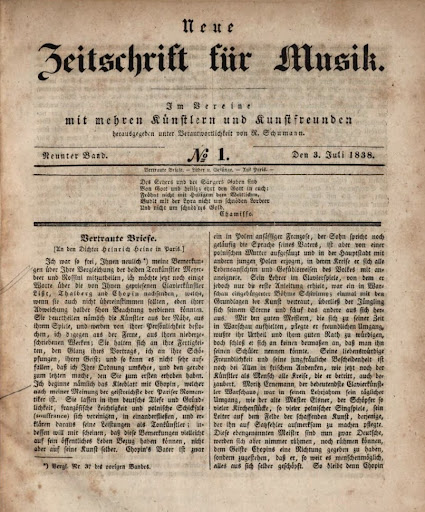
In 1834, at twenty-four, Robert Schumann founded the Neue Zeitschrift für Musik specifically to combat what he saw as musical philistinism. The journal became his platform for championing Chopin, Brahms, and Berlioz, while waging aesthetic war against empty virtuosity.

Neue Zeitschrift für Musik, July 1838. Schumann founded the journal in 1834 and edited it for a decade, signing his reviews as Florestan, Eusebius, or Raro.

His most remarkable innovation was formal. He created two alter egos, Florestan (passionate and impulsive) and Eusebius (dreamy and introspective), and signed his reviews accordingly. This was not a gimmick but a solution to a critical problem: how to write with both passion and lucidity, how to be both advocate and analyst.

The first time Schumann staged his characters was in 1831, in a review of Chopin’s Opus 2, the Variations on ‘Là ci darem la mano’. The young Chopin was then unknown and Schumann launched him with a scene:

Eusebius quietly opened the door the other day. You know the ironic smile on his pale face, with which he invites attention. I was sitting at the piano with Florestan. As you know, he is one of those rare musical personalities who seem to anticipate everything that is new, extraordinary, and meant for the future. But today he was in for a surprise. Eusebius showed us a piece of music and exclaimed: “Hats off, gentlemen! A genius!”

This was criticism as theater. The two voices weren’t confined to his reviews. In Carnaval Op. 9, Schumann composed separate movements titled “Florestan” and “Eusebius.” Listen to them back to back: “Eusebius” floats in, soft and introspective, a dreamy melody in E-flat major that seems to lose itself in thought; “Florestan” bursts in immediately after in restless G minor, all rushing triplets and impatient sforzandos. Two temperaments, two musical languages, yet unmistakably the same composer. In the Davidsbündlertänze Op. 6, each piece is signed F. or E. Schumann’s mind worked in dialogue, and both his music and his prose reflected this fundamental duality.

This is what makes composer-critics fascinating: the coherence—or the tension—between the writing and the music. In Schumann’s case, the coherence is total. The man who invented Florestan and Eusebius on the page was the same man who composed them into being.

Schumann multiplied voices not to argue with himself, but to let his inner selves coexist on the page: the impetuous and the tender, the combative and the dreaming, each defining the other. Debussy would do the opposite: sharpen a single voice until it could wound.

Debussy’s Assassinations

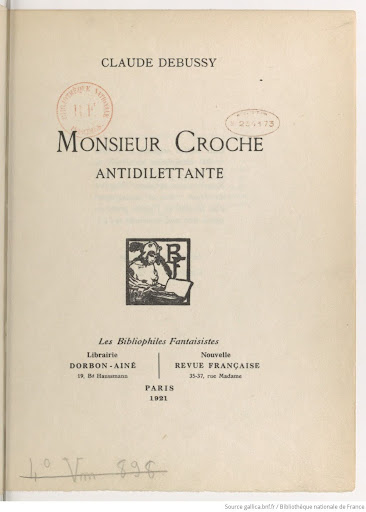
Writing under the pseudonym Monsieur Croche, Debussy perfected the art of the devastating metaphor. Grieg, he wrote, produced “music to lull convalescents in rich neighbourhoods.” Rimsky-Korsakov’s Shéhérazade “makes one think of a bazaar rather than the Orient.” On Stravinsky, he delivered his masterpiece: “He says ‘my Firebird, my Sacre‘ like a child saying ‘my top, my hoop.’ He is exactly a spoiled child who sometimes puts his fingers up music’s nose.”

Title page of Monsieur Croche, antidilettante (1921), the posthumous collection of Debussy's music criticism.

Debussy’s critical method mirrors his compositional one. Like his prose, his music replaces direct statement with suggestion. He does not analyze; he conjures images. “Music to lull convalescents in rich neighbourhoods” offers no technical argument whatsoever, yet it conveys, with brutal precision, how Debussy heard Grieg. That gently rocking rhythm, those warm thirds and sixths, the melody that never strays far from home… Grieg’s music offers comfort, not challenge. Debussy heard cushions where he wanted cliffs. This one stings, I admit. Grieg’s Waltz in E minor was where I first learned to use the piano pedal. I love it still, and yet I understand what Debussy meant.

The cruelty of Monsieur Croche and the tenderness of Debussy’s music are not a contradiction—they are two sides of the same approach: suggestion and evocation instead of direct argument. Croche never explains or analyzes; he throws out sharp, deadly images. The music does exactly the same. Listen to “Golliwogg’s Cakewalk” from Children’s Corner: a jaunty, syncopated ragtime dance. Then, right in the middle, Debussy quotes the famous “desire” motif from Wagner’s Tristan und Isolde—played straight, marked “avec une grande émotion.” He lets it ring for a moment… then cuts it off with mocking grace notes, little laughing hiccups, and jumps back to the cheeky cakewalk. The music makes its point with a jab and moves on.

For Debussy, criticism was a playground. For others, it was a sentence.

Berlioz: The Reluctant Genius

Hector Berlioz wrote some of the most brilliant prose in nineteenth-century music criticism. He also experienced criticism as a form of exile from composition. For decades, he filed feuilletons for the Journal des Débats, reviewing operas he often despised while dreaming of the symphonies he could have been writing instead. “The labour revolted him,” his biographer David Cairns notes, “yet he found himself as helpless as a galley slave.”

Berlioz's Mémoires (1878). He spent nearly thirty years as music critic for the Journal des Débats, a task he described as wading through 'a swamp full of toads.

In his Mémoires, Berlioz himself vents his fury at this servitude: “To write feuilletons forever in order to live! To write nothings about nothings! To give lukewarm praise to insufferable insipidities! To speak tonight of a great master and tomorrow of a cretin with the same seriousness, in the same language!” The feuilleton, he wrote, was “a sad domain, a swamp full of locusts and toads.”

When Berlioz wrote freely, the results were incandescent. His Mémoires stand among the great autobiographies of the century, while the Soirées de l’orchestre  sparkle with theatrical wit and narrative excess. The voice is unmistakable. It is the same voice that animates the Symphonie fantastique. In both prose and music, Berlioz stages himself: dramatic, obsessive, extravagant.

Criticism, however, was not a playground for him. It was a constraint. This tension surfaces in one of his most revealing pranks. In November 1850, Berlioz presented a short, gentle chorus called “L’Adieu des bergers à la Sainte Famille” as the work of a fictitious 17th-century composer, Pierre Ducré, master of music at the Sainte-Chapelle in 1679. He fabricated a story of a manuscript discovered behind a wall during restoration work. The piece—a pure, simple, almost archaic choral lullaby—was a huge success. Critics praised its purity, simplicity, and archaic charm. One listener declared that Berlioz could never write a tune as simple and charming as this little piece by old Ducré.

The same chorus, unchanged, later reappeared as the centerpiece of L’Enfance du Christ, under his own name. The hoax exposed how much critical judgment depended on names and reputations, not on the sound of the music itself.

The coherence between Berlioz’s prose and his music is complete. The fracture lies elsewhere, between freedom and obligation. Berlioz loved composing and loathed reviewing. Journalism was servitude. Music was escape.

Listen to the “Songe d’une nuit de sabbat” from the Symphonie fantastique: Berlioz at his freest. The infernal bells toll, the Dies irae is twisted into a grotesque dance, the idée fixe returns as a shrieking witch, and the orchestra erupts in wild, extravagant chaos. This is pure, unbridled Berlioz: dramatic, obsessive, far from the  “insufferable insipidities” he was forced to praise in his feuilletons.

Berlioz suffered because criticism kept him from composing. César Cui presents a stranger case: a composer whose criticism eclipsed his music entirely…

César Cui and His Victims

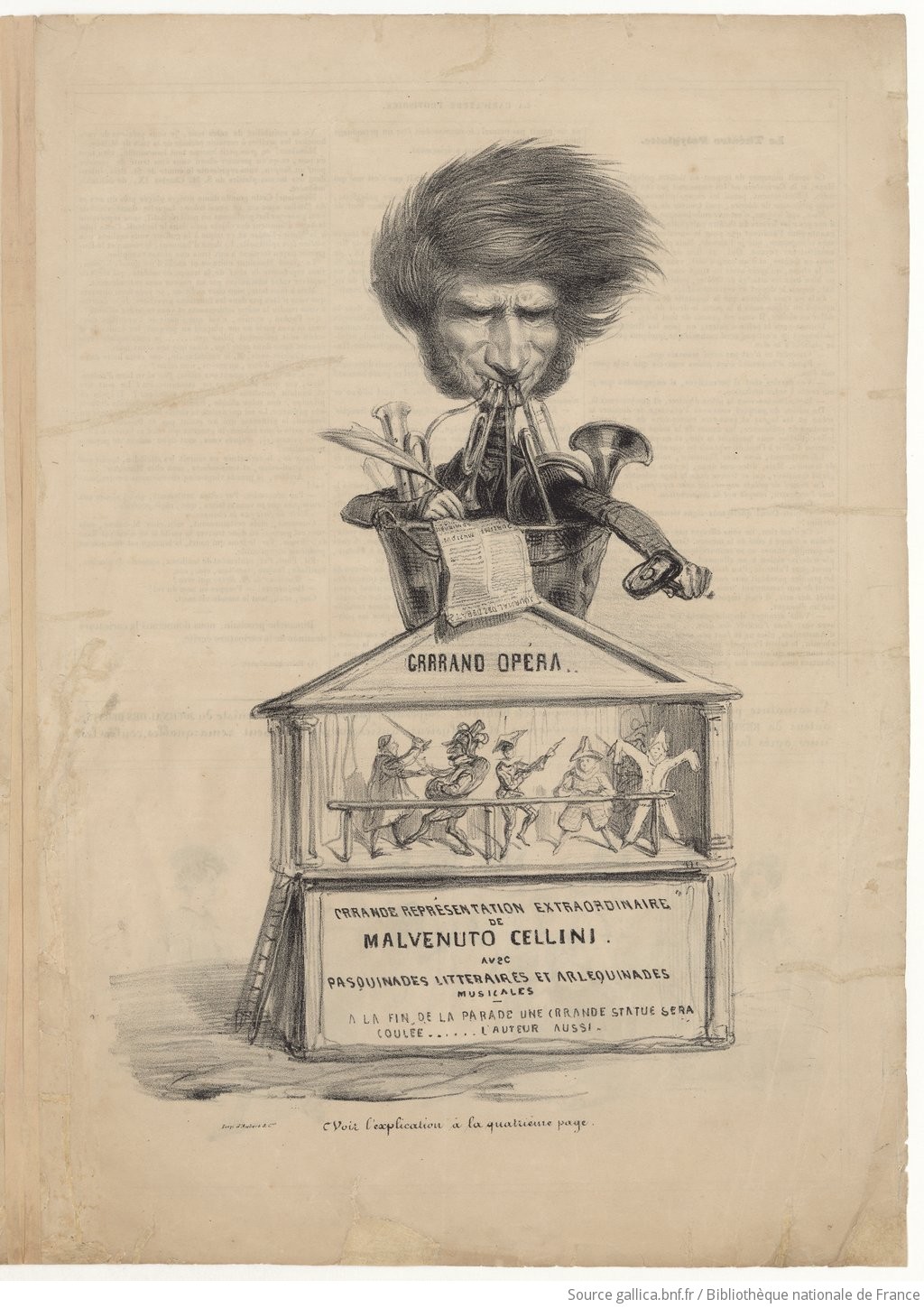
César Cui was a fortification expert. By day, he taught military engineering at the Imperial Academy; by night, he wrote criticism that could destroy careers. For fifty years, he was one of Russia’s most feared musical voices, publishing some 800 articles. He was also a member of the group known as The Five — Balakirev, Mussorgsky, Borodin, Rimsky-Korsakov and Cui himself, although of French descent — who sought to develop a distinctly Russian musical idiom outside Western academic models.

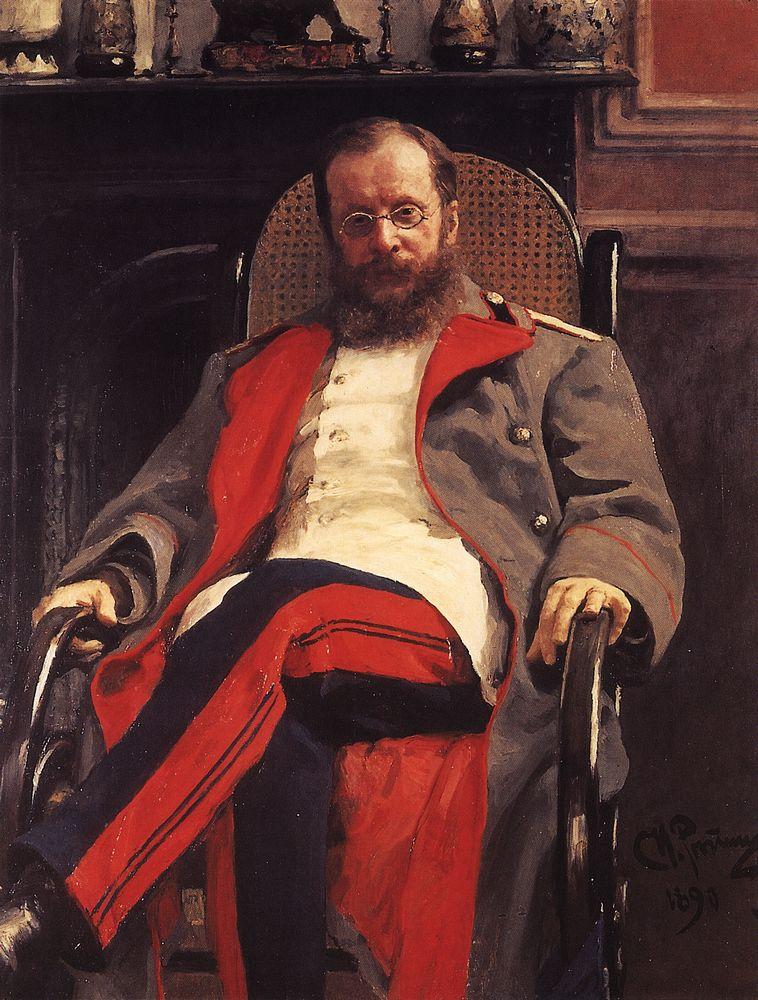
César Cui, portrait by Ilya Repin (1890). A military engineer by profession, Cui wielded his pen like a weapon.

Cui’s attacks spared no one, not even his allies. On Mussorgsky’s Boris Godunov: “chopped recitative and looseness of musical discourse… the consequence of immaturity, self-complacent, hasty method of composition.” Cui and Mussorgsky were supposedly on the same nationalist team. So much for solidarity.

His most devastating blow fell on the young Sergei Rachmaninoff. After the disastrous premiere of Rachmaninoff’s First Symphony in 1897, Cui wrote: “If there were a conservatory in Hell, and if one of its talented students were to compose a symphony based on the Ten Plagues of Egypt, he would have fulfilled his task brilliantly and would delight the inhabitants of Hell.”

The review helped send Rachmaninoff into a depression so severe it silenced him for three years. Words do not vanish once printed.

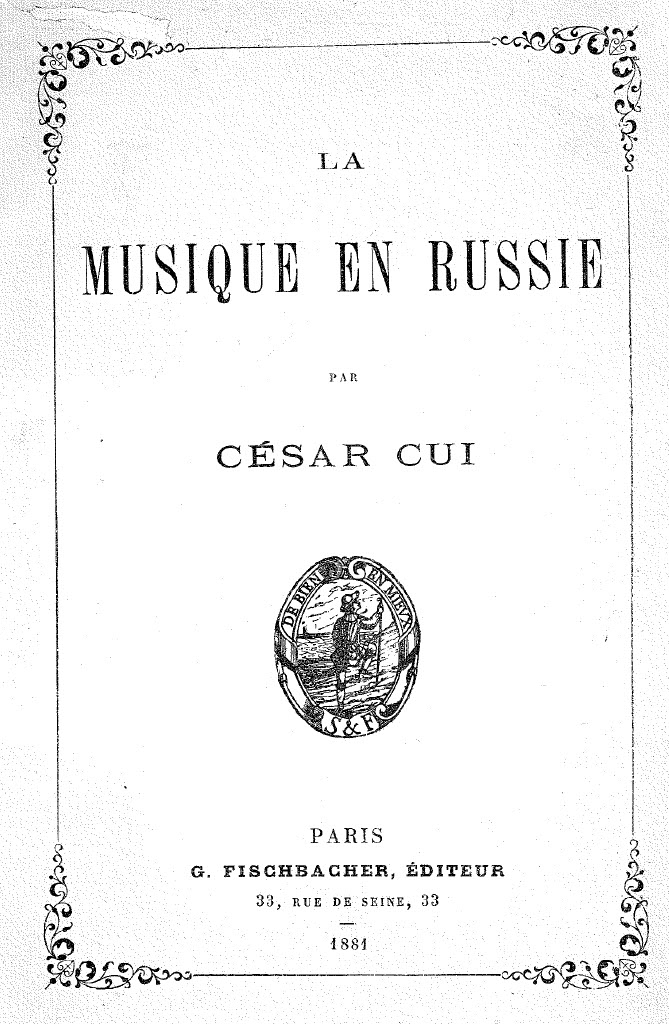
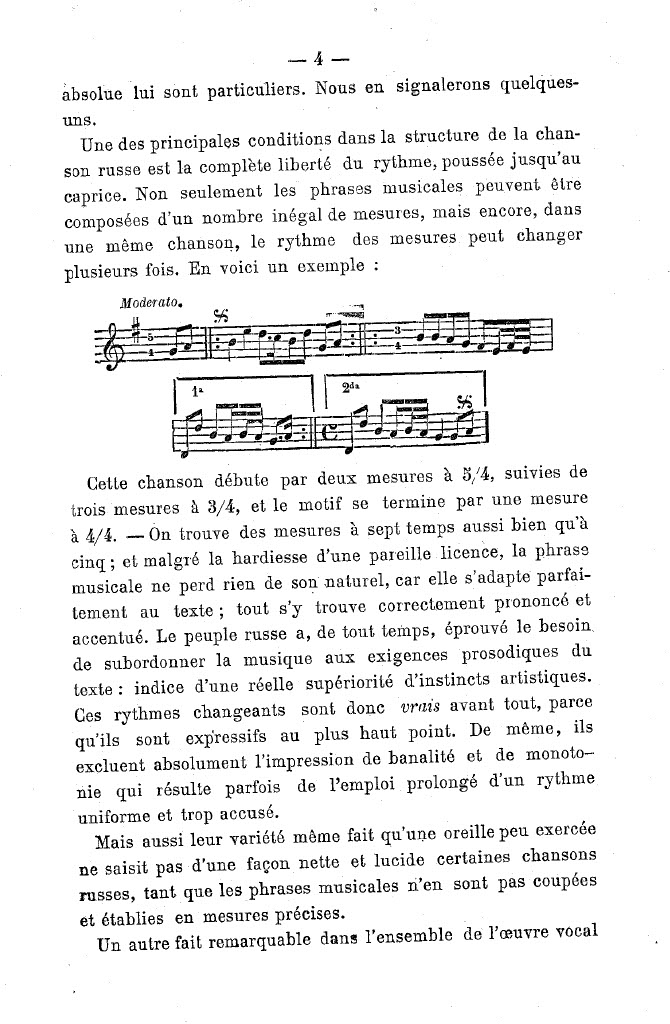
La musique en Russie (1880), César Cui's French-language manifesto promoting Russian nationalist music to Western European audiences.

Here is the deepest paradox: Cui spent decades championing Russian nationalist music, yet his own compositions never embodied the aesthetic he preached. His colleagues knew it. Rimsky-Korsakov later recalled that Balakirev thought Cui “understood nothing in orchestration.” The critic who judged everyone was himself found wanting.

Listen to Cui’s Impromptu in A-flat minor from his Suite for Piano, Op. 21: polished, Chopinesque, pleasant. This is the music of the man who sent Rachmaninoff to Hell. Now listen to Rachmaninoff’s Prélude in G-sharp minor, Op. 32 No. 12, composed thirteen years later: restless, shadowed, intense, unmistakably his own. The contrast speaks for itself.

Cui’s case makes the underlying rule visible: when composers write criticism, they put their own music on trial.

Coda

What sets the composer-critic apart? Skin in the game. We can verify their judgments against their own music; we know their biases because we hear them. This transparency comes at a cost. Criticism is not harmless; words circulate, stick, and wound. They silence composers; they haunt reputations long after the music has proved them wrong.

As for César Cui: still an abominable man. His music, as I heard it said so often, is not bad.

Further Reading

Nicolas Slonimsky, Lexicon of Musical Invective (W.W. Norton)

Robert Schumann, On Music and Musicians

Claude Debussy, Monsieur Croche and Other Writings

Hector Berlioz, Memoirs (trans. David Cairns)

Written by Maria Matalaev

Writer

Macha Matalaev was born in Paris into a distinguished family of Russian musicians: her grandfathers were Valentin Berlinsky, founder and cellist of the legendary Borodin Quartet for 64 years, and renowned conductor Lev Matalaev. Her father, Anton Matalaev, founded the Anton Quartet, and her mother is pianist Ludmila Berlinskaïa.

She began her career as a pianist, studying at the CRR de Paris and the École Normale de Musique A. Cortot. After completing a degree in Applied Modern Literature at the Sorbonne, she worked in art history before returning to music as a producer, later earning a…

View author's page