
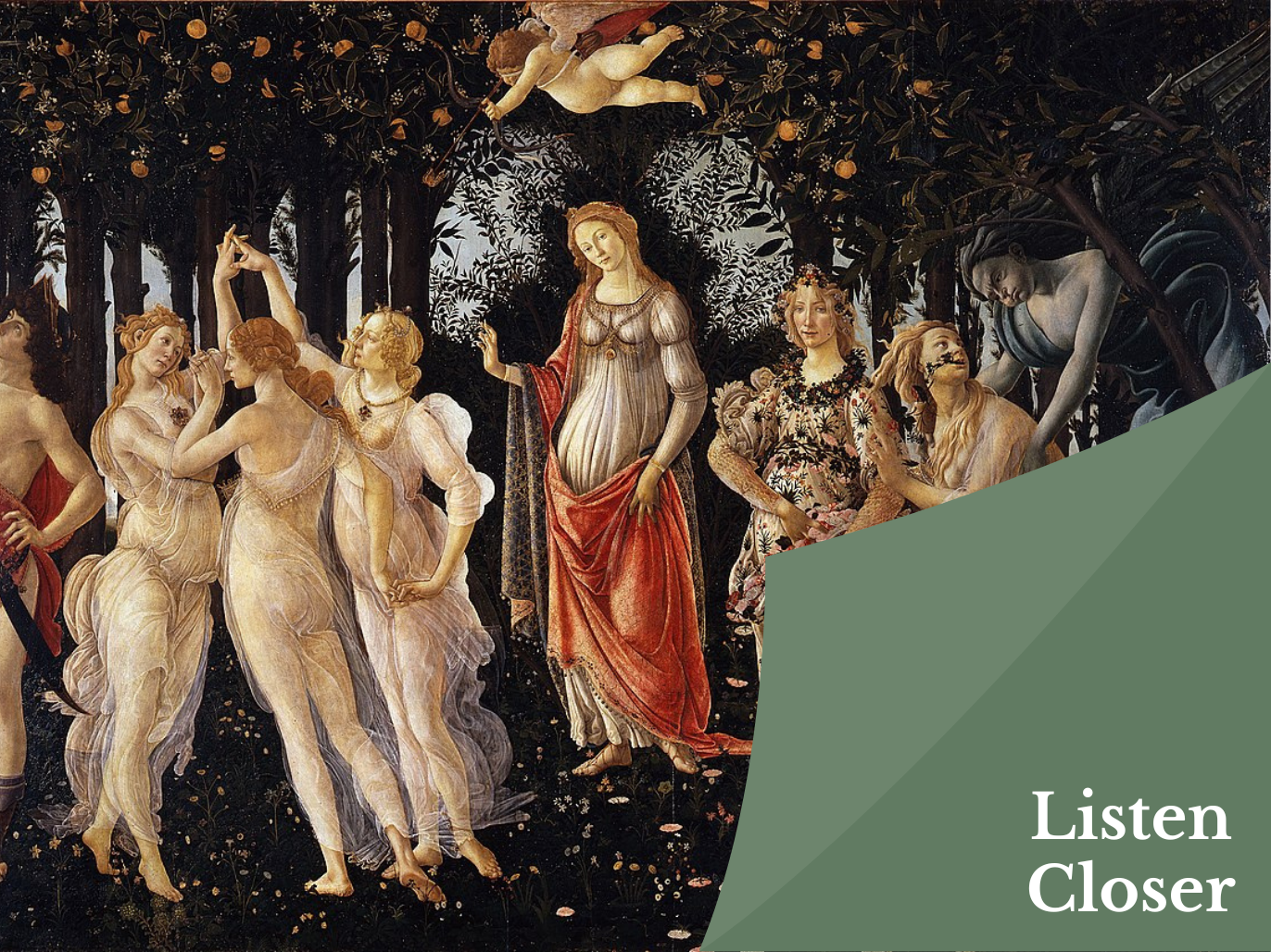
Listen Closer: Vivaldi’s Four Seasons

On the first day of spring, we return to Vivaldi’s Four Seasons, one of classical music’s most joyful tributes to nature. The small creatures that inhabit “Spring”—some more realistically depicted than others—bring this familiar score to life. Beneath its melodies lies a lively world of birds, animals, and pastoral scenes, just waiting to be heard anew.

View author's page

By Alix Haywood

Reading time estimated : 5 min

With its vivid depiction of Mother Nature, Vivaldi’s Four Seasons needs little introduction. The set of four concertos—one for each season—constitute a veritable ode to nature and Vivaldi’s electric musical depiction of a sudden spring thunderstorm or the almost oppressive repetition that he uses to evoke the heat of high summer are firmly entrenched in the pop culture canon. But Vivaldi’s attention to detail in this piece runs deep. His musical representations of Mother Nature cohabitate with passages portraying creatures big and small: from the very human sound of chattering teeth to the very Disney-princess experience of having a flock of singing birds circle merrily above one’s head, the Four Seasons absolutely brimming with life.

But first, if you’re wondering how can we even pretend to have so much detail about what Vivaldi was depicting, it’s because we have more than just the music to go on.

Each of the four concertos is accompanied by a sonnet describing the atmosphere of the season. More than just general inspiration, fragments of the sonnet are interwoven directly into the score, giving us concrete insight into how Vivaldi imagined his music brought to life the poem’s vivid imagery. Let’s look at the sonnet paired with the first movement, Spring:

Springtime is upon us.
The birds celebrate her return with festive song,
and murmuring streams are softly caressed by the breezes.
Thunderstorms, those heralds of Spring, roar,

casting their dark mantle over heaven,
Then they die away to silence, and the birds take up

their charming songs once more.

On the flower-strewn meadow, with leafy branches rustling overhead,
the goat-herd sleeps, his faithful dog beside him.

Led by the festive sound of rustic bagpipes, nymphs and
shepherds lightly dance beneath the brilliant canopy of spring.

Scholars are unsure of whether the music or the poetry came first, or even who penned the four sonnets. Some believe it may have been Vivaldi himself, given how neatly the three-part structure of each sonnet lines up with the traditional three-movement form of the concerto. The great care he took to align specific musical moments and voices with poetic phrases might suggest that as well. Whoever the author may have been, it’s clear that the Four Seasons follows a specific narrative, making it one of the earliest examples of what we call program music—a genre that wouldn’t hit its stride for another two centuries!

Now let’s get into some of the detail and look at two of the animals Vivaldi gives voice to.

While it’s the thunderstorm that most people remember about the first movement of “Spring,” it’s actually more of an obstacle than protagonist in the sonnet. Birds are given pride of place as they celebrate the season’s arrival, get interrupted by the storm, and then pick their festive rejoicing back up again. We don’t have to wait long for Vivaldi’s first musical depiction of the flock; less than two minutes in, they arrive in a musical flurry of trills, rapid bits of melody, and chirp-like repeated notes chiming in from across the ensemble in vivid surround-sound. Let’s listen:

Sounds almost like we’re under a canopy of trees with birds flitting about above our heads, right? A moment fit for Snow White!

And then we get to the second movement and the infamous “barking dogs.” According to the sonnet, this section of the concerto is meant to depict a shepherd napping in an idyllic meadow, his faithful dog at his side. In the score, Vivaldi provided even more detail, assigning the role of the sleeping shepherd (“Il Caprar che dorme“) to the solo violin and the “barking dog” to the viola (“Il Cane che grida“). Listen for both in the excerpt below:

Pretty tame for a barking dog, no? Maybe he’s barking in his dream? The question of how to take on this role has plagued violists around the world. As Nicola Benedetti reminded in a master class hosted by our friends at Classic FM, you need to embrace the idea of not sounding pretty (which misses the point!) and “try to become something else.” Sound advice for the Four Seasons generally, we think.

So next time you listen to the Four Seasons, pay attention to the menagerie of creatures living in Vivaldi’s musical world. You’ve met the birds of spring and the shepherd’s dog, but there are more to discover—buzzing gnats, the sweet song of the turtle dove, and countless other lively details brought to life by musicians who bring imagination and character to every note.

Written by Alix Haywood

Chief Content Officer at medici.tv

View author's page