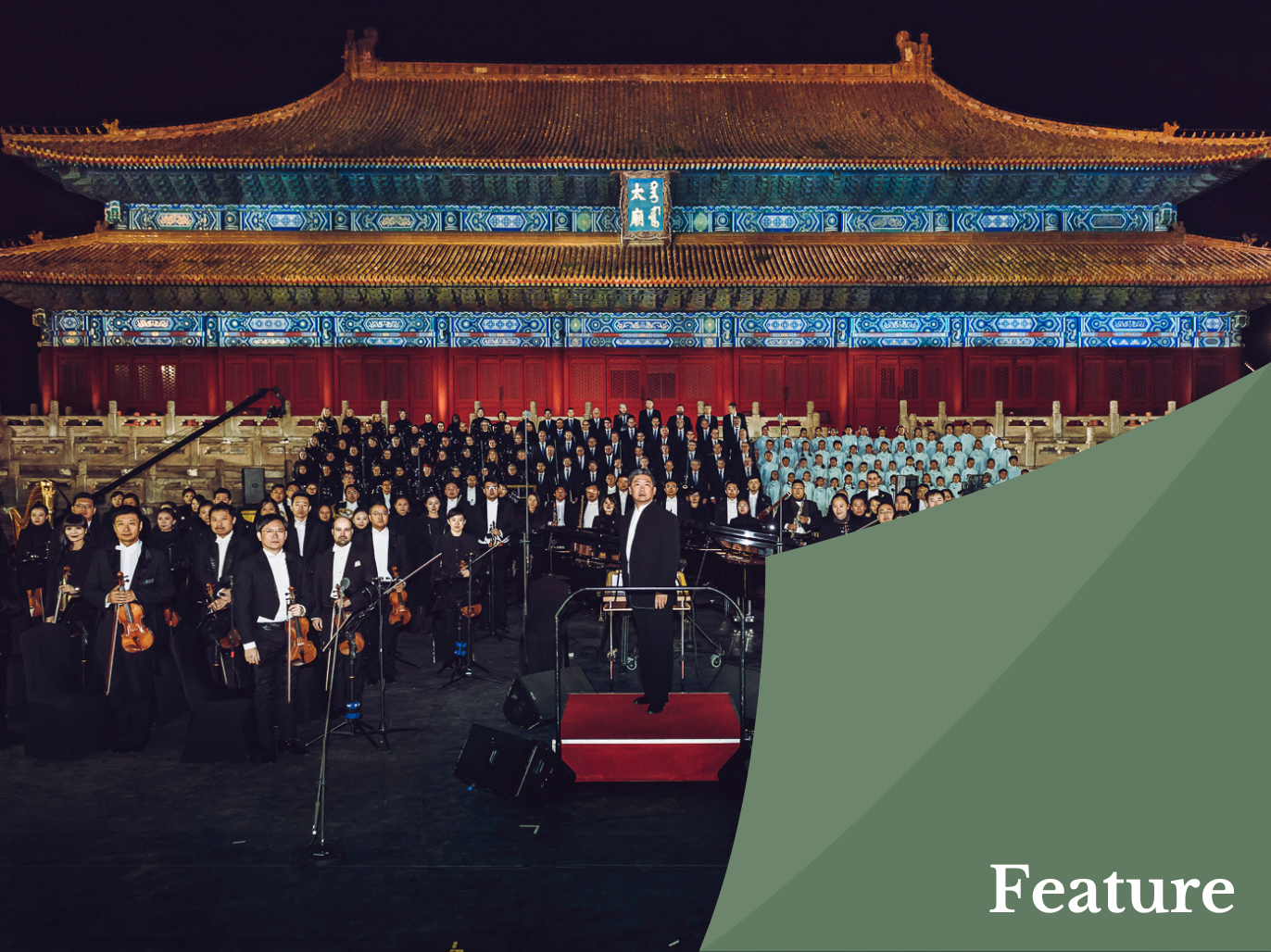
New Energies from Deep Roots
On the eve of the Covid-19 pandemic, there were significantly more than 80 fully professional symphony orchestras in China – the vast majority established since the end of the suppression of Western classical music during the Cultural Revolution (1966-1976). Classical music is seen as a ‘new’ phenomenon in China – from the inside and the outside.
But that’s not the whole story. The Shanghai Symphony Orchestra, one of the leading orchestras in the country, was established in 1879 – making it older than the majority of its counterparts in Europe and America. Before the cultural revolution (during which it still played, though generally not music from outside China) the SSO’s diet was similar to most European ensembles while it was often led by leading European musicians. Music from France (the nation of its founding Music Director, Jean Rémusat) and Russia (with which China shares a 4200km land border) were at the heart of its repertoire.
Plenty would see that as a hangover of aggressive colonialism, and rightly so. The SSO’s interest in French music also stemmed from the French control of parts of the city – notably the area still known as the French Concession in which the SSO’s sleek modern concert hall now resides. But in truth, nobody ‘owns’ such music and anyone, surely, should be allowed to play and enjoy it – whatever the roots of their taste.
The manner in which China is currently organized, and the authoritarianism of its current regime, are no less controversial than the country’s colonial history. But the country’s curious blend of Marxism and Capitalism has clearly shaped its emerging prowess in classical music, just as it has stoked manufacturing and business. Across business and the arts, success in China has been fueled by the much-practiced Chinese tendency to cherry-pick the best of what it sees other countries doing abroad and imitate them with tremendous effectiveness.
One example is teaching. China was once known for employing a Soviet-style music education system in which teachers had overbearing control over their pupils. It has made considerable efforts to change that in recent years – readying its graduates more for the realities and opportunities of the contemporary global classical music scene.
Meanwhile, orchestral academies like that run by the SSO have addressed the problem of highly competent instrumentalists emerging from conservatories with a soloistic playing style and no interest or experience of playing with orchestras. The SSO’s academy is based on what its management sees as a combination of the best of European and America models.