
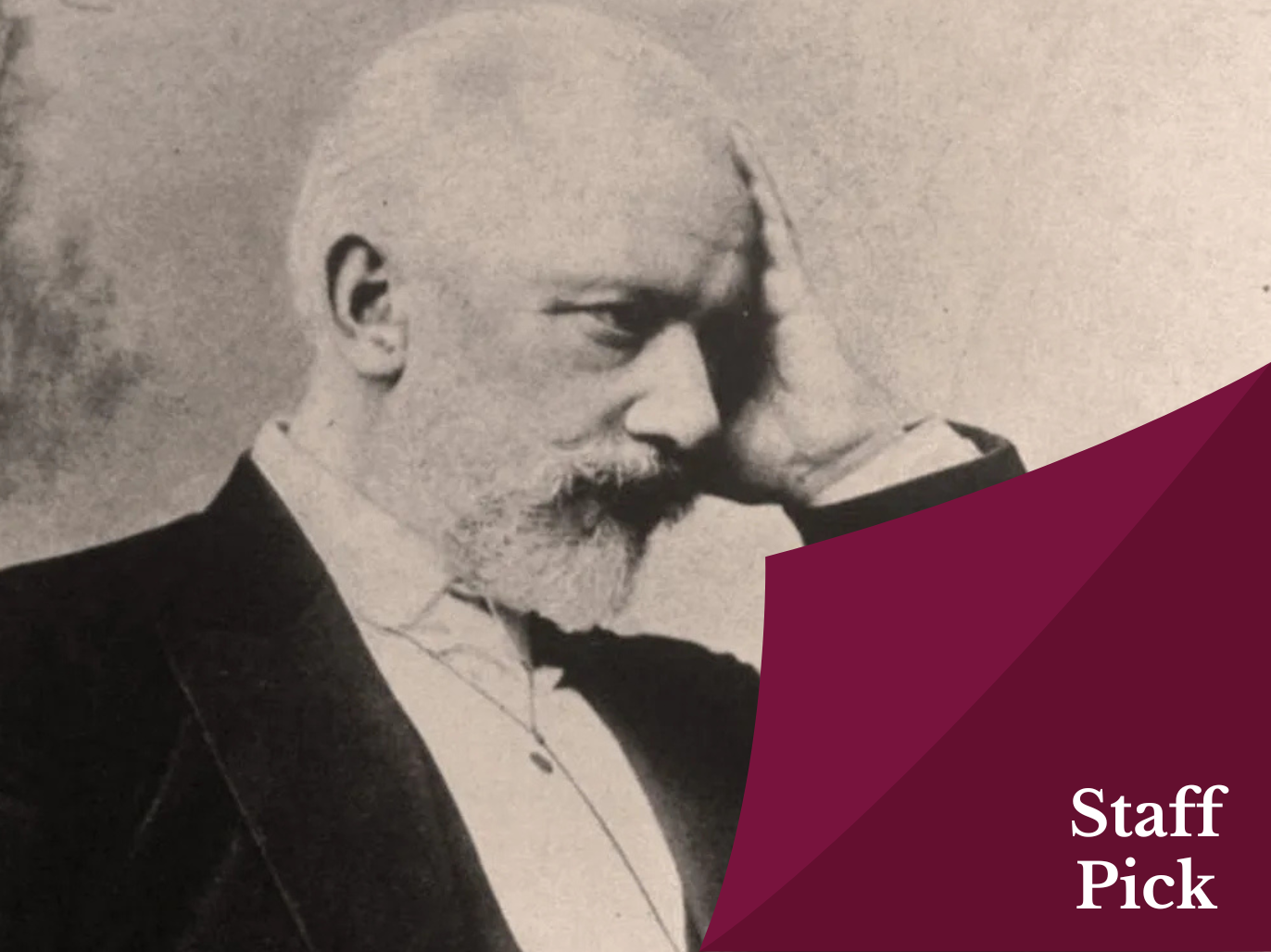
The evocative power of music elicits a wide spectrum of emotions, shaped by our personal sensibilities and experiences. Tchaikovsky’s music moves me deeply, particularly his Symphony No. 6 “Pathétique.” My passion for classical music comes largely from my father, who was a great admirer of the “Pathétique” and played it to us regularly when I was a child. According to him, the beginning of the first movement never failed to draw me into the living room, where I would listen religiously—truly spellbound—to the music emerging from the speakers. When I rediscovered the symphony a few years later on a rainy afternoon during lockdown, I was stunned by its emotional power once more. I listened to it over and over again, driven by a growing need to articulate the feelings it evoked in me. In order to understand what makes this work so captivating, I shall examine it here through a historical, theoretical, and emotional lens, basing my musical analysis on my feelings and impressions.
View author's page
Reading time estimated : 6 min
Firstly, the “Pathétique” is virtually inseparable from the mythology that surrounds it. By mythology, I mean the story of its creation. I use this term because, although the story is based on real events, it remains an interpretation: a possible idealization of the composer’s life.
In 1893, Tchaikovsky began composing his final symphony. He described it as autobiographical, but also as one of the most personal and important works of his career. Although he spoke of it so openly, he was careful to keep some of its mysteries hidden. Its subtitle, “Pathétique”—from the Greek pathos, evoking emotion—already steers our perception of the music toward its intrinsically sensitive nature. But there has been much speculation about the autobiographical nature of this symphony. The most widespread hypothesis is that it represents an emotional journey by its composer, a musical setting of his memories and torments.
Dedicated to his nephew Vladimir Davydov, who may also have been his lover, it has been suggested that the primary emotional tension of his work may be rooted in the composer’s homosexuality, which, in Tsarist Russia, was compelled into silence by the severe dangers attached to such an identity. To express this inner world, Tchaikovsky weaves together contrasting emotional threads. At the opening of the first movement, a mysterious, plaintive theme in B minor emerges from silence, its low tones barely audible. Introduced by the bassoons and supported by cellos and double basses, the theme gradually passes to the strings as the intensity swells.
This is followed by a lighter second theme, which seems to evoke happier moments. Just as we finally allow ourselves to be lulled by the extreme pianissimos (pianissississimos, to be exact) of the clarinet and then the bassoon, a sudden fortissimo bursts forth. The storm arrives unannounced, erupting without warning. Hearts pounding, we are transported by this sudden, violent mass of sound—an almost terrifying rage. This whirlwind of emotion only subsides with a calmer reprise of one of the main themes. The movement concludes with a lament, marked by short eighth notes, leaving a lingering sense that, though the storm has passed, sorrow is never far away.
After this emotionally trying movement, the second movement Allegro con grazia promises to be more serene. In the irregular five-beat waltz that begins the first section, the cellos, followed by the flutes, play a nostalgic and luminous theme, offering a moment of relief. And yet… Announced by a steady, almost mournful percussion pedal, a theme of profound heartbreak shatters the hard-earned calm. The legatos are accompanied by crescendo and diminuendo effects, which create a feeling of swelling: a sharp and repressed pain that is trying to escape. The theme is played once, then repeated a second time in the pianissimo that increases the effect tenfold. For me, this second section taints the return of the waltz with a certain melancholy, since we now know that happy memories also bring their share of disillusionment.
Lively, bursting with energy yet deeply structured and rigorous, the third movement contrasts sharply with the rest of the work and gives us hope for a happy ending. This is what makes the symphony so unsettling. It’s conventional for such a movement to be at the end, not in the middle, and the triumph that concludes it sometimes unsettles an uninformed audience, who applaud thinking that the hero of the symphony has finally prevailed. Their hopes are dashed at the beginning of the fourth movement, which makes it clear that there is no happy ending.
For many, this final movement is the most captivating. The opening plaintive phrase is not concealed among brighter passages; it emerges without warning. We can no longer avert our gaze: this work is imbued with a profound sense of grief. The multiple iterations of harmonic friction increase the tension, and Tchaikovsky ends his symphony with infinite gentleness, but also immense despair. The music slowly fades in the orchestra’s lowest registers, following a descending harmonic path that vanishes into silence.
When the composer first presented his final work, it didn’t immediately win over the audience who was unsettled by its unconventional form and sinister finale. It was only after his mysterious death two days later—some say from cholera, others suicide—that the composer’s tragic story became inextricably bound to the work, inviting it to be viewed in a new light—as a possible testament. This powerful suggestive force and the mythology surrounding it allowed the work to live on beyond the music itself. In works written after its premiere, it emerged as a powerful symbolic marker. What ultimately made the symphony resonate so powerfully with me was watching Maurice (James Ivory, 1987). In the film and eponymous novel by the gay writer E.M. Forster, the second movement of the “Pathétique” accompanies the exploration of the protagonists’ desires, then socially and legally prohibited, and powerfully echo the composer’s life.
While discussing the composition, I realized I wasn’t alone in being deeply moved by this symphony. The “Pathétique” places us in the composer’s shoes: its emotional drama draws us into feelings that resist any predefined progression, colliding and overlapping instead. Perhaps some people are indifferent to such a direct and grandiloquent expression of pathos. For me, the “Pathétique” is an unforgettable and unparalleled work, a poignant journey in the emotional life of a man that resonates through the years.
