
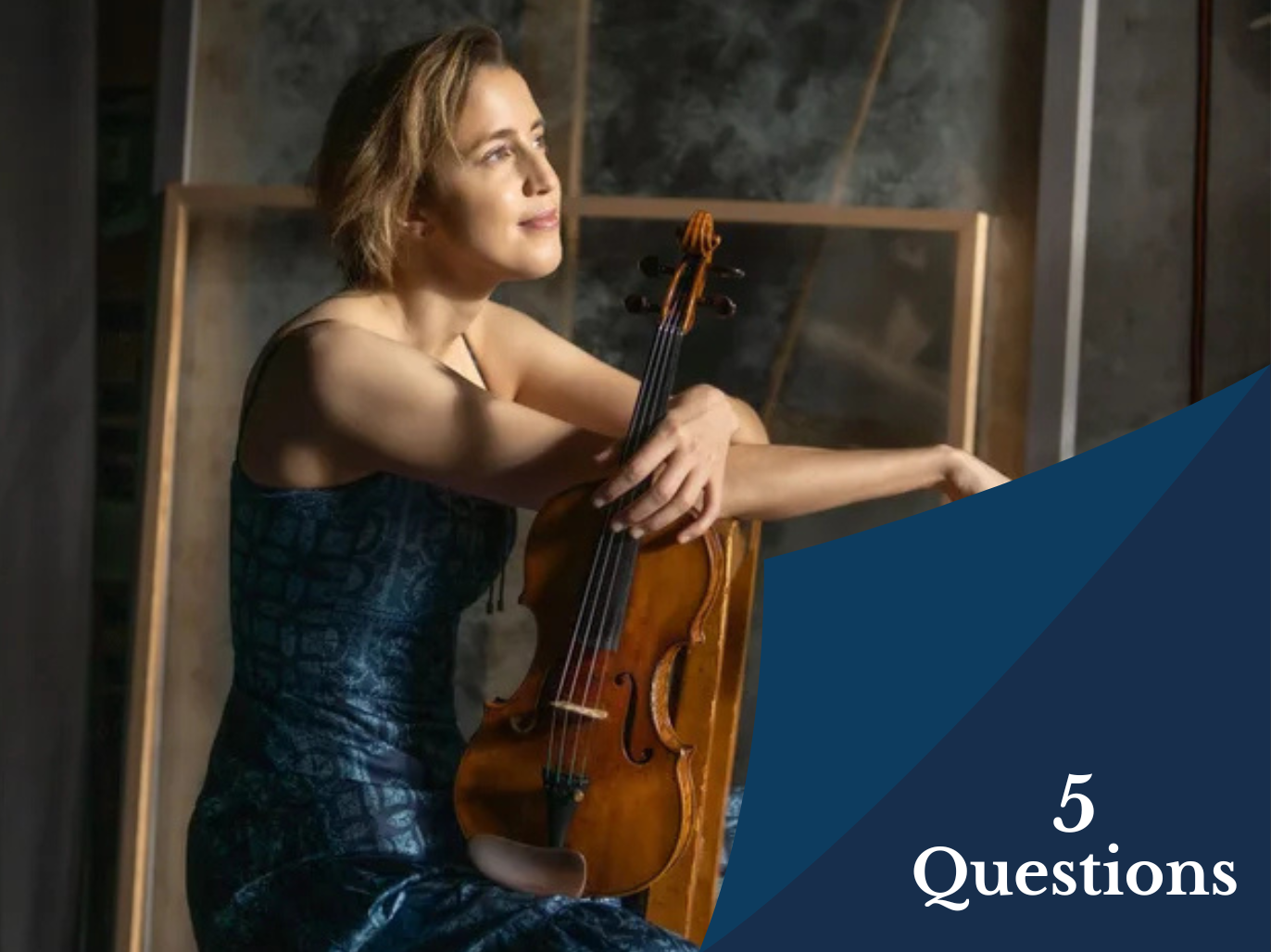
Vilde Frang: "Playing Korngold Feels Like Singing Beyond the Limits"

Norwegian violinist Vilde Frang opens up about the soaring, limitless world of Korngold’s Violin Concerto, the art of daring on stage, and why a day in the mountains beats a day on the phone.

View author's page

By Editorial Team

Reading time estimated : 4 min

What first drew you to the Korngold Concerto?

Probably the soundscapes of the music, and this endless quality of playing with complete abandon. It just abandons even the top of the fingerboard — it soars higher and higher and higher. There is something truly limitless about it.

When I discovered it, I had no idea a violin concerto like that even existed — one that extends the limits of the instrument in such a way. The violin is already such a light, coloratura instrument in itself, but with Korngold, you somehow go beyond all borders when you play it.

It’s quite an experience, because you feel like you are truly singing it rather than playing it. You need to let out all your expressive qualities to the maximum — and even beyond what you feel capable of expressing. Doing it twice a day is, I have to say, a little exhausting.

What did you need most from the orchestra in this piece?

To be honest, the London Symphony Orchestra has everything that is needed. What one truly requires is a conductor who understands the freedom of the score, the abundance of it, and the spirit of abandonment in the phrasing. The great thing about playing with Sir Antonio Pappano is that you can sense he knows a thing or two about opera, and a thing or two about film music — it is at the very core of his musical knowledge. He has that lushness somehow up his sleeve, and it is wonderful to feel that with an instrument like the LSO behind you. With Pappano, it really is an amazing combination.

What is your favourite kind of risk to take on stage?

To me, it doesn’t matter whether I am more relaxed or more nervous on a given evening — every night is different. What it really comes down to is curiosity. I genuinely wonder: what will happen tonight?

Sometimes it becomes difficult if the previous concert or rehearsal went particularly well, because then you can get trapped in a cycle of questioning — how do I keep on delivering? Will I manage, or will I let people down? You can fall into all kinds of mental traps. Sometimes, caring a little less is actually what you need.

It’s about not letting it feel like a life-or-death situation, but rather an exploratory journey. Because then it doesn’t matter if you play a little too sharp or a little too flat — that’s not what it’s about. And I think that is also what audiences want: to be taken on that journey. But always, always, always dare to do something. You will never regret having tried. Just daring to be curious — that is what matters.

What do you wish you had learned earlier as a musician?

Definitely piano. I would love to have the ability to properly explore scores, because with piano you essentially have a key to the music.

My teacher was a lovely lady, but we spent most of our lessons simply talking — about dinosaurs, about ghost stories. She was wonderful to talk to, but not a great deal of piano actually came out of it. (Laughs.) Perhaps it’s not too late.

What does your ideal day off look like?

It definitely involves fresh air, sunlight, and a long, lovely walk. I did exactly that over Easter, and there is very little that can beat the feeling of coming home after spending the whole day outdoors.

Earlier this year, I also went skiing in the mountains in Norway. The silence there is immense — it is a truly humbling and deeply cleansing experience. Your mind becomes so clear after a day in nature; you suddenly see things with great clarity and creative ideas begin to surface. Whereas if you look at your phone — which we all do far too much — everything somehow becomes blurred.

Written by Editorial Team

medici.tv

View author's page