Sir Antonio Pappano: “Music Is About Storytelling”

Sir Antonio Pappano reflects on the “necessary evil” of dress rehearsals, the electricity of live performance, and what he listens for first when meeting an orchestra: cohesion, flexibility, and reaction.

View author's page

By Editorial Team

Reading time estimated : 3 min

What should listeners listen for first in Imogen Holst’s Persephone?

I think listeners should enjoy the fact that they recognize the colors and the musical gestures from composers like Ravel. But they should also be surprised at the strength and darkness of this piece.

What do you listen for first when you start working with an orchestra?

Orchestras play together differently. Some orchestras are absolutely a unit and they move together and they go together. And of course, that’s a very positive thing for a conductor because there’s less work for him. But of course, if that leads to a certain inflexibility, then it’s, I would say, not such a positive.

The idea is that whatever cohesion an orchestra brings, it must be infinitely flexible to the needs of the music. I don’t even say to the needs of the conductor. It’s more, you know, different types of music need different types of reaction. And I think that that’s important.

That’s what I’m looking for, is to see how an orchestra reacts to the twists and turns because music is about storytelling somehow and every good story has twists and turns. And so that’s very, very important.

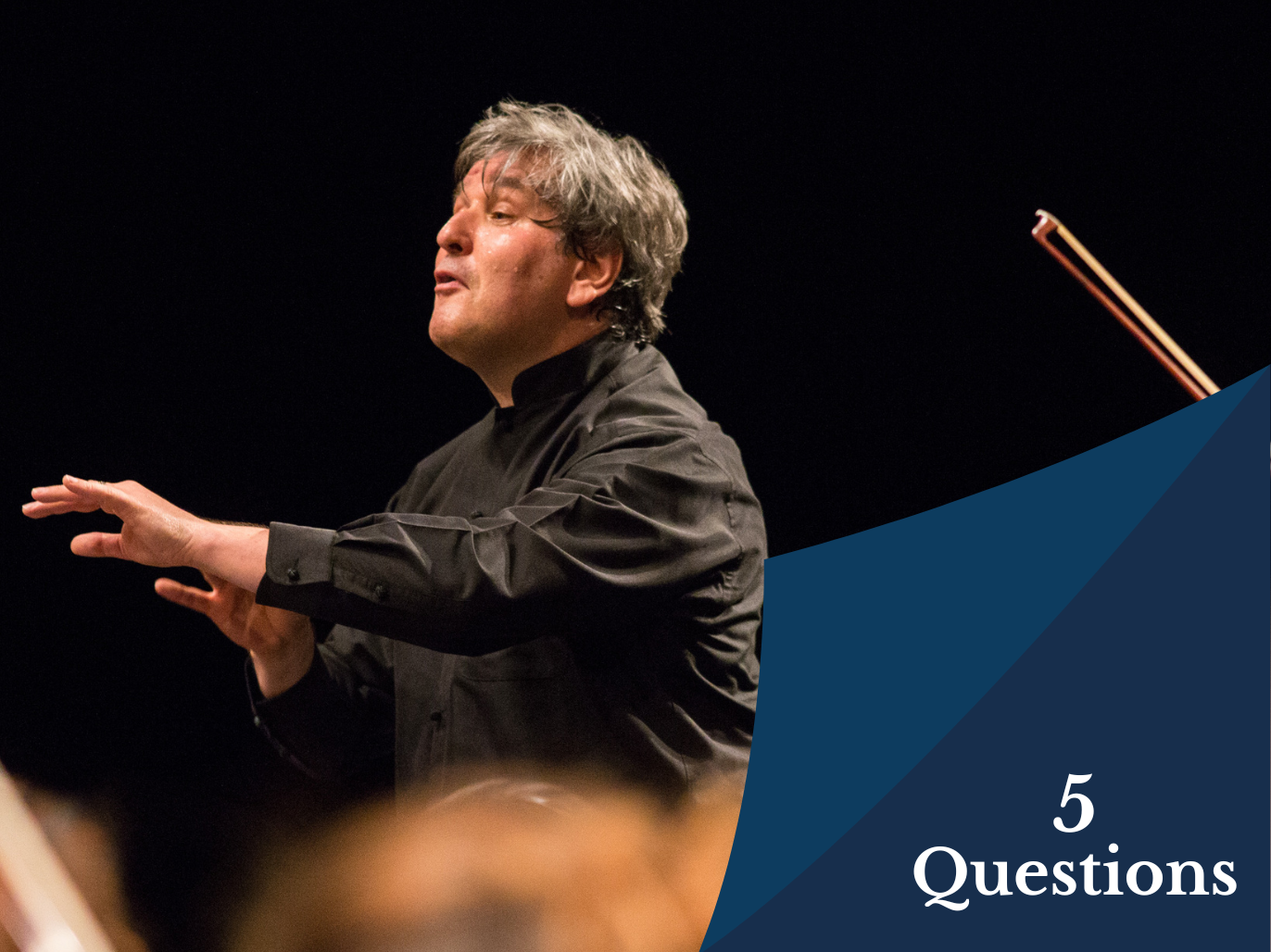
What does the London Symphony Orchestra do uniquely well in Shostakovich?

The London Symphony Orchestra has enormous power but also mobility. To go fast at a very high volume is very difficult and they can do that wonderfully well. But they also have an enormous sensitivity for the moments where they have to do exactly the opposite. And so I’m very grateful to them for that.

What’s your favorite part of concert day? What’s your least favorite part?

My least favorite part of concert day is rehearsing. And it’s a necessary evil, shall we say. You have what we call the dress rehearsal. And in our case, it’s really a dress rehearsal because we were in our concert gear. So that’s not a lot of fun because it feels like you have to do the concert twice in a way.

But my favorite is to discover what in public changes from what you rehearse. Just because of the nature of the moment and how every musician in the orchestra reacts and changes because all of a sudden it’s for real.

What’s the most underrated skill in a conductor?

All people are different and I think conductors need to have a great instinct for psychology and for the psychology of the group and the psychology of the individual, which can be wildly different, of course.

And you have to sense things. You have to sense when enough is enough in terms of maybe rehearsing or focusing on one detail. But you must also have the knowledge or the sensitivity to know when you have to challenge your musicians.

So there are many sides, but I think psychological insight is crucial—and most conductors have this, have to.

Written by Editorial Team

medici.tv

View author's page