
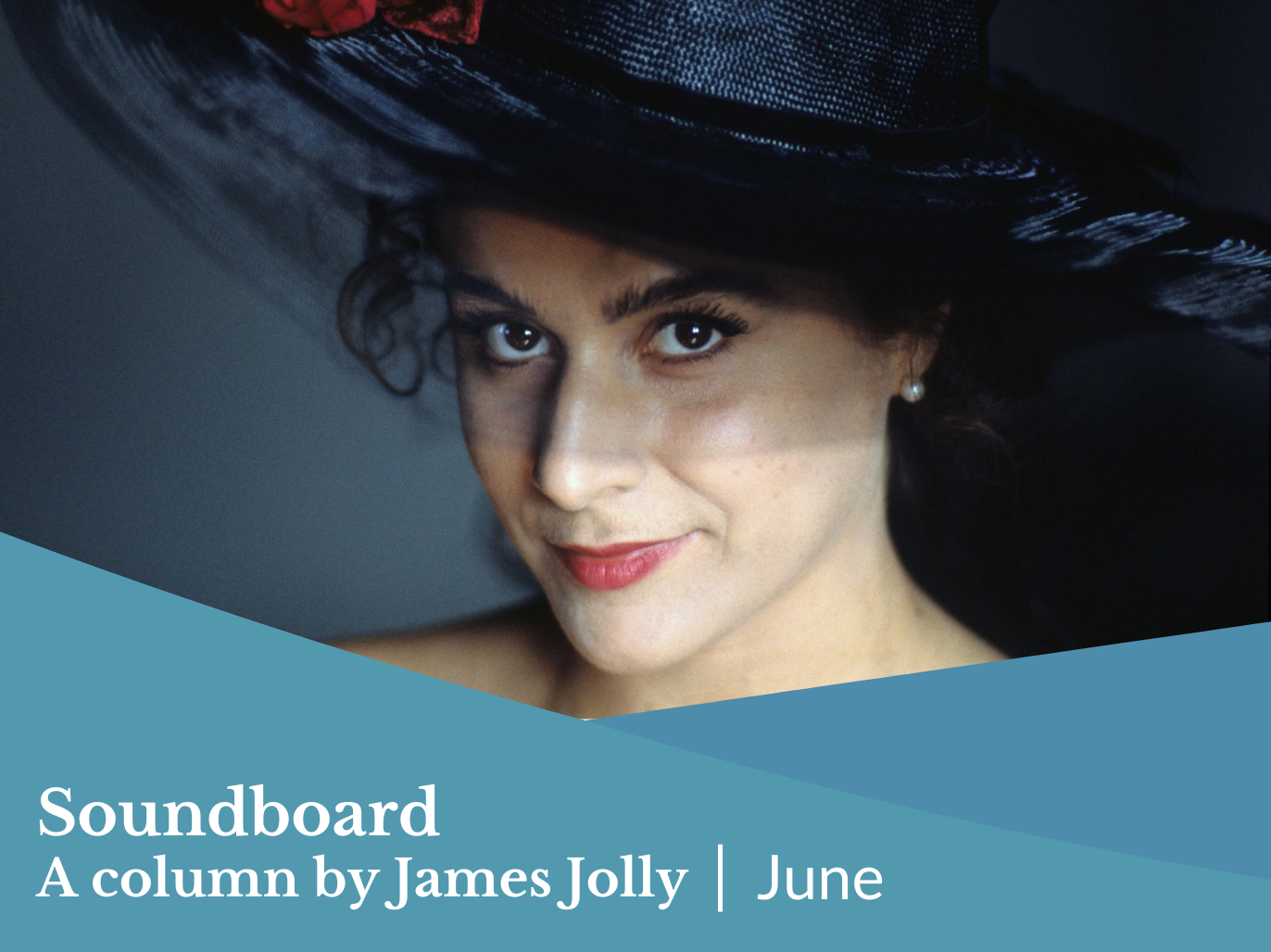
Un Moto di Gioia: Cecilia Bartoli at 60

Cecilia Bartoli at 60: A celebration of a career built on curiosity and transformation. James Jolly explores how this mezzo-soprano sensation became both a global star and a musical archaeologist, constantly pushing the boundaries of classical music.

View author's page

By James Jolly

Reading time estimated : 7 min

The mezzo-soprano Cecilia Bartoli remains one of classical music’s most singular phenomena: a singer who has somehow managed to be both a global star and a fearless musical archaeologist. In an era when operatic celebrity can so easily become a matter of branding, Bartoli’s fame has always rested on something rarer: curiosity. Her career has been less a procession of standard triumphs than an unfolding act of discovery, each new project asking audiences to hear familiar repertoire differently – or to hear forgotten music as though it had just been written.

For committed listeners who have followed her through her live performances, recordings, streamed concerts and the treasure-house of performances on medici.tv, this milestone birthday is a moment to celebrate not simply longevity, but transformation. Few singers have so fundamentally altered what we expect from the modern mezzo-soprano.

Born in Rome on 4 June 1966 into a musical family  – both parents were professional singers and her first teachers  – Bartoli seemed destined for the operatic world. Yet nothing about her rise was conventional. Her voice, from the beginning, defied easy categorisation: dark-grained yet agile, capable of astonishing velocity but always anchored by textual precision. Early champions like Daniel Barenboim immediately recognised not just technical brilliance but a distinctive musical intelligence. (I remember travelling to Berlin in November 1989 for recording sessions of Mozart’s Così fan tutte, conducted by Barenboim, the week the Berlin Wall came down – which caused quite a diversion – and taking note of the Dorabella who sang with such character and palpable joy.)

The first great flowering of her career came through Mozart and Rossini. Her Cherubino (Le nozze di Figaro) was no mere trouser-role charmer but a psychologically alert adolescent; her Dorabella brought unusual warmth and quicksilver wit. On film, these performances still leap from the screen with freshness. Her Mozart was never porcelain-classical. It pulsed with theatrical life.

She signed exclusively to Decca, lured there by the producer Christopher Raeburn who took her under his wing musically, and no doubt provided a grounding to the media attention that she immediately attracted. (I remember interviewing her for Gramophone shortly after her Decca signing and reminded readers that “when Rossini’s Il barbiere di Siviglia was given in London in 1825, nine years after its stormy premiere, the Rosina, the great Maria Malibran, was only 17 years old. Now, over 150 years later, Decca have recorded the opera, not with some diva d’un certain age and an international reputation, but with a vivacious 22-year-old girl from Rome, every inch a Rosina.”) She revitalised Rossini’s music for a generation. Her Rosina, Angelina (La Cenerentola) and Fiorilla (Il turco in Italia) redefined bel canto style for modern audiences (she’d add Isabella in L’italiana in Algeri rather astoundingly nearly 40 years later – to great acclaim – as you can see as it’s available to watch on medici.tv). Bartoli restored to Rossini what too many performances had lost: danger, mischief and rhythmic electricity. The famous final rondo “Non più mesta” (La Cenerentola) became, in her hands, not simply a display vehicle but an eruption of joy and liberation. For many younger listeners, it was Bartoli who made Rossini feel contemporary again.

Yet it was Baroque music that became her true revolution. When Bartoli released the “Vivaldi Album” in 1999, the effect was seismic. To listeners accustomed to Vivaldi as polite concerto background, it was ear-opener. Many people had no idea how much vocal music Vivaldi had written, let alone vocal writing ablaze with drama, virtuosity and emotional extremity. The recording sold extraordinarily well and opened doors for repertory that had languished for centuries. Suddenly Vivaldi opera was not specialist fare but headline material.

This became Bartoli’s defining gift: turning scholarship into theatre. Her ‘Opera Proibita’ project revived the Roman Baroque world of Handel and his contemporaries with intoxicating immediacy. “Sacrificium” explored the vanished castrato tradition not as historical curiosity but as living emotional language. Her championship of composers such as Agostino Steffani and neglected operatic repertory expanded the canon itself. She made audiences trust that if Cecilia Bartoli had unearthed a forgotten score, it was worth hearing.

Streaming has only deepened that legacy. On medici.tv, one can trace her artistic evolution almost like chapters in a novel. The documentary “Cecilia Bartoli and Friends” offers perhaps the warmest portrait: colleagues such as Martha Argerich and Barenboim speak not only of her artistry but of her total musical commitment. It reveals the essential Bartoli paradox: immense discipline paired with almost childlike delight in performance. (And it is that delight that has animated her musical partnerships with musicians like Sir András Schiff, Jean-Yves Thibaudet, Marc Minkowski, Christopher Hogwood, Nikolaus Harnoncourt, Giovanni Antonini, Philippe Jaroussky and myriad others.)

Her Norma was a revelation, stripping Bellini of post-Verdi heaviness to recover something leaner and more classically poised. Her Semele with William Christie glittered with elegance and theatrical intelligence. And her Rossini performances remain reference points for filmed opera  – documents not merely of vocal accomplishment but of stagecraft at its most alive. (The one role that got away, and which Christopher Raeburn had set his sights on recording with her at some stage, was Bizet’s Carmen. One can only dream how it would have sounded, so sadly it will have to remain one of those musical fantasies! Personally, I would also love to hear her sing Luciano Berio’s Folk Songs.)

Even Bartoli’s detractors  – and every major artist of character has them  – tend to concede the uniqueness of her achievement. Some find the timbre unconventional, the stage mannerisms extravagant. Yet even sceptics acknowledge the phenomenal control, stylistic exactitude, and sheer daring of her artistry. Among opera lovers, admiration for her technical command and gratitude for her rediscovery projects remain constants.

That courage has extended beyond singing. As artistic leader of the Salzburg Whitsun Festival and now director of Opéra de Monte-Carlo, Bartoli has shaped institutional culture as boldly as she reshaped the repertory, programming with the same intelligence and appetite for surprise that have marked her performances.

At 60, she stands as something increasingly rare: an artist who has not merely interpreted music but changed the landscape around it. Her greatest achievement may be that she taught audiences how to listen adventurously. Through her, Baroque opera ceased to be museum repertoire. Rossini regained his subversive sparkle. Mozart shed centuries of interpretative varnish. Forgotten composers returned to the stage.

There are singers who perfect tradition, and singers who break it. Cecilia Bartoli has done both at once.

For those of us who have watched her on screens large and small  – from treasured DVDs to late-night medici.tv streams  – the celebration is personal. Her performances have offered exhilaration, astonishment and often the sense of hearing old music become new before our ears. Sixty, for Cecilia Bartoli, feels less like an anniversary than the gentle turning of a page to start a new chapter.

Written by James Jolly

Editor Emeritus of Gramophone

James is Editor Emeritus of Gramophone, having previously been Editor. For 25 years he organised and hosted the Gramophone Classical Music Awards which in 2021 reached an audience of over 300,000 via its live stream. He makes a weekly interview podcast for Gramophone, talking to the leading classical musicians of our day. For many years a regular voice on BBC Radio 3, he has twice presented the Tchaikovsky Competition from Moscow and St Petersburg for medici.tv; in 2019, hosting all the piano rounds and the three gala concerts. He filmed a series of in-depth interviews for medici.tv with 12 of music’s movers and shakers,…

View author's page