
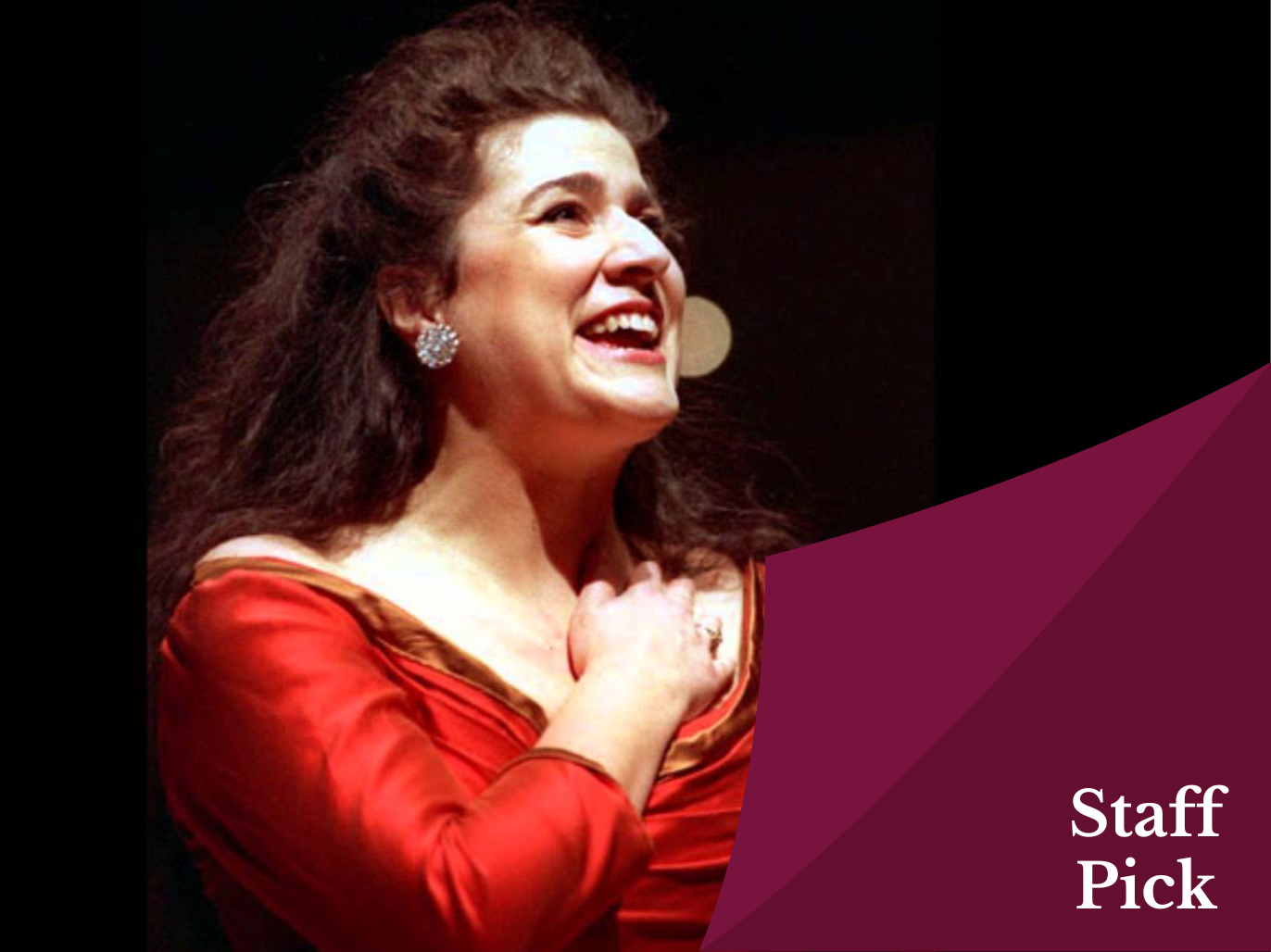
The superhuman castrati underwent the brutal process of castration as children in order to preserve their pure, child voices which then matured in volume and range when their lung capacity and vocal cords developed in adulthood. These legendary singers inspired some of the most virtuosic music ever composed for the human voice. In Sacrificium, Bartoli brings some of these incredible works to life at the Neapolitan Palace of Caserta. Director Olivier Simonnet’s delightful camera work accentuates the beauty of her surroundings: the palace’s luxurious baroque salons, and gardens that seem to be taken straight out of an 18th-century oil painting. Equally exquisite is Bartoli’s wonderfully theatric vocal display, full of trills, dizzying scales, and long notes that challenge the limit of what human lungs are capable of. Italian period instrument ensemble Il Giardino Armonico — conducted by world-renowned Baroque expert Giovanni Antonini — provides an energetic musical accompaniment.
View author's page
Reading time estimated : 4 min
The Da capo aria
Let’s dive into one of my favorite Baroque formats, the da capo aria — da capo meaning “from the beginning” — and explore what makes it so exciting.
In the third section of Giacomelli’s “Sposa, non mi conosci” (excerpt below), Bartoli embellishes one of the main melodies by adding decorative notes and variations on the original — a veritable masterclass in the kind of ornamentation prized by the castrati hundreds of years ago. This creative take on the original melody from the first section is essential to the da capo aria. We hear the first melody in Section A; Section B presents a contrasting melody; and the A’ or da capo section allows for a reprise of the original Section A melody, now ornamented by the singer.
Section A: Original melody
Section B: contrasts with section A (tempo, text, harmonic color) in a chiaroscuro style worthy of Caravaggio
Section A’ or da capo: section A returns, now modified and ornamented by Bartoli, who adds decorative notes, displaying her musical creativity and bringing the melancholic undertones of the original melody to the fore.
Emőke Baráth’s da capo
Let’s look at a second example. At the sumptuous Château de Fontainebleau — in another of Olivier Simonnet’s films — Emőke Baráth sings one of Vivaldi’s most intense and virtuosic da capo arias. Her ornamentation of the opening melody harks back to Judith’s fury in Vivaldi’s Juditha Triumphans (a superb oratorio with all the features of a typical Baroque opera!).
Section A: Original melody
Section A’ or da capo: Emőke Baráth’s own variation on the melody
Lastly, can you identify Sandrine Piau’s variations in the da capo section of Handel’s poignant aria “Se pietà” from Giulio Cesare? Listen to the soprano’s heavenly version in another of Olivier Simonnet’s films at St. Georgen Church during the Bayreuth Baroque Festival 2024. Whether you spot the da capo or not, enjoy Piau’s sublime voice, the last (but not least!) in this selection of some of the most extraordinary female Baroque interpreters of our time!
Section A: Original melody
Can you spot the da capo?
