
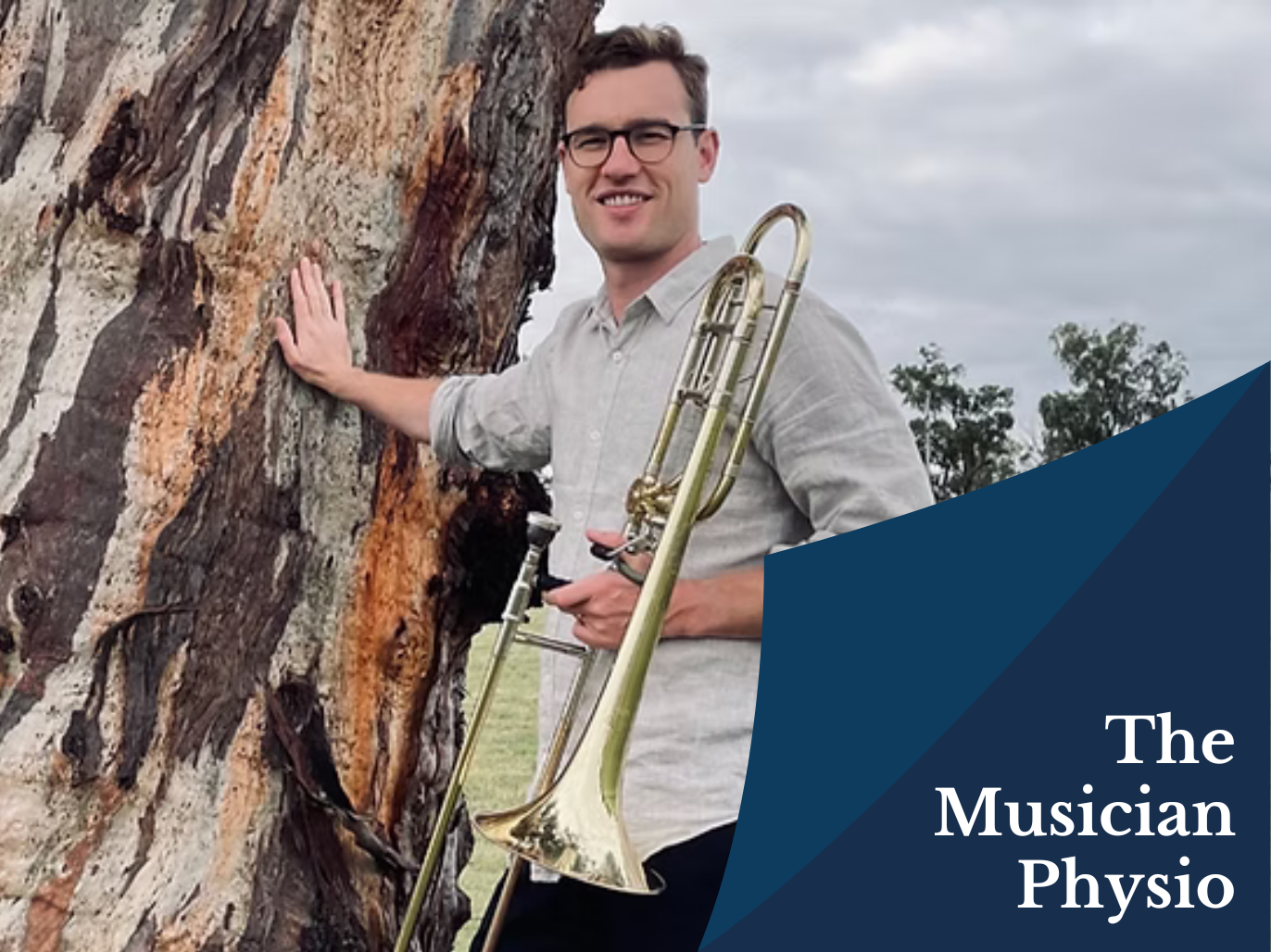
Wagner’s Ring Cycle is widely considered as the pinnacle of operatic achievement. Composed over 26 years, the work consists of four individually performed operas—Das Rheingold, Die Walküre, Siegfried, and Götterdämmerung—and constitutes fifteen hours of performance. In December 2023, a fully staged production of the Ring Cycle came to Brisbane for the first time in the town’s 147-year history. With over 2,000 pages of music, Wagner’s masterpiece presented an immense challenge to performers. “We had 185 musicians, and the whole practice and performance season lasted about three months,” says Michael Ingle, serving as Head Physiotherapist for Opera Australia’s production. “We got through it with only one injury, which we were really happy with, considering the scope of the project. A big reason for this was conducting initial assessments of musicians and following up when any issues weren’t getting better. We ended up providing treatment and giving people rest early on, taking them out of a performance rather than waiting for pain problems to escalate and result in a total standstill.”
View author's page
Reading time estimated : 12 min
Why do musicians need specialized physiotherapy?
Musical performance is a physical activity that requires a specialized skillset. As an orchestral trombonist, Ingle knows the needs and demands of the musical profession. Having studied an undergraduate degree in Physiotherapy at Curtin University, Ingle completed a Master of Music (Classical Performance) at the Sydney Conservatorium of Music and returned to Curtin University to graduate with a Master of Clinical Physiotherapy (Musculoskeletal). Throughout his music career, he has performed at the BBC Proms and played extensively with the West Australian Symphony Orchestra. “Lots of musicians would come up to me and ask questions about their pain problems, wondering how to resolve them,” says Ingle. “Many of them had already been to physios about it, but they hadn’t received the treatment they needed. Given my background, I understand what musicians do on a daily basis and I speak their language. I know what their schedules look like, what it feels like to perform, and why they have to practice so many hours. I also know how this relates to things like muscle tension and anxiety. If you haven’t studied music, it’s likely you might not understand the basic terminology. But you wouldn’t go and be a physio in the Australian Open Tennis without knowing about tennis. This often happens with music. You go to a physio and they know very little about what musicians do and how to converse in that world.”
Ingle’s unique background as a physiotherapist and classical musician led him to open Australia’s only physiotherapy clinic for musicians. The idea first occurred to him when attending a talk with pioneering physiotherapist Bronwen Ackermann during a camp with the Australian Youth Orchestra. “She’s a trailblazer in the physiotherapy world,” he explains. “A violinist herself, she was one of the first people to really recognize that performing artists, in particular musicians, needed specialist help in physiotherapy. At the time, I hadn’t really connected physiotherapy with music—I viewed the two disciplines separately. But Bronwen said that lots of musicians come to see her, and this sparked my initial interest. I wanted to invite musicians to see me with the knowledge that I understand their work.”
Current evidence shows high rates of Playing-Related Musculoskeletal Disorders (PRMDs) among musicians, with lifetime rates reaching up to 93%. Yet these are often managed sub-optimally, resulting in musicians ignoring significant problems and some ending their careers prematurely. Ingle aims to change this. “Physiotherapy evolved out of a sporting context,” he elaborates. “Attempts have been made to transfer knowledge from sports and occupational medicine to music, but these often fail to capture the unique aspects of musical performance. Many musicians—particularly orchestral musicians—report pain in their bodies. Symptoms like tingling, numbness, and pain can be caused by or affect their artistry. Physiotherapy isn’t just for athletes, we have the potential to help musicians just as much.”
Common patterns of injury for musicians
Ingle often detects patterns of pain or injury depending on the type of instrumentalists he is consulting. “It’s the area that carries the most load that is typically where we’re going to see problems,” he explains. “For violinists, it’s usually the left shoulder and the right wrist, so the bow arm. Musicians playing asymmetric instruments, like the trombone or bassoon, often report pain in the arm that’s supporting the weight of the instrument.” The role of posture and playing technique also informs Ingle’s assessment. “Posture’s a bugbear of mine. We traditionally think of good posture as people who are sitting really straight. Sometimes, musicians want to sit like that on stage because it presents well, and that’s fine. However, I’ve seen several musicians who always sit really straight and the straighter we sit, the harder it is on our muscles. They will have muscles that are active even when they don’t need to be. I’m giving people permission to slouch and not sit upright surprisingly often, as the myth is that good posture must always be good for your back.”
How does physical health inform musical sound?
“We look at posture both in terms of physical comfort and its impact on musical sound. For example, someone might feel better sitting slouched, but if they’re a brass player, they need to take big breaths and come out of that position. We’ll teach people to alternate between different postures and go back to the position that feels relaxing on their back, moving into an upright posture when they need to expand their lung capacity. The general advice is that we want people to use the minimal amount of muscle work that is required. This generally produces the best sound as well. With violinists, we often see problems around the left thumb as they often overgrip the neck of the instrument, so reducing that grip and allowing the hand to be free will help.”
Common issues musicians bring to Ingle include neck pain and forearm strain, particularly during demanding performance periods. Ingle works as the Lead Physiotherapist for the Queensland Symphony Orchestra, which balances large-scale symphonic programs with orchestral accompaniment for opera and ballet performances. “During heavy performance weeks, we’ll see what has traditionally been called ‘overuse injuries:’ with symptoms including achy muscles and headaches. Musicians use the term RSI (Repetitive Strain Injury) a lot, but we’ve moved away from this terminology, as it’s okay to practice long hours under two conditions. The first is that you build up gradually. The second is that you have enough recovery time, so that your body can get stronger and build up endurance. We often call ‘overuse injuries’ and RSI ‘lack of recovery’ injuries instead.”
“We try to work out if there’s a more efficient way for someone to hold their instrument or manipulate it, judging by their muscles and what they’re feeling.”
“What’s interesting is that many orchestral musicians will also come to me with injuries that aren’t necessarily related to music: someone might have a sore knee or sore foot that’s stopping them from running. But exercise is the way they cope with performance stress, so I’d say about a third of people I see actually come with more general pain problems.”
Beyond injury management, Ingle provides physical conditioning, performance preparation and recovery, touring support, and guidance for particularly demanding repertoire. “Pain problems tend to spike when people are on tour. A tour disrupts a musician’s routine, with factors like long-haul travel, jet lag, an unfamiliar room, a different time zone and diet. They spend a lot of time sitting down, so their joints and muscles get stiffer. The performance environment itself might be cramped, with intense lighting, and there’s more pressure to perform at your best. All of this floods the body with a fight or flight response, adrenaline and stress hormones kick in, meaning the pain threshold is lowered. If they have someone there to provide some physical treatment, it can get them through a concert. Certain stretches can enable them to keep going. We might run an exercise class or daily walks during the tour just to get people active and moving their body. We sometimes do physio before shows and in the breaks, so we’re providing treatment that helps people carry on, but we’re also looking at prevention and the root cause of pain.”
A physio’s advice for musicians: managing performance anxiety, pain, and fatigue
Every musician knows what performance anxiety feels like. Butterflies in the stomach, sweating, shaking, dry mouth, racing thoughts, racing heart rate. “Everyone who has performed gets it to some extent,” elaborates Ingle. “When we get stage fright, our sympathetic nervous system is activated. Short-term things you can do to help include slowing your breathing and not trying to fight against your own body. Think positively about your feelings and don’t feel threatened by their intensity. It’s helpful to delve into your mindset, with or without professional help. Getting to the root cause of these thoughts can ease the symptoms in the long term.”
“Classical culture can be quite anxiety inducing because it is so focused on perfection and quite rigid ways of interpreting music. I’ve spoken about this with other researchers around the world and we agree that we should move as a community to a place where we’re less obsessed with technical perfection. This is ultimately what makes people anxious. If we don’t permit people to make mistakes, which is only natural, then of course people will feel the pressure. They will judge themselves and have negative self-talk.”
“It’s a wider cultural point within classical music: if we can accept that music doesn’t always have to be played perfectly to convey the emotion and sentiment of the piece, we might find performers a little more relaxed and therefore less prone to injury.”
Pain, recovery, and long-term wellbeing
From Ingle’s experience, many musicians take playing in pain for granted. “There are a lot of myths around pain in our joints and that it’s linked to old age,” he says. “We often see orchestral musicians continuing into their 70s and even 80s, and I’ll see a lot of them who have had pain for a long time. I ask why they hadn’t seen me earlier, and it turns out they just attributed the pain to getting older. While some discomfort in the body is normal, we can provide help if there is a significant issue. Pain is a warning sign and we don’t want musicians to be unduly concerned as it can be a normal human experience, but if the pain is becoming worse and it’s starting to interfere with playing, it needs to be addressed. Musicians often try to ignore it and hope it goes away. Think of pain as a light that comes on in the dashboard in the car—it’s telling you something. It might be that you’re over-practicing or you haven’t had enough recovery time, or you’re practising too many technically difficult pieces in one session. You’ve got to work out what your body is telling you as pain can be a sign of something sinister in the body. That’s what we try to look for as health professionals.”
“If you had a runner and they were a little sore after intense exercise, that would be normal. But if they were limping and decided to go running, you would know that wasn’t going to help at all. The same applies to musicians.”
As a musician, Ingle highlights that it’s important to get good sleep and manage stress healthily. Research shows that if you deprive people of sleep for just a single night, they’re 30-40% more likely to get neck pain. “It’s our nervous system’s way of trying to get us to rest and recover,” Ingle explains. “When a device doesn’t work, you turn it off and on again. That’s what sleep is like for our bodies, and if we don’t get that, our nervous system will let us know very quickly.”
“Being active and having time away from music also helps: being out in nature, structuring your practice smartly, not biting off more than you can chew or performing in too many gigs at once. Make sure you’re disciplined with practice and build up gradually. If you look at what causes people stress in orchestral environments, it’s the quality of their performance and also their relationships with colleagues. Trying to sort out interpersonal difficulties helps manage fatigue. You might have to work with certain colleagues for decades, so learning things like conflict resolution and not taking commentary too personally can keep stress at bay and diminish pain in the body.”
