
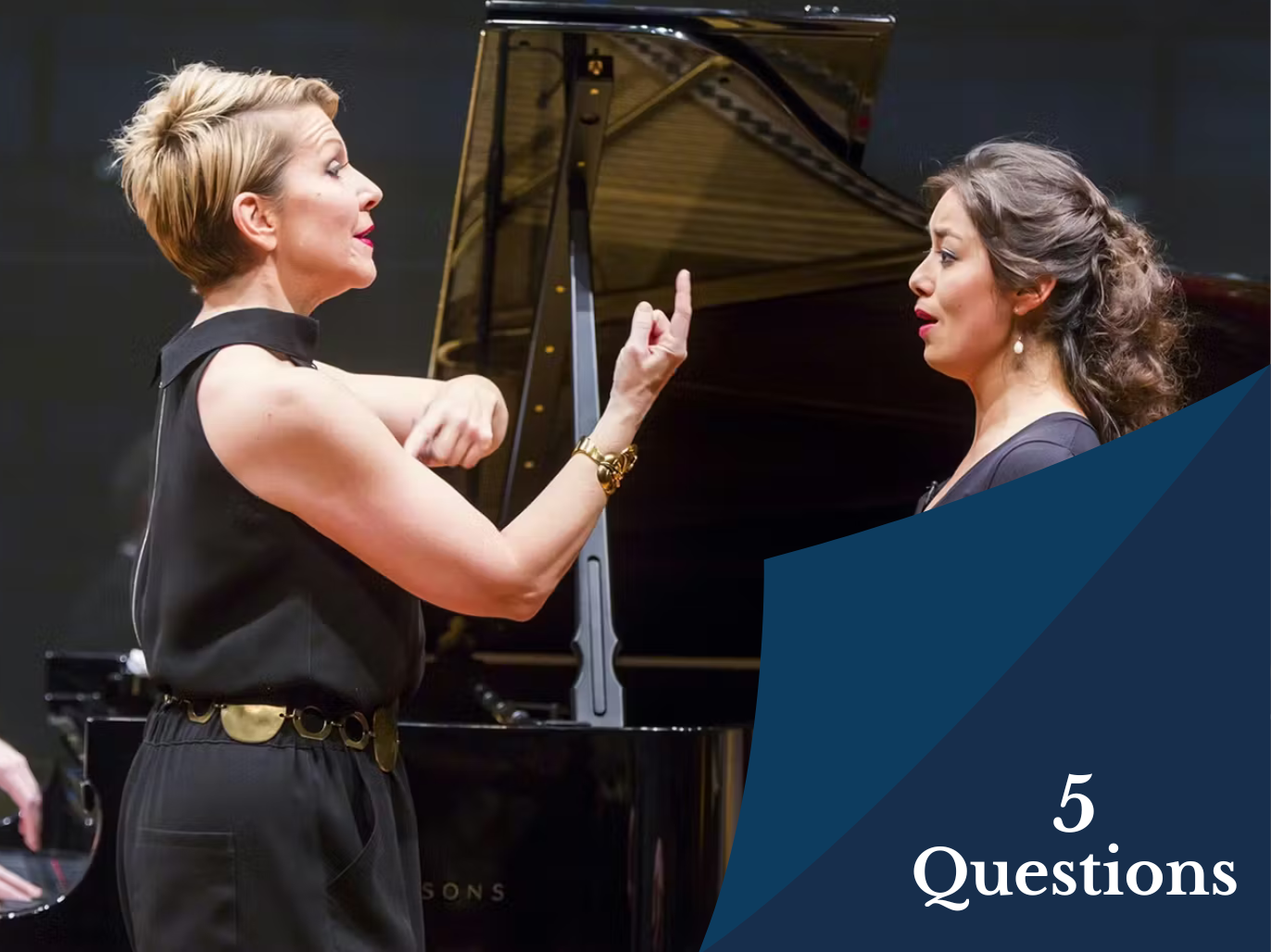
“Saying Something Beyond the Notes”: Joyce DiDonato’s Master Class Secrets

What makes a great vocal master class? Mezzo-soprano Joyce DiDonato reveals her teaching philosophy, how she evaluates singers, and why presence matters more than perfection on stage.

View author's page

By Editorial Team

Reading time estimated : 3 min

In a master class, what are you listening for in the first 10 seconds?

Usually I’m watching how they handle the piano introduction: are they already in character, in the space, connected to the “orchestra”? Then I clock how they take in the very first breath: is it free, is it organic to the music? And then there is the magic of the first moment hearing their voice: is it releasing freely on the breath, and is it saying something beyond the notes on the page. The second 10 seconds will tell me a lot more about their technical abilities, their language skills and their innate theatricality. 

How do you keep feedback direct without crushing confidence?

It’s vital that I provide a safe environment where they can trust me and the experience enough to take risks and to let go. This is why I always prep the audience ahead of time to not expect a “final product” but to come along for the adventure of exploring the process. If they feel safe, and if I have put them at ease by identifying the many things they are doing well, this will often lead to them allowing the work to come in. After all, I remind them, it’s why they signed up! 

What’s the most vulnerable thing about teaching in front of people?

The possibility of not helping or even worse, confusing them to the point where they shut down. 

What’s your advice for singers who compare themselves to the other participants?

To stop it. Although, I do think being extremely objective and discerning where you “stand” compared to your colleagues can be helpful in the early stages. I remember my first National Competition (the MacAllister Awards – I competed with Berta’s aria from Il Barbiere di Siviglia in the collegiate division!) and I sat in every other audition during those 3 days of competition, taking copious notes on every singer I heard. It became very evident to me what I was missing, what I needed most to work on, and – importantly – what I was doing well. That gave me a very specific checklist to work on when I returned to school.

What would you like the singers—and the audience—to carry home as a human lesson, not just a musical one?

The art of presence – of dancing with arriving as prepared to our lives as possible, but in the actual moment to let it all on the line, and simply BE PRESENT with all that you are.

Written by Editorial Team

medici.tv

View author's page