
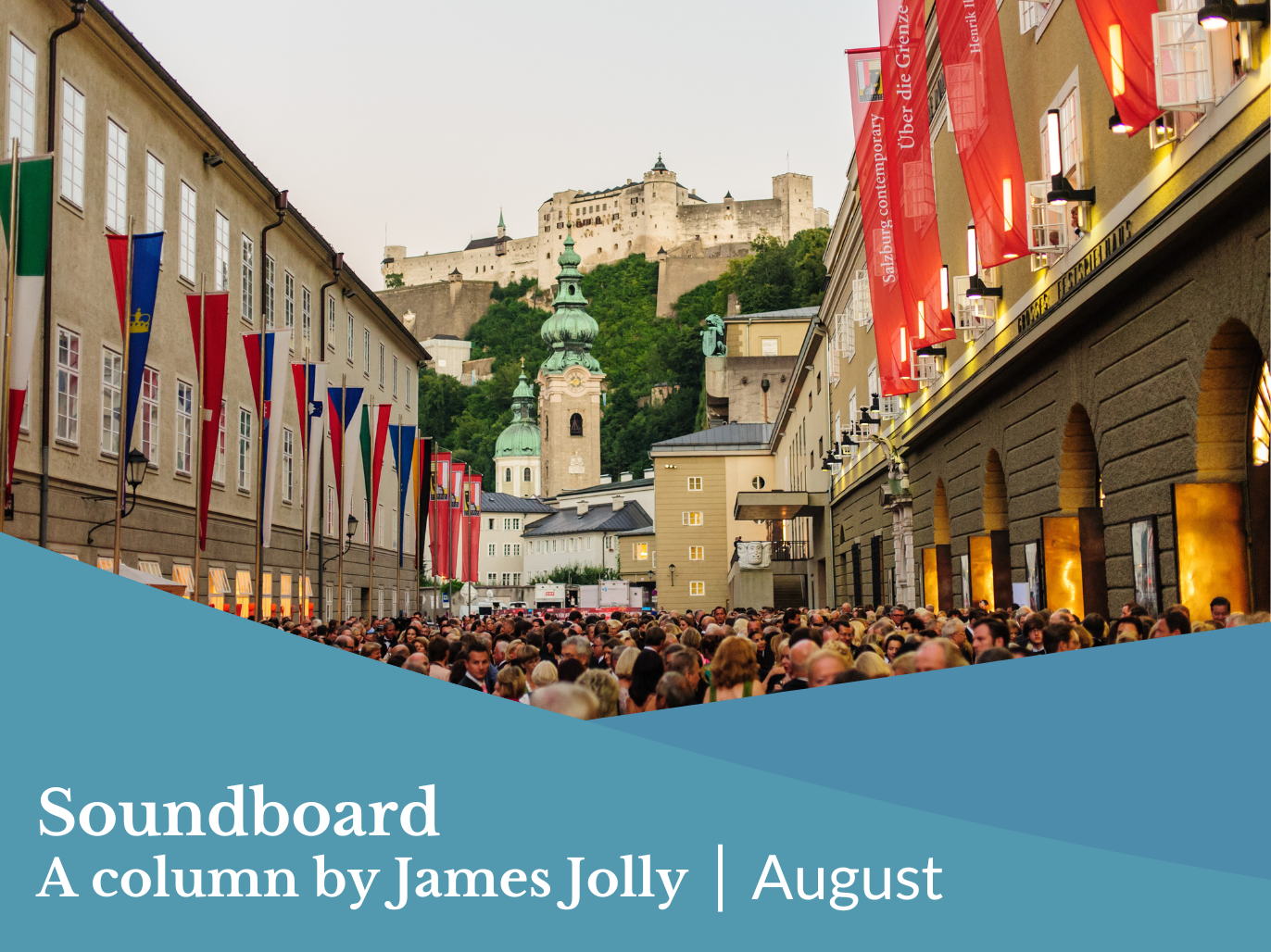
There are many ways to understand the Salzburg Festival. As a celebration of its greatest son, Mozart, naturally. As a showcase for the world’s greatest orchestras and singers. As a laboratory for directors determined to make old operas speak to the present. As one of the great annual gatherings of the international cultural elite. But perhaps the simplest definition is also the most revealing: Salzburg is where the stars come to play.
View author's page
Reading time estimated : 8 min
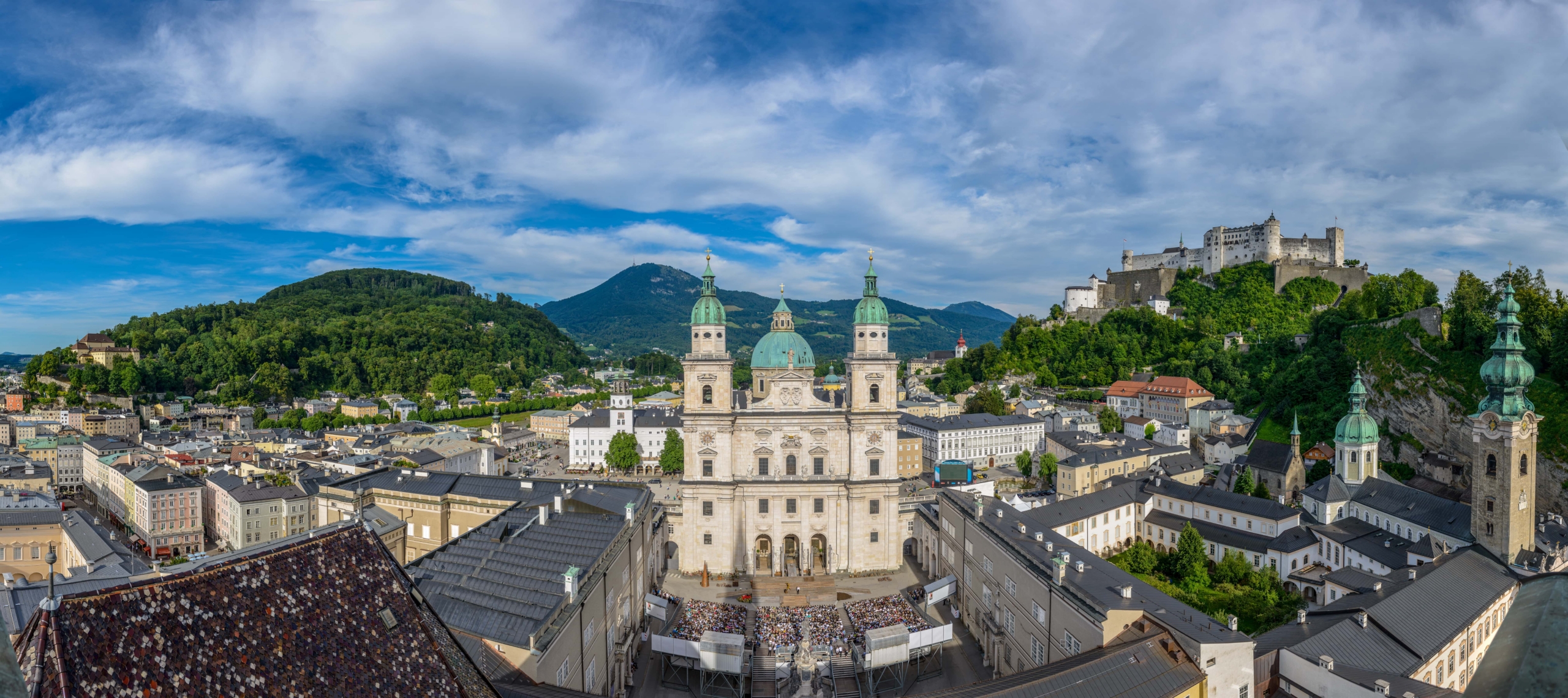
That has been true almost from the beginning. When the Salzburg Festival was founded in 1920, in the aftermath of the First World War, its ambitions were startlingly grand. Max Reinhardt, Hugo von Hofmannsthal and Richard Strauss envisaged a festival that would offer an artistic counterweight to a Europe emerging from catastrophe. Its first performance, Hofmannsthal’s Jedermann, directed by Reinhardt on the steps of Salzburg Cathedral, was almost improvised: shortages meant that the originally intended production could not be realised, and the cathedral square became the theatre.
Within two years, concerts and opera had been added. Mozart was the obvious spiritual centre, while the Vienna Philharmonic became the Festival’s resident orchestra. Then came Richard Strauss. From the middle of the 1920s his operas became, alongside Mozart, one of the pillars of Salzburg’s identity: Ariadne auf Naxos appeared in 1926, followed in 1929 by Der Rosenkavalier, which became one of the Festival’s defining works (the film of the 1960 production, conducted by Karajan and with Elisabeth Schwarzkopf, Sena Jurinac, Anneliese Rothenberger and Otto Edelmann in the key roles, and made at the opening of the Grosses Festspielhaus, remains a thing of wonder). And with Strauss came something else that has remained characteristic of Salzburg: the irresistible magnetism of great names.
The Festival has always understood that audiences do not simply come for repertoire. They come for artists. The history of Salzburg reads almost like a roll-call of 20th-century musical legend: Arturo Toscanini, Bruno Walter, Wilhelm Furtwängler, Herbert von Karajan, Elisabeth Schwarzkopf, Dietrich Fischer-Dieskau, the Vienna Philharmonic, and countless others. The Festival’s mythology was built on the premise that if you wanted to hear and see the greatest artists of the age, Salzburg was where you went.
That principle remains remarkably intact in 2026. The difference is that the definition of a Salzburg star has broadened. The Festival is no longer content simply to preserve its historical inheritance. It wants to interrogate it, refract it, sometimes even provoke it. New directors, new visual languages, contemporary composers and artists from beyond the conventional operatic establishment have become part of Salzburg’s landscape.
Yet the ghosts of Mozart and Richard Strauss are not so easily displaced. Consider this summer’s new production of Strauss’s Ariadne auf Naxos. Ersan Mondtag relocates the opera from its familiar world of Viennese theatrical decadence to a billionaire colony on Mars, transforming Strauss and Hofmannsthal’s satire on wealth, privilege and cultural vanity into something pointedly contemporary (suffice to say, it has not been without controversy!). Manfred Honeck conducts the Vienna Philharmonic, with Kate Lindsey (always a magnetic Composer in this opera and a fabulous actor whatever the setting), Christina Nilsson and Ziyi Dai among the leading performers. On paper, it might seem as far from traditional Salzburg as one could imagine. In reality, it is quintessentially Salzburg.
The Festival has never been a museum – its relationship with its heritage has always involved reinvention. Strauss himself belonged to a generation that looked backwards and forwards simultaneously: Ariadne can be Mozartian, Wagnerian, Italianate, French, comic, tragic and extravagantly modern within the space of a few minutes. Its collision between high art and popular entertainment, between seriousness and parody, feels almost uncannily suited to a festival that has itself become a collision of traditions and contemporary ideas.
And Strauss’s presence in Salzburg extends beyond Ariadne. This summer’s Festival also offers Elektra, conducted by Franz Welser-Möst and staged by Krzysztof Warlikowski. Here is another Strauss work whose violence, psychological intensity and orchestral excess can accommodate radical theatrical thinking without ever becoming merely historical.
If Ariadne represents Strauss looking back towards Mozart, Rossini provides another route into Salzburg’s history of theatrical exuberance. This year’s Il viaggio a Reims, conducted by Gianluca Capuano and directed by Barrie Kosky, brings together Cecilia Bartoli, Marina Viotti, Mélissa Petit and a remarkable ensemble of singers. It is precisely the kind of starry casting that Salzburg has traditionally made its own. Rossini’s opera is itself a celebration of the international gathering: a collection of travellers stranded together, their nationalities, vanities and romantic entanglements transformed into comic spectacle. It is difficult to imagine a more appropriate work for Salzburg, where every summer the world’s musical travellers converge in one small Austrian city.
Salzburg’s attraction, though, is not confined to the opera house. medici.tv’s coverage brings viewers into the Festival’s extraordinary constellation of artists, from the opera stage to intimate vocal and instrumental encounters. Canto Lirico: Anima, for instance, brings together Lea Desandre, Thomas Dunford, Nicolas Altstaedt, Bruno Philippe and Ensemble Jupiter in the Felsenreitschule (familiar to millions from The Sound of Music and its key role in that classic film’s unfolding drama as the von Trapps sing at the “Salzburg Music Festival”). It is a reminder that Salzburg’s idea of stardom can be intimate as well as spectacular: a great singer, a period ensemble, a handful of exceptional instrumentalists, and the chemistry that emerges when exceptional musicians meet.
Further into the Festival, the repertoire becomes darker and more uncompromising. Teodor Currentzis conducts Bartók’s Bluebeard’s Castle in a production by Romeo Castellucci, while Vladimir Jurowski conducts Berg’s Wozzeck in William Kentridge’s staging. These are works that could hardly be described as comfortable Salzburg traditions. Yet they belong to the Festival’s deeper history: the belief that opera should be an encounter with the most searching artistic ideas of its time.
That, ultimately, is why Salzburg can change without losing itself. The ravishing scenery remains. The Festival’s grand spaces remain. The Vienna Philharmonic remains. Mozart remains at the centre of the city’s musical imagination. And Strauss, whose connection with Salzburg was so profound that he conducted there 16 times between 1922 and 1943, remains one of the composers through whom the Festival understands its own identity. But the Festival also remains hungry for the new.
Perhaps that is the real secret of Salzburg’s longevity. Its traditions have never depended upon standing still. The Festival was born from a desire to create something new in the ruins of an old Europe. Its founders believed that the past could be used not as an escape from the present but as a means of confronting it.
A century later, the argument continues. A Mozart opera can be made to feel startlingly contemporary. A Strauss opera can be transported to Mars. Bartók, Berg and other modernist landmarks can sit alongside Rossini and the musicians of the early-music movement. Directors can challenge conventions while singers of international renown continue to provide the human substance that makes opera more than an idea.
And then there is the audience — whether seated in the Grosses Festspielhaus, the Felsenreitschule or the Haus für Mozart, or watching from somewhere far beyond Salzburg through medici.tv. Because that may be the greatest transformation of all. Once, Salzburg required a journey. Today, the journey can begin with a screen. But the essential attraction has not changed.
For more than a century, Salzburg has been the place where extraordinary artists gather to make extraordinary music. Mozart is still there. Strauss is still there. The past is still there. But so, importantly, is the future. And every summer, the stars arrive to discover what happens when they meet.
