
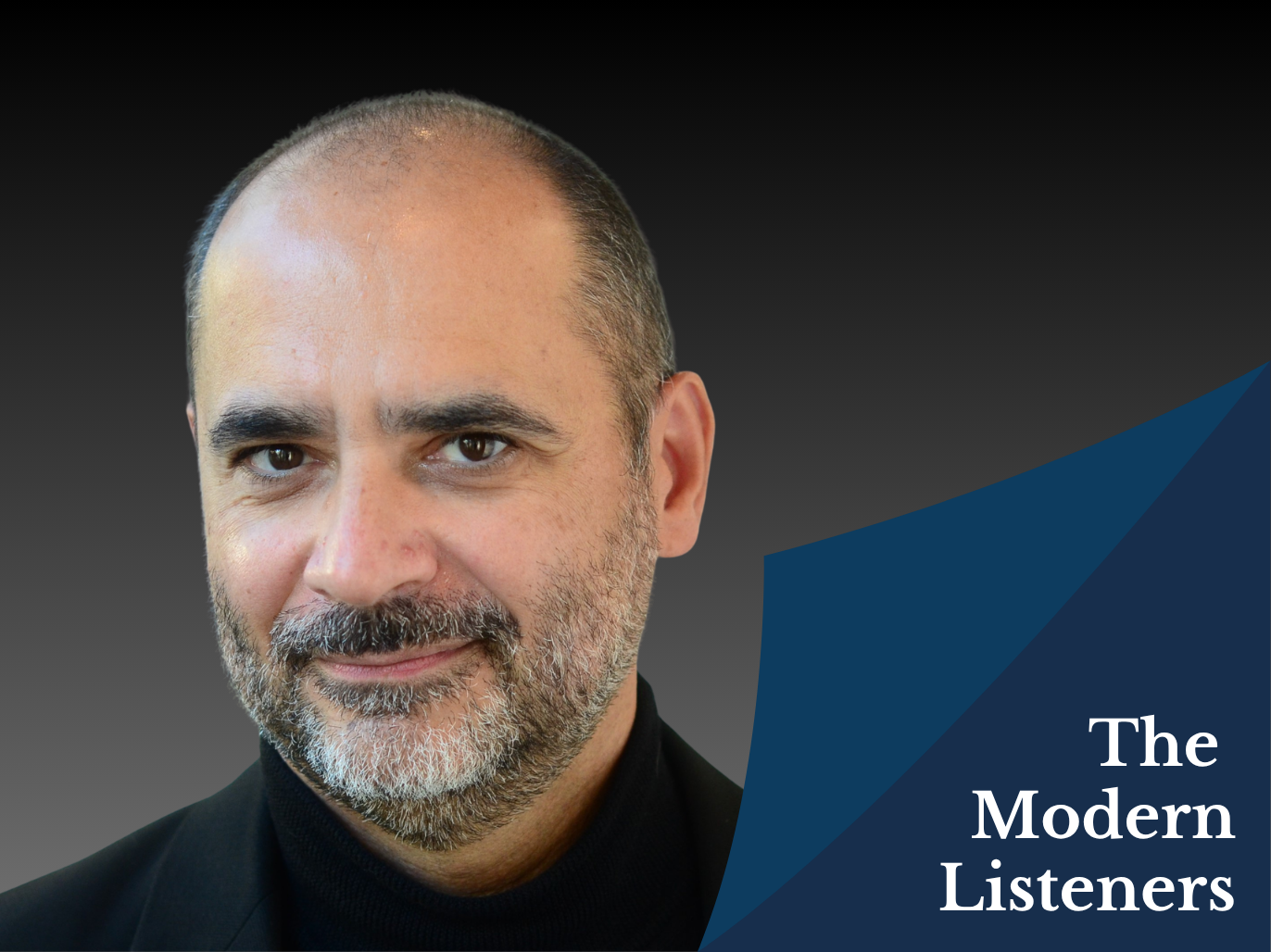
Portrait of a Modern Music Listener: Gilbert Guicheney, the Opera-Loving Engineer

What does it mean to love classical music in 2026? In this new series, Page Turner meets listeners from all walks of life to discover how music accompanies them every day. For this first installment, we travel to Paris to meet Gilbert Guicheney, a civil aviation engineer and devoted opera lover, who reflects on his listening habits, memorable discoveries, and his belief that “the scientific and artistic minds are not incompatible — on the contrary, they enrich one another.”

View author's page

By Editorial Team

Reading time estimated : 5 min

Could you introduce yourself and tell us a little about your relationship with music?

I’m 57 and work as an engineer for France’s civil aviation authority in Paris, where I focus on supporting and promoting light and general aviation. I think the scientific and artistic minds are not incompatible — on the contrary, they enrich one another. I need art as much as I need air or water. I’m always going to museums, concert halls, opera houses, and the theater. I can’t really imagine life without them.

What’s your strongest memory of discovering classical music?

Listening to Mozart’s Don Giovanni on vinyl when I was about 6. I still remember having to get up and change the record halfway through. I’d spend entire afternoons listening to it over and over.

Is there a piece of music you associate with an important moment in your life?

Yes — many of them, actually. A lot of operas are tied to very specific moments in my life. One that immediately comes to mind is Gluck’s Iphigénie en Tauride in Krzysztof Warlikowski’s staging. I saw it during a very difficult period, when my mother was living with Alzheimer’s. The way Iphigenia’s madness was portrayed onstage brought me back to my mother’s story and the trauma she had lived through. More recently, Philip Glass’s Satyagraha affected me deeply. It makes nonviolence feel concrete in a way that’s incredibly powerful. I came away from it hoping that art can still change something in the world.

What kind of music moves you most, and how do you mainly listen today?

My tastes are pretty wide-ranging. Opera is probably what I’m most drawn to, but I also love contemporary dance, and I can be just as moved by instrumental music. I don’t think in terms of genre. What matters is whether something really lands. I go out a lot, and I have subscriptions to all the major Paris venues. I’ll happily travel for a performance, too. When I’m not in a theater or concert hall, I stream a lot, especially on medici.tv. That’s how I revisit productions I’ve loved, discover works I don’t know yet, and keep up with artists I care about. I also use platforms like Spotify, usually to get myself in the right mood before going to the opera. But I’m not someone who has music on all the time. If I’m watching a filmed performance, I make time for it. I settle in and give it my full attention.

Who are some of your favorite composers, conductors, and performers?

That’s a hard one, because my tastes really do go in a lot of different directions. Among composers, I’d name Leoš Janáček, Tchaikovsky, Mozart, Benjamin Britten, Gluck — and Stockhausen too. Among conductors, I’m especially drawn to Raphaël Pichon’s rigor and Barbara Hannigan’s intensity and commitment. In terms of performers, I follow Joyce DiDonato and Asmik Grigorian very closely. And stage directors matter enormously to me as well: Robert Wilson, Laurent Pelly, Dmitri Tcherniakov, and Ted Huffman.

What does medici.tv bring to your life, and what would you recommend to someone just getting into classical music?

I get so much out of medici.tv. It’s where I go to revisit performances I’ve loved, feel that emotional impact again, and look more closely at how they work. Filming can reveal things you don’t experience in quite the same way in the theater. In Die Walküre, for instance, the close-ups bring a whole other layer of intensity to the singers’ faces. The platform has also introduced me to works I might never have found otherwise, like Tchaikovsky’s The Enchantress or Weinberg’s The Idiot. I love the masterclasses too. They open up the works themselves, but also the artists’ process. I’m genuinely attached to the platform. It’s become part of my everyday musical life. For someone just starting out, I might suggest Handel’s Giulio Cesare in Dmitri Tcherniakov’s Salzburg production, or one of Joyce DiDonato’s programs, like EDEN, which is beautiful and deeply moving.

Written by Editorial Team

medici.tv

View author's page