Patronizing for Power: King Louis XIV and French Baroque Music

At Versailles, music was more than entertainment. Under Louis XIV, it helped define French Baroque style while serving the court’s larger purpose: to glorify the monarch.

A trip to the Palace of Versailles is humbling on multiple levels. The first time I visited I was simultaneously speechless and full of questions. How on earth did workers manage to build the palace using 17th-century construction methods? How long did it take? How could one man envision and demand such an extravagant residence? Breathless and sweaty after finally completing my walk around the palace and extensive grounds in the middle of summer, I found myself thinking less about the logistics of Versailles’ construction and more about the cultural implications of its existence, especially in terms of music. After all, the history of French music in the Baroque era is really the history of music in King Louis XIV’s court at Versailles. 

The fact that the direction and development of French music relied on one single, though astonishingly powerful, man for over 50 years is both impressive and a little unsettling. Louis XIV dictated that not only music, but dance, theater, architecture, visual arts, and landscape design should work towards one common goal: to glorify the monarch. The story of how Louis XIV shaped French culture reminds us that while we consider some works of art to be timeless, art can never be fully separated from the people, politics, and events of the specific time it was created in. 
Art under the Sun King

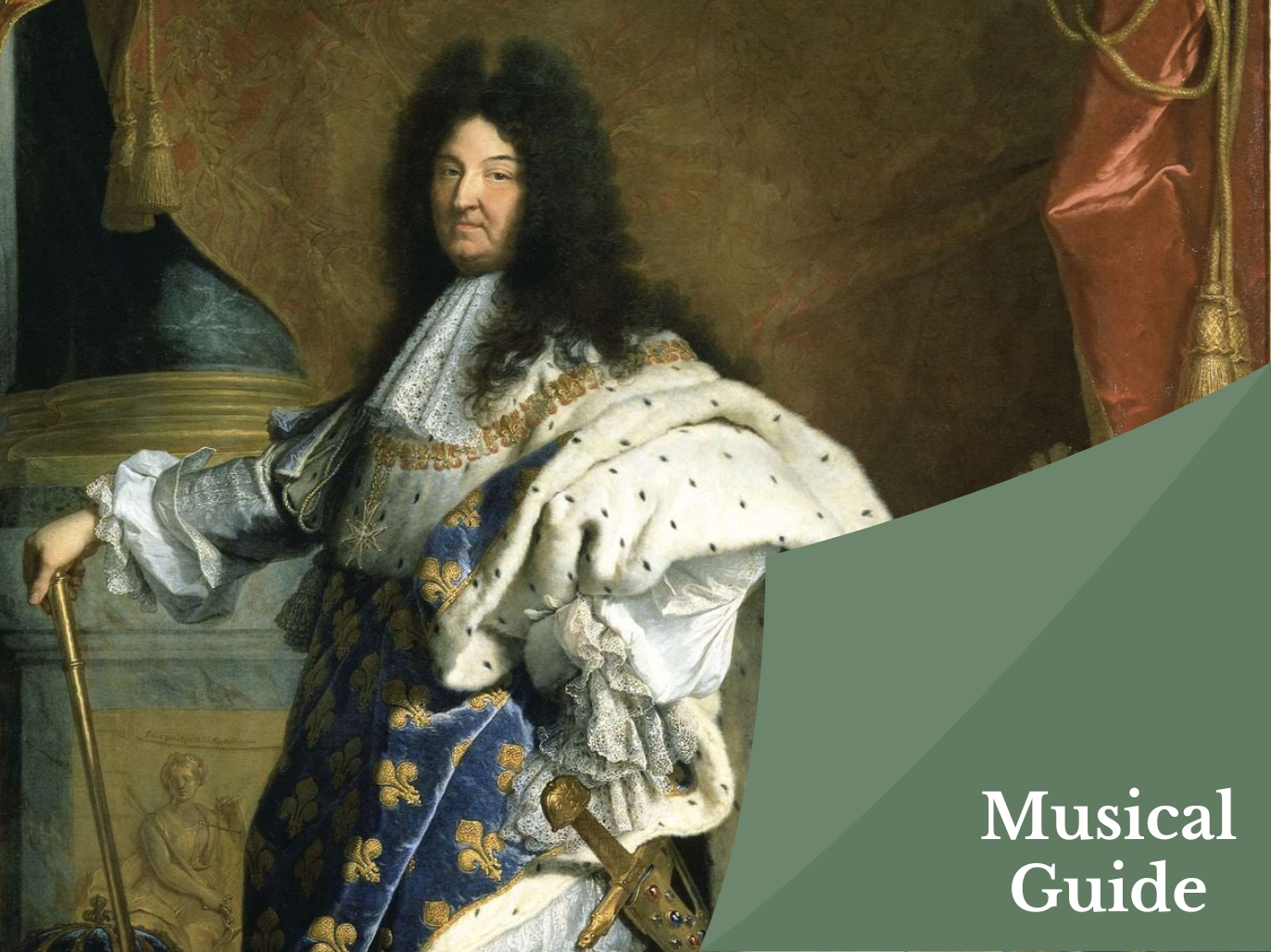
Louis XIV is remembered as a great patron of the arts, but the term “patron” does not fully capture the extent of his influence in shaping the artistic identity of an entire nation. At the risk of taking celestial analogies too far, the Sun King was truly the center of an artistic solar system, around which all French art orbited. The system of royal academies during Louis XIV’s reign were the clearest example of this. Louis XIV created academies devoted to different facets of French scholarly and artistic life, including dance, visual design, industry and commerce, architecture, and music (the Académie Royale de Musique). Musicologist John Walter Hill boils down the purposes of these academies to two: “(1) to make France an exporter rather than importer of arts and scholarship, and (2) to coordinate the imagery, mythology, and language through which the French monarchy was portrayed, directly or through allegory.” In other words, an entire system of artistic patronage was developed to make Louis XIV look really, really good.

Louis XIV contributed to musical life in Versailles not only through patronage, but also his own artistic identity, and in fact the trajectory of French Baroque music largely mirrors his own personal interests during three distinct phases of his life. Louis XIV’s first artistic passion was dance, being an accomplished dancer himself from a young age. This led to the commission of many ballets and the establishment of dance as a key part of French opera, and was also an integral part of royal court culture.

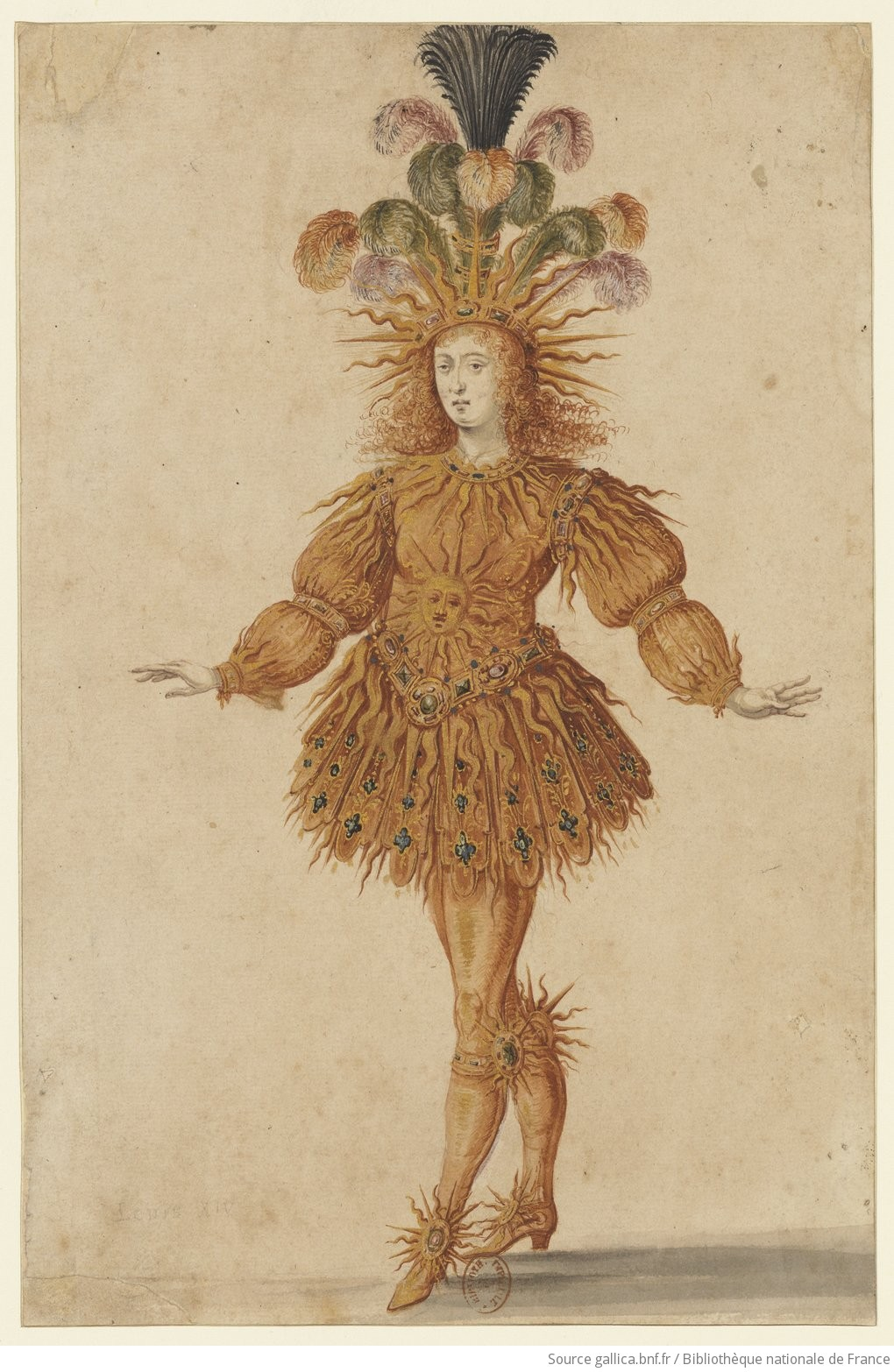
Louis XIV dancing as Apollo in Ballet de la nuit

As his reign progressed, Louis XIV turned from dance towards the development of French opera. He viewed opera in part as a way to distinguish France artistically from Italy, which at the point was considered the musical epicenter of Europe. Attempts were made to establish Italian opera in the French court before Louis XIV came to power, but a few years into his reign in 1666, he sent the Italian musicians away in a politically-charged move that emphasized both his independent control and goals for France. And although French opera did indeed make a lasting name for itself, much of the music created in Louis XIV’s court was still written with Italian influences. François Couperin, for example, who worked as an organist, harpsichordist, and composer for Louis XIV, credited Italian composer Arcangelo Corelli as inspiration for a set of trio sonatas Couperin wrote while in the service of Louis XIV, which were later published under the title, Les Nations.

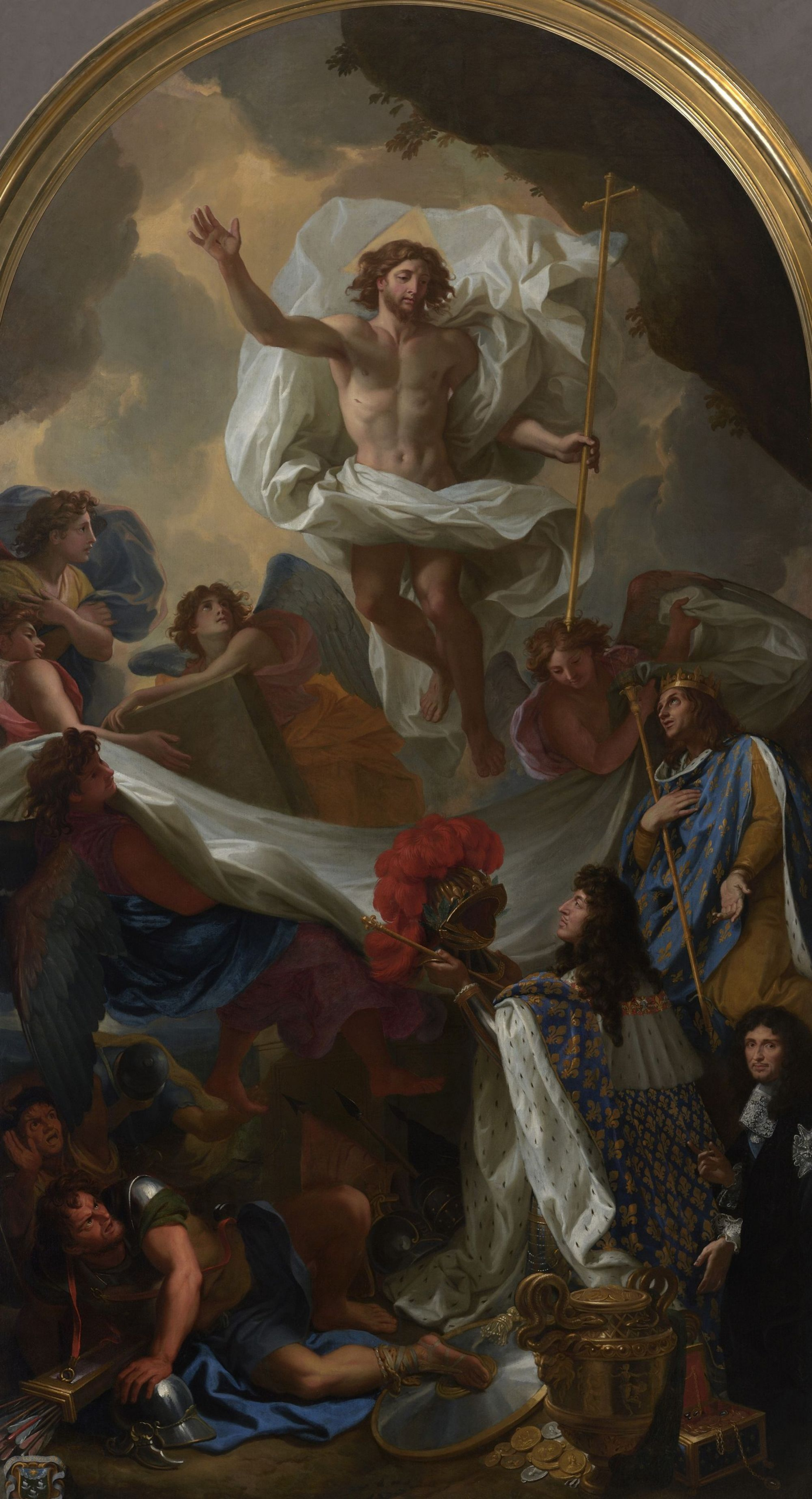
In his later years, Louis XIV became more religiously devout, largely because of his second wife, Françoise de Maintenon. His devotion shifted his musical focus once again from theatrical music to sacred music, though even music of the church was expected to serve Louis XIV’s political aims. In his mind, after all, Louis XIV was as close to God as any human could be, believing himself divinely chosen to rule.

Charles Le Brun, The Resurrection of Christ

How many musicians does it take to glorify a King?

Louis XIV’s coordination and domination of French artistic creation required maintaining a hefty store of artists on site at Versailles, making his court one of the biggest sources of employment for musicians in all of France. This system of court employment and patronage was typical throughout Europe in the 17th century, with most professional musicians employed either by wealthy nobility and royalty, or the church. In typical fashion, Louis XIV took the number of musicians he employed to the next level, keeping around 200 singers and instrumentalists in his court.

Music played a role in most every aspect of life in Versailles and was formally organized into four primary areas: (1) the Musique de la Grande Écurie (“Music of the Great Stable”), (2) the Musique de la Chambre (“Music of the Chamber”), (3) the Chapelle Royale (“Royal Chapel”), and (3) the Académie Royale de Musique (“Royal Academy of Music”). These organizations corresponded to different events, instrumentations, and styles of music that were part of daily life at Versailles. And as with all other members of the royal court, musicians had to tread carefully to stay in favor with the king if they wanted to stay employed, which meant they could only perform music that shone Louis XIV in the grandest of light. No musical member of court proved more successful at this than the (ironically) Italian-born composer, Jean-Baptiste Lully.

Louis and Lully: Creating distinctly French music

When Louis XIV dismissed the Italian court musicians after taking power in 1666, there was one notable exception to this exodus. The Italian Jean-Baptiste Lully, born Giovanni Battista Lulli, was brought to France as a teenager to act as a tutor to Louis XIV’s cousin, Anne-Marie-Louise d’Orléans. After leaving this post, Lully caught the attention of Louis XIV when they danced together in the elaborate Ballet de la nuit (“Ballet of the Night”) in 1653, where Louis XIV earned the title of the Sun King dancing the role of Apollo. Louis XIV was quickly taken with Lully and appointed him to increasingly powerful musical roles in court, culminating with his appointment as surintendant de la musique de la chambre du roi (“Superintendent of Music for the King’s Chamber”) in 1661, the highest musical position in court, at which point he became a naturalized French subject.

Lully enjoyed his own version of absolute power in Louis XIV’s court, having been granted what was effectively total control of what music was performed in France and the stylistic direction it would take. In the realm of opera especially, Lully almost singlehandedly created the quintessentially French genre, tragédie en musique. Believing the characteristics of Italian opera didn’t suit the French language, Lully partnered with librettist Phillipe Quinault to develop a French operatic style defined by elements including a five-act structure, the French overture (characterized by stately dotted rhythms followed by faster, imitative sections), dance, elaborate staging, no spoken recitative, and dramas based on classical mythology and epics that were meant to symbolize Louis XIV’s own heroism and god-like status.

Lully’s Atys, which was said to be Louis XIV’s favorite opera, perfectly embodies the expectations of French opera in Louis XIV’s court in the prologue alone. The five-act work begins with the typical French overture, followed by a chorus that praises a glorious hero (we all know who), a danced menuet, and a pantomime ballet. The opera’s plot centers on a love triangle between gods and includes plenty of spectacle. It’s easy to see why Atys earned the nickname, “the king’s opera.”

Lully’s power in court was taken down a notch towards the end of his life as a result of what Louis XIV determined to be lewd behavior (during Louis XIV’s pious period), but that did little to take away from Lully’s decades-long legacy as the composer who shaped the Baroque era for France. The relationship between Louis XIV and Lully is the ultimate example of the power of the royal patronage system. And while the patronage system would gradually fade out in the 18th and 19th centuries, music has never stopped being used as a political tool. From protest songs, to presidential campaign music, to musicians themselves influencing the direction of politics (looking at you, Taylor Swift), music continues to hold power, especially in the hands of powerful people.

Written by Katie Beisel Hollenbach

Musicologist, Educator, Arts & Academic Administrator

Katie Beisel Hollenbach’s research interests lie in popular music, technological mediation, reception, and fandom, particularly in American music culture during World War II. Her work has appeared in Music and the Moving Image, the Journal of Popular Music Studies, and most recently in her new book, The Business of Bobbysoxers: Cultural Production in 1940s Frank Sinatra Fandom (Oxford University Press, 2024).

She has over a decade of experience in academic research, teaching, student support, career coaching, curriculum development, admissions,…

View author's page