
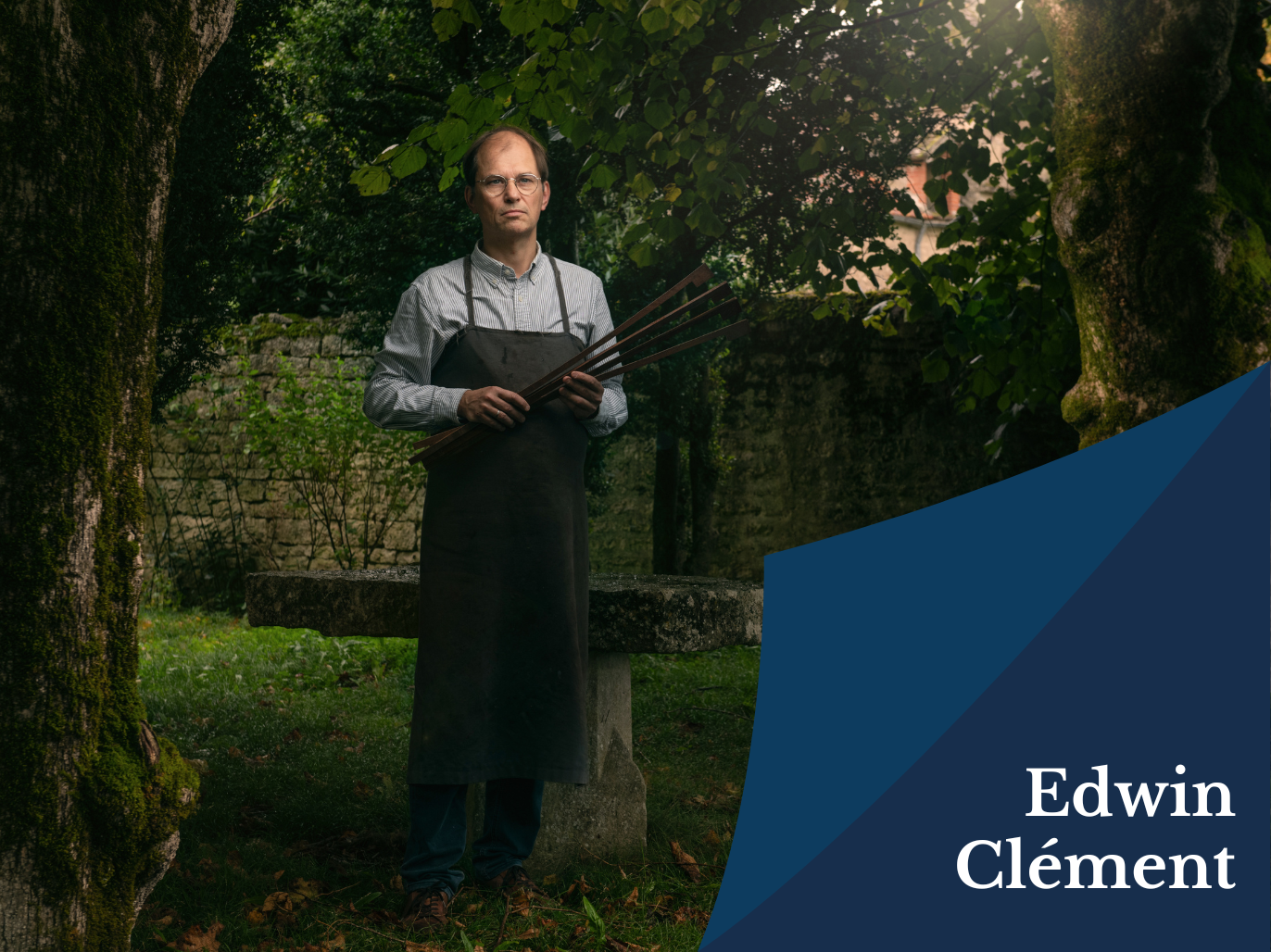
“The degree of deception in this case is staggering. Appendix I would have sounded the death knell for pernambuco!”—Edwin Clément, an exceptional bow maker, can breathe a sigh of relief. Bow making will not be suppressed this year. Named Meilleur Ouvrier de France in 2000, he is now one of the leading figures in contemporary bow making.
View author's page
Reading time estimated : 10 min
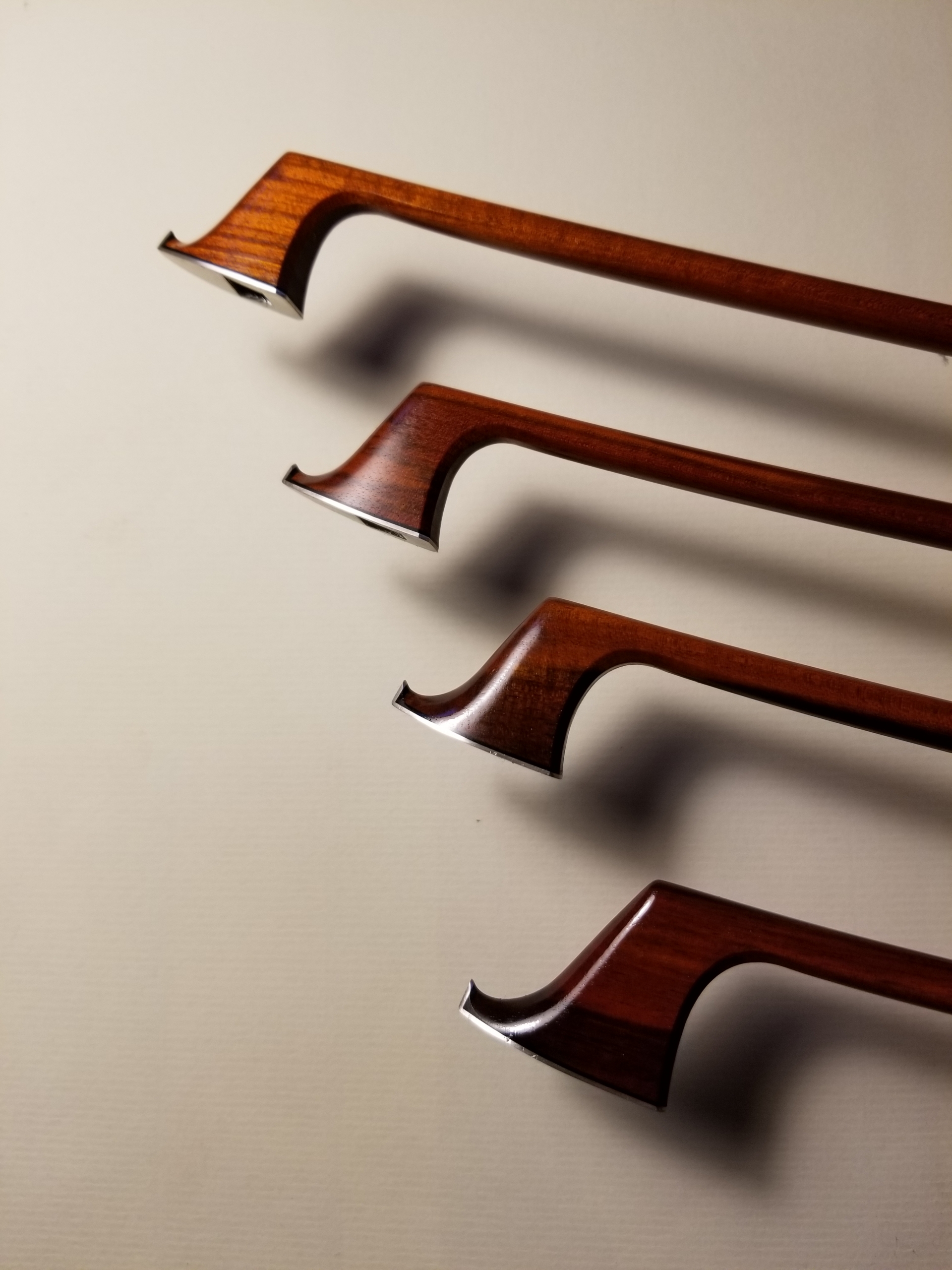
Among his clients are the Modigliani Quartet, who commissioned him to make an exceptional set of four bows in 2022 for the winners of the Vibre! Festival, the Bordeaux International String Quartet Competition and Festival. “A violin is like a singer,” explains Edwin Clément. “It is the air passing between the strings that produces a powerful sound. The bow causes the strings to vibrate, like a starting motor for an engine.” And this “starting motor,” he points out, is inseparable from pernambuco.
Last November, at the Conference of the Parties to the Convention on International Trade in Endangered Species of Wild Fauna and Flora (CITES), Brazil made a second attempt to tighten restrictions on the trade in pernambuco, giving it the highest level of protection: Appendix I. This reclassification would have banned international trade in pernambuco, except in special cases. The attempt drew criticism from bow makers and classical musicians. Leading the opposition, the International Pernambuco Conservation Initiative (IPCI) has been bringing together bow makers and luthiers since 2000 to oversee the replanting, protection, and traceability of pernambuco wood. Edwin Clément is its founder, secretary general, and European representative.
Beyond the ecological issue, pernambuco holds a more personal significance for the bow maker: it is the wood that brings each of their bows to life, indispensable companions for musicians. “This one belongs to Klaus Mäkelä. He has very, very good taste. He likes the best,” says Clément with a smile. “It’s custom-made,” he explains. “Show me your bow and I’ll tell you who you are.” Shy, introverted, expressive, flamboyant… That’s where the difference lies. “A shy person won’t want to make their violin sound impressive. An extrovert, on the other hand, will look for a powerful bow.” The variation doesn’t depend solely on the musician. “There are people who make a beautiful bow without realizing that it could reduce the vibration of the violin. Why ask for a bow that will mute a violin?” For Edwin Clément, the most important thing is the first stroke. “A very good bow is like an excellent swimmer who dives into the water like a needle.”
It is no coincidence that the bow maker insisted on meeting me in Paris’s 6th arrondissement, at Le Mazarin bistro: this is where he cut, assembled, polished, and put together bows for decades. “My workshop was located at the top of this building. During COVID, people started complaining about the noise. I’ve relocated since then.” Clément left Paris for Nièvre, where his permanent workshop is now located. “I started out as a violinist.” It was around the age of twenty that his vocation as a bow maker emerged. “There are no schools for bow making, so I started by doing two years of violin making school in Wales. I then continued my training with a master bow maker in Bristol, England, and then in London.” And finally with a bow maker in Paris “with whom I worked for about ten years.”
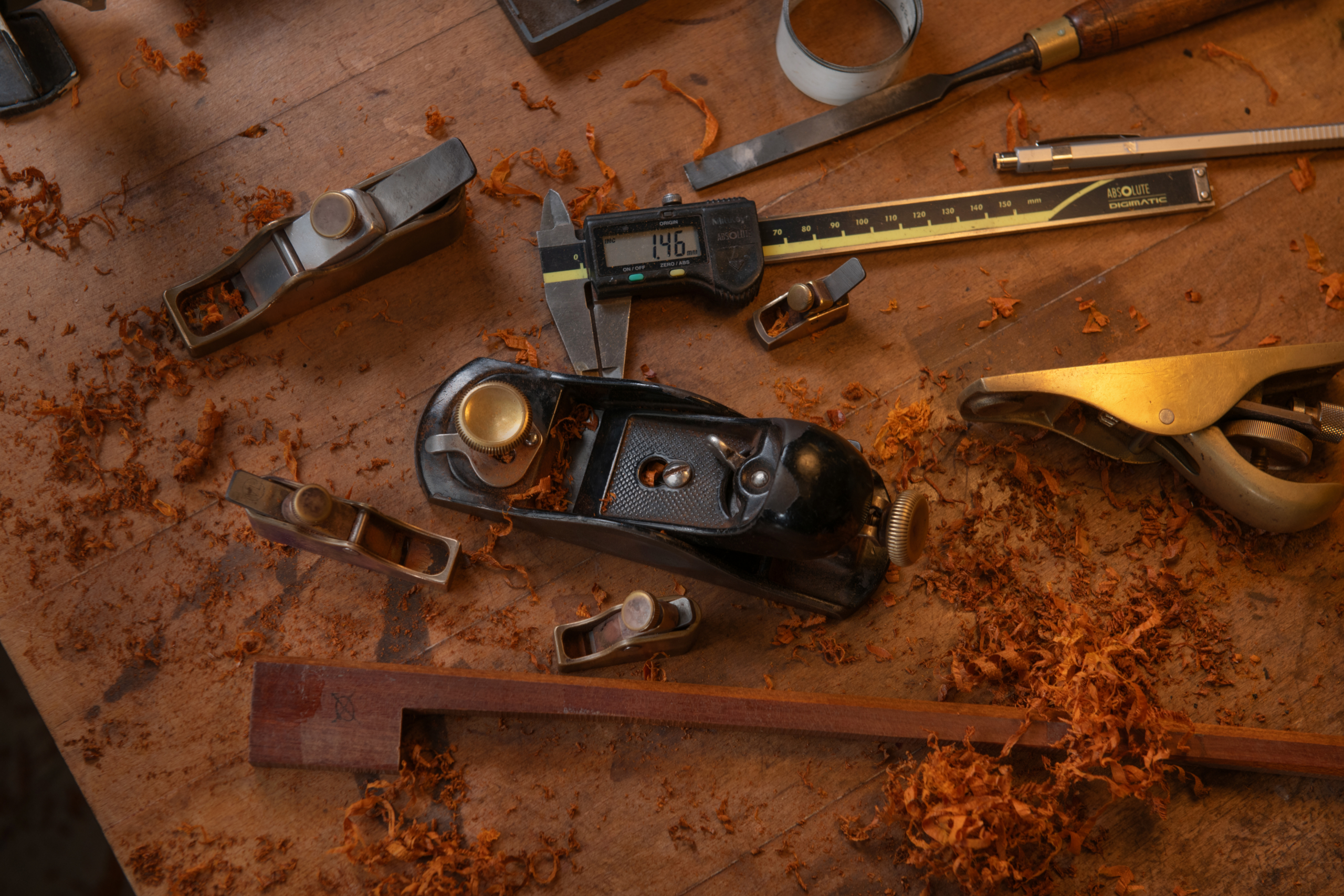
Building a bow is a rhythm, a method, a ritual. “I start with the stick, which determines everything else. Because 16 millimeters and 16.5 millimeters are not the same thing at all.” Every element counts: “The quality of the silver affects the resonance, as does the quality of the horsehair.” No more chlorine-bleached hair. “It’s too damaged.” Clément’s bows are made exclusively from “very natural, soap-washed Mongolian horsehair.” These precise choices have been honed by decades of experience. “Even though I have apprentices, I don’t let anyone carve a stick I’m working on.” To give the bow its curve, the wood must be heated to a very high temperature, at the risk of breaking it. Sweating must be avoided at all costs. “Apprentices often have sweaty hands, which can stain the bow. The first lesson is to make sure it never ends up stained.” In addition to his work as a cabinetmaker, Clément is also a silversmith and tablet maker: silver soldering to within a tenth of a millimeter, then using mother-of-pearl. “I work with abalone from the raw shell.” No more details are given: it’s a trade secret. But he still gives a glimpse of the task at hand. “When you’ve been working on mother-of-pearl for three hours, it breaks and you have to start all over again…” A sigh punctuates the end of his phrase. “And also, mother-of-pearl dust is toxic, so you have to be careful.”
“Edwin, do you have any apprentices?” “I’ve trained some!” he replies with enthusiasm, but it quickly dissipates. “And I would have liked to train one or two more. But I’m not going to send someone aged 25 into this profession. How will they make a living?” Although the threat of Appendix I has once again been averted, thanks to a compromise with Brazil aimed at improving the traceability of pernambuco wood stocks, the bow maker fears that it is only a matter of time. “Or else they really have to tell me: there’s nothing else that interests me in life. I want to make bows.” Clément, on the other hand, never stops. He is currently busy working on the last piece of a quartet in homage to the city of Paris. “This bow will take at least 200 hours of work.” It is the last in a set of four exceptional bows, whose mother-of-pearl eye—inlaid in the center of the frog—conceals a 2.8 millimeter-diameter “crystal micro-lens”—”no bigger than the tip of your pen.” Behind each one is a previously unpublished photo of a Parisian monument.
For the first violin, “the prima donna of the quartet”, Clément commissioned photographer Amélie Billon to take a picture of the Eiffel Tower, “made symbolic by its base in the water, matching the fragility of the first violin, which—when played—is like a flood.” For the second violin, an image of the Pont Neuf echoes the Place des Vosges chosen for the viola. The first three have already found buyers in Europe, primarily in Switzerland and Belgium. “For this quartet, I weld two golds that don’t go together: white and pink.” The materials are generally incompatible, but the bow maker has developed welds so fine “that you can’t even see them.” Nothing flashy: “It’s all in the mystery,” he says. When asked whether this poses a challenge for him or whether it is mainly for connoisseurs, Edwin doesn’t answer, but his smile speaks volumes. The final piece remains: the cello bow. It will feature a photo of the Notre Dame and Quasimodo’s eye before the fire. “This bow requires 200 hours of work.” And unlike the others… “I don’t know if I’ll sell it.”
Of the 600 active bow makers around the world, more than one in ten are French. It was in Paris that the methods that shaped modern bow making were developed. In the eighteenth century, bow maker François-Xavier Tourte revolutionized his discipline: he popularized pernambuco and established the bow’s current shape and function. More robust, more flexible, and easier to heat and bend, this wood also offers superior resonance to European woods such as oak for most bowed strings. Jean-Baptiste Vuillaume, inheritor of the Tourte method, perfected this legacy and his workshops produced—directly or indirectly—the French makers Peccatte, Sartory, Ouchard, Lamy, and many others. Two centuries later, their heirs—including Edwin Clément—continue to preserve this ancestral craftsmanship throughout the world.
While all bow makers use pernambuco wood, the scarcity of this resource is cause for concern. According to Brazil’s CITES report on the status of pernambuco, this species exists nowhere else but in Mata Atlântica forest, now reduced to “only five to seven percent of its original size” due to “massive deforestation” linked to logging and agriculture. Added to this is a major constraint: only a tiny fraction of the wood cut is considered to be of sufficient quality for bow making. “Over 90% of pernambuco wood is discarded during production because it is deemed unsuitable for the manufacture of professional bows,” the report states.
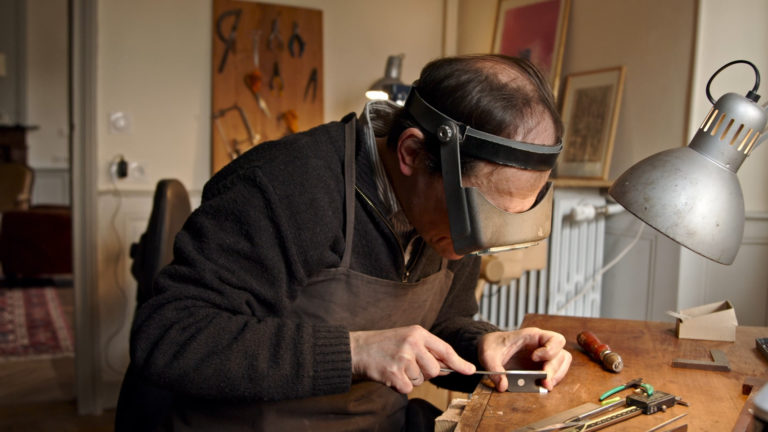
Aware of the increasing scarcity of this resource, which is essential to their craft, the IPCI has made its mission to contribute to the conservation of the species. The first forests replanted in collaboration with the IPCI are now 25 years old. Although they are still too young to be harvested, “the aim was above all to create a truly sustainable industry,” explains Clément. While the fate of bow making is intrinsically linked to that of pernambuco, the reverse is also true: “If producers can no longer plant or harvest it to sell, then it becomes more profitable to cut it down and replace it with something else.” The Parties’ decision to avoid listing it in Appendix I is therefore, in Edwin’s view, as much about preserving an art as it is about the very survival of the species: “If pernambuco no longer has any economic value, it will eventually disappear.” This relief is shared by musicians and figures in the world of classical music, who are now waiting for a new reprieve.
Translation: Nadya Miryanova
