Forgotten Operas to Discover: Operas You Didn't Know You Loved

Uncover a universe of forgotten operas to discover. Andrew Mellor delves into why certain works fade from view and how modern productions are successfully bringing them back into the spotlight.

View author's page

By Andrew Mellor

Reading time estimated : 12 min

What do you prefer: seeing an opera you know you love? Or seeing an opera you’ve never experienced before, having no idea where it will take you? 

That’s a loaded question. “An opera you’ve never experienced before” might still be an opera by Puccini or Mozart. Both wrote some operas that aren’t performed that often, while there are plenty for whom Puccini’s La Bohème is as new and strange as Enescu’s Oedipe. For all of us, every opera was new and unfamiliar at some point.

But there can be little doubt that we’re conditioned to accept some operas as “standard” more than others, even if we don’t know them – usually operas that make audience members feel more comfortable parting with their hard-earned cash. They often come with a cast-iron reputation and a known composer’s name. 

That’s the economics of opera in the twenty-first century, but it’s also very much an area up for debate. Is the operatic canon too restricted? Is there enough new work being presented? Can opera attract a newer, bigger audience by turning the model on its head and prioritizing newly-written work – a model being experimented with in the USA by the Metropolitan Opera and Opera Philadelphia?

That, of course, is how opera used to be. The art form was once almost exclusively powered by new scores telling fashionable stories. That’s why eight different composers wrote operas based on the story we know as The Barber of Seville. Only one of them remains in currency. Which raises the question: what were the other seven like, and why are we not seeing and hearing them? 

Justified Neglect? 

Ask an AI chatbot why certain operas have fallen out of favour while others remain extremely popular, and you get a typically unsophisticated response: operas stop being performed because their plots are convoluted or unlikely – and they don’t have enough good tunes. 

While there’s a grain of truth in that, it’s a blunt and clumsy argument. There are plenty of operas that remain in the repertoire despite their convoluted and unlikely plots (Figaro, Lohengrin) and plenty that have almost disappeared despite having great tunes (Die tote Stadt, La Nonne Sanglante). Peter Grimes and Wozzeck aren’t exactly stuffed with tunes you can whistle but remain immensely powerful and popular. Weber’s Euryanthe has great tunes, and is the plot really that much of a headscratcher next to the likes of Così fan tutte? Judge for yourself: here’s a beautiful (and very characteristic) Christof Loy production from the Theatre an der Wien:

Sometimes, operas fall out of currency because of baseless prejudices. Die tote Stadt is a good example. As a piece of music theatre, it’s magnificent. But a generation of opinion-formers decided that its composer Korngold was kitsch and cheesy, and that was that. I spent a good proportion of 2020 listening to Die tote Stadt on a loop. Then I saw the production linked above, and fell even more deeply in love with it. 

Full disclosure: I had a bit of a form with Korngold. In my teens, I took a recording of his opera Das Wunder der Heliane out of my local library, for no other reason than it had just arrived and I was the first person to rent it – it looked all shiny and new. Back then, I had never heard of the composer, nor the work. 

I was captivated by Das Wunder der Heliane right from the opening bars, which seemed to open doors to a magic kingdom (yes, the angelic choir helped). I later read that the opera was generally considered bloated, insufficiently of-its-time and unpalatable given the far-fetched nature of its plot. None of those things bothered me when I was listening to the music as a teenager, blissfully unaware of what anyone was singing about. 

Now I’ve got the chance to put that right. Almost all the “rare” operas mentioned above are on medici.tv’s Rare Operas playlist. Yes, the playlist prompted this article. But it has also been a genuine ear (and eye) opener. 

On the list is a gorgeous production of Das Wunder der Heliane from the Deutsche Oper Berlin. Christof Loy’s (him again) staging doesn’t ask you to believe that a person is brought back from the dead and then sucked up to heaven; it poses the story as a symbol, a fairytale – something that exists more in our own individual minds, with as many meanings as witnesses. I found it devastatingly moving. And by the way, if sumptuous, chromatic late Romantic opera from Austria is your thing, do check out the same company’s production of Zemlinsky’s The Dwarf.

You might argue that this is the perfect time to rethink or tweak the operatic canon; to flood it with works that were once subject to prejudices that no longer exist (Korngold, for example, is no longer roundly disparaged). Not only would that appear to fit the age of reappraisal in which we live; it also seems like an opportune thing to do given that the canon itself is on unsteady ground. A new generation has grown up with such little knowledge of opera that they don’t automatically put La Traviata above Lo Schiavo. Regrettable as that might be, it could also be a huge opportunity. 

Theatre You Can Relate To

Besides, operas whose plots are considered to be unrealistic, outdated or fanciful can benefit from the opera world’s current post-modernist tendency to allow unlikely stories to be interpreted by the receiver; to acknowledge that a plot like Das Wunder der Heliane’s or Lohengrin’s doesn’t have to be taken literally, and find a way for it to resonate with all sorts of emotional truths and meanings. That can deliver beautiful productions but it can also help to make operas that would have seemed faintly ridiculous appear far more palatable and effective.

Another prevailing trend in current opera production is “regietheater” – in which a director superimposes his or her alternative narrative onto the composer’s or librettist’s. Sometimes the results are brilliant. Sometimes they are infuriating. 

But like it or loathe it, regitheater also presents big opportunities for works considered un-stageable given curious plots or unlikely deus ex machina devices. It has been fascinating to watch Katie Mitchell’s production of Handel’s oratorio Theodora, a work once considered overly pious and sweet. Mitchell takes a wholly different view of the piece, exploring religious fundamentalism. Perhaps the superimposed story is a stretch, but the imagery is striking. And the singing, from Joyce DiDonato, Julia Bullock and Jakub Józef Orliński, is ravishingly beautiful. 

You might ask why Theodora needed a new narrative. Isn’t its basic story of religious tolerance and the barbarism of the death penalty absolutely relevant today? If so, the same could be said of Bohuslav Martinů’s The Greek Passion. This unusually powerful opera, dressed in the Czech composer’s distinctively rich harmonic language, asks societies who claim to base themselves on Christian morals just what, exactly, they would do when faced with a huge influx of desperate refugees.

Back in Fashion

Sometimes, in opera as in life, we all get swept up by a new enthusiasm. When I started watching opera in the 1990s, operetta was certainly not flavour of the decade. I got the impression it was seen as an artform specific to a time and place – not here, and not now. 

These days, operetta is cool again. There are companies presenting works that once seemed dowdy in productions that are wickedly funny, sharply observed and musically scintillating. Maybe it was our problem, not operetta’s? Or maybe the revival is a symptom of a time in which taste isn’t so rigorously policed (thankfully).

It has been fascinating, for an operetta-sceptic, to see a flush of operettas entering the repertory of opera houses – and to see companies like Komische Oper in Berlin and Opéra Comique in Paris reclaim their identities by doing operetta with immense style while proving that, as in opera, the form’s best works are eternally adaptable to new eras.   

One reason for operetta’s previous bad rep is that it’s even harder to do well than serious opera is. When it is done well, it’s irresistible – as is this production of Reynaldo Hahn’s Ciboulette, one of the last great French operettas. Michel Fau’s staging has all the biting humour of a Mel Brooks spoof, and despite being thirteen years old feels extraordinarily fresh (even the announcement at the beginning, telling us that one of the singers is unwell, is a delight). What isn’t there to like about Julie Fuchs, with her lilac lipstick and little (live) dog Rafäele? For another treat from the Opéra Comique, check out Thomas Jolly’s staging of the least-often seen of Offenbach’s operettas, Fantasio.

Advocacy from the likes of Barrie Kosky is one reason why operetta is on the ascendant. Advocacy from similarly passionate individuals is also the reason some composers are back in fashion. Mirga Gražinytė-Tyla has worked tirelessly to propagate the music of Mieczysław Weinberg, whose opera The Passenger has slowly re-entered the repertoire over the last 15 years. Another Weinberg opera, The Idiot, had to wait until 2013 for its premiere and was almost unknown when the Salzburg Festival presented a new production in 2024. Gražinytė-Tyla, naturally, was in the orchestra pit. 

The score for The Idiot is strong. But if anything can convert you to this opera based on Dostoyevsky’s novel, it’s the “dream team” thrown at it by Salzburg, including Gražinytė-Tyla, the Vienna Philharmonic, director Krzysztof Warlikowski and a cast led by soprano Ausrine Stundyte. 

All of which raises the question: would an opera like The Idiot be so enjoyable, were we not watching it played, sung, conducted and directed by the very best in the business? Another reason a work like La Bohème is so popular is that it’s highly effective even in a mediocre performance.  

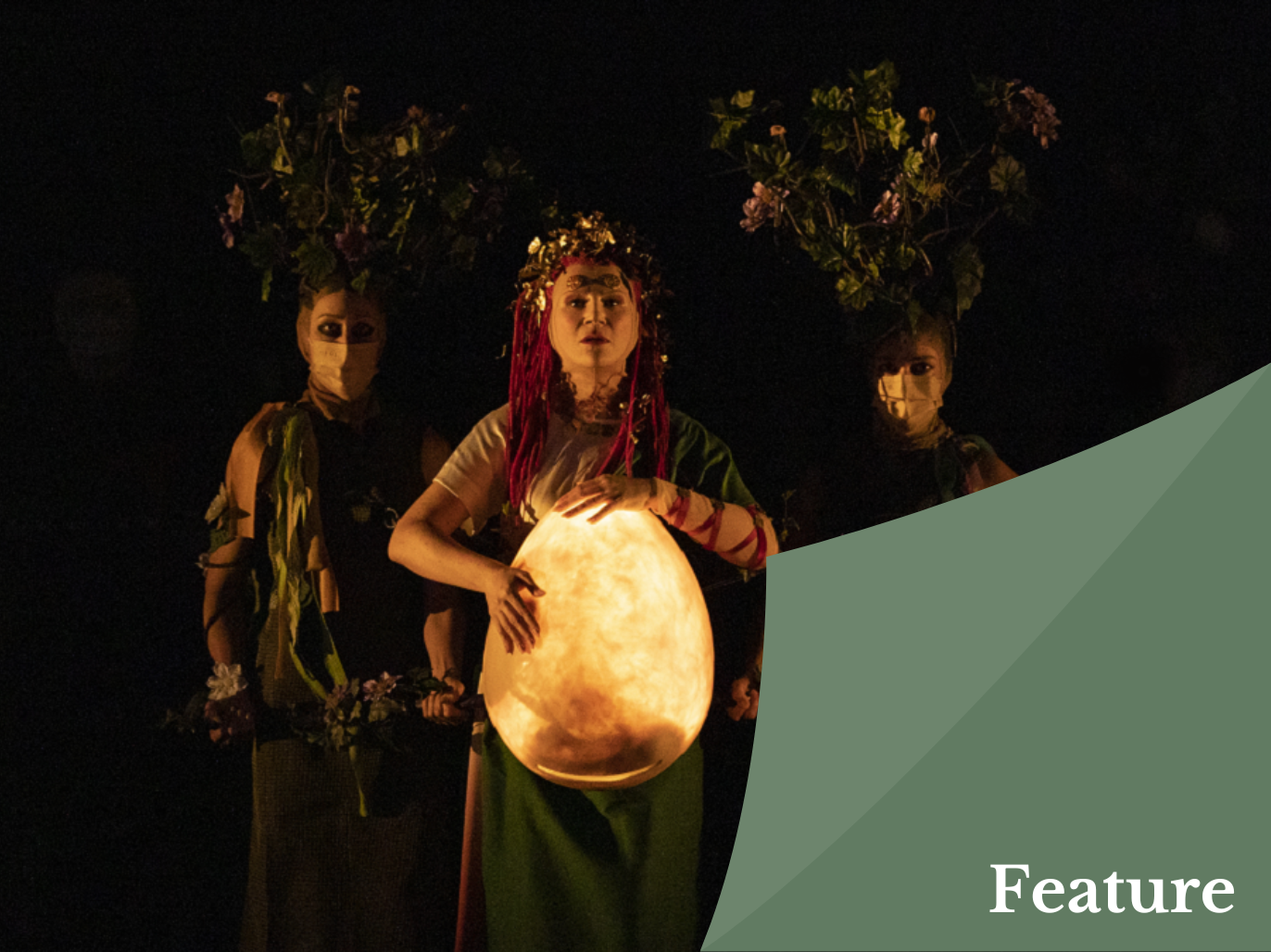
That’s something to consider with regard to another composer who has benefitted from strong advocacy in recent years, Ethel Smyth. Glyndebourne’s 2022 production of the British composer’s troubled opera The Wreckers was a great example of a company throwing everything at a neglected score to make scintillating theatre, even if plenty agreed after the event that said score has more than its fair share of flaws, all of which would grate if the work was performed more frequently. I can’t wait to see The Wreckers when it comes to Malmö Opera near me in a year’s time, in that same Melly Still production. I’m not sure I’ll leave the theatre wanting to see it again, but that’s not the point; isn’t variety the spice of life?

Trusted Composers

Verdi and Strauss don’t need the sort of advocacy that Ethel Smyth does. But both Verdi and Strauss wrote operas that don’t make it onto the stage with anything like the frequence of Aida and Der Rosenkavalier. In the case of Verdi, you can appreciate why we don’t hear a work like Aroldo as frequently as we hear Nabucco; but that doesn’t mean we wouldn’t want to hear Aroldo just a little more often. 

Opera houses operate on calculated risks, and some risks are calculated as being too high. That explains the situation we’re in with regard to a persistent core repertoire of operas that are staged over and over again. Often, they also happen to be works that can seem uncannily modern even now. Every time I see La Bohème, I am startled at how modern its themes seem: sexual exploitation, disease, grief and the high cost of living.

The beauty of a platform like medici.tv is that opera houses can mitigate those risks by reaching a global audience with rare works that might not lure thousands into an actual theatre but can reach a global audience online. Even better for those audiences, is that we can peruse and sample such works, often from reputable opera companies, without being stuck in a theatre for three hours with a piece we don’t like. If it’s not for us, we can switch off or find something else – minimal investment, minimal risk. 

I’ll admit one thing: I’ve never really understood why the opera world hasn’t crowned Die tote Stadt a masterpiece. And while I’m at it, how could anyone resist the final scene from Strauss’s rarely-seen opera Capriccio? It’s surely the most ravishing fifteen minutes of operatic music Strauss wrote and doesn’t disappoint in this unusually steady but probing performance from the wonderful Malin Byström in yet another elegant Christof Loy production. If you want to skip to the good bit – the bit that will really sell you Capriccio if you don’t already love it – watch from 2’04’00. Enjoy! 

Written by Andrew Mellor

Journalist and critic

Andrew Mellor is a British writer, critic, and broadcaster based in Copenhagen. After studying music at the University of Liverpool, he began his career with the Manchester Camerata and the London Philharmonic Orchestra before training as a journalist at Classic FM magazine and Gramophone. Since moving to Denmark in 2015, he has become a leading voice on Nordic music and culture, contributing regularly to Opera and Opera Now.

A regular critic for the Financial Times and a presenter for medici.tv and the Danish Broadcasting Corporation, Andrew Mellor also writes extensively for orchestras, festivals, and record labels around…

View author's page