
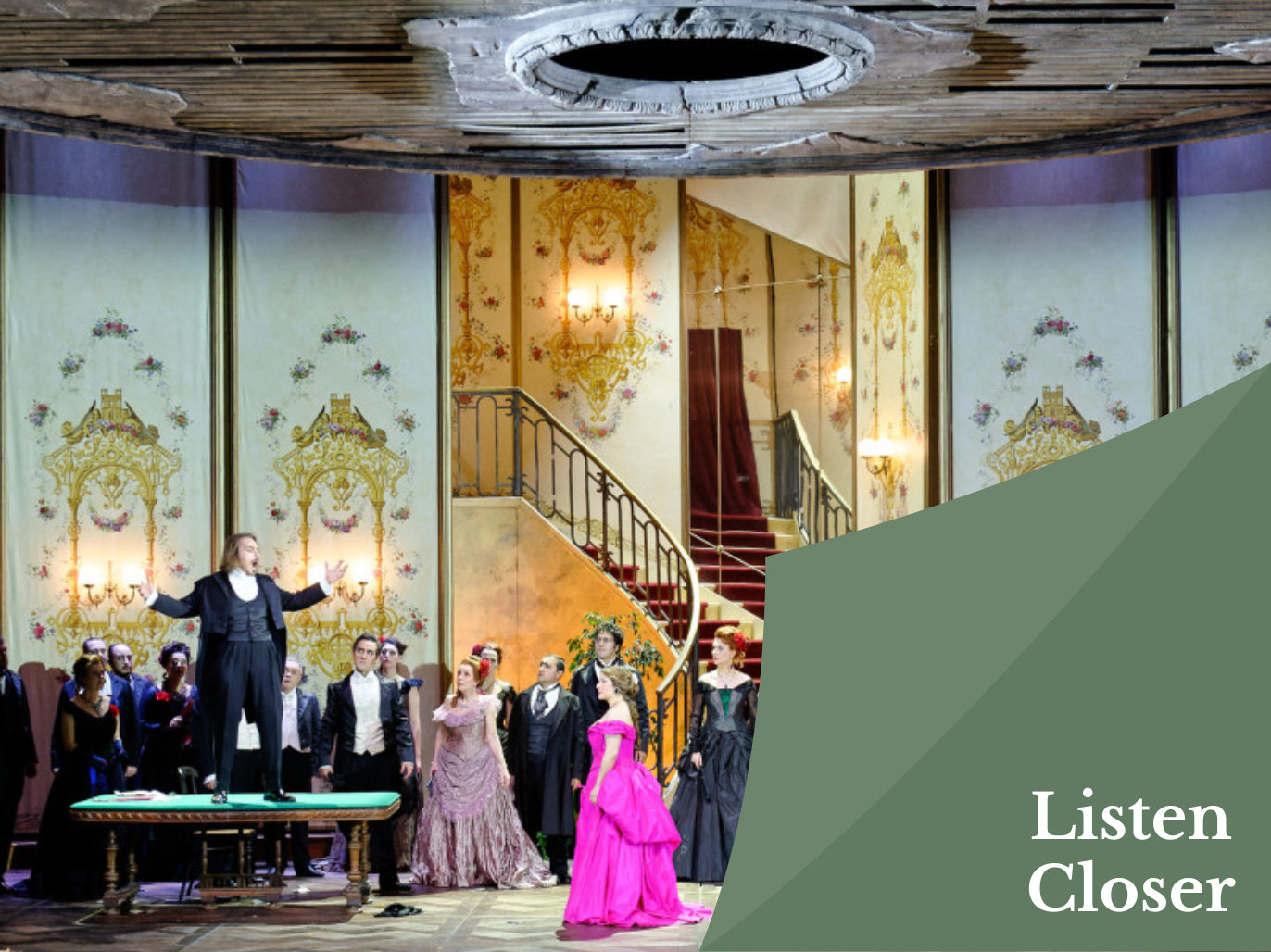
“La Traviata has been an utter fiasco, and what is worse, they laughed,” wrote Verdi in a letter to a colleague the day after the opera’s premiere. An unfortunate combination of inappropriate casting and poor vocal performances led the composer to ban all productions beyond the initial run in March 1853. Unlike the customary historical or mythological settings of nineteenth-century opera, La Traviata is a modern drama exploring themes of prostitution, class bigotry, and money. The work’s provocative realism already posed a significant risk of alienating audiences. Determined to turn the opera’s fate around, Verdi commented that “last night’s verdict will not have been the last word,” and one year later, the opera was staged in a smaller theater in Venice and met huge success.
View author's page
Reading time estimated : 5 min
Verdi’s masterpiece continues to enchant audiences all around the world almost two centuries later. Based on Alexander Dumas fils’s La Dame aux Camélias, the work follows a Parisian courtesan whose newfound love is dashed by social expectations and a fatal battle with tuberculosis. The opera emerged at the end of Verdi’s “galley years” (1839-1853), a prolific period in which he produced 19 operas. Deriving inspiration from the Italian bel canto tradition, the composer focuses on three main characters, musically depicting their psychological state through intense vocal expression and dramatic orchestration. From the jovial waltz ‘Libiamo, ne’ lieti calici’ to the impassioned ‘Sempre libera,’ the music of La Traviata delivers sweeping emotional contrasts with masterful precision.
The instrumental element
Next time you watch La Traviata, listen closely to the opening Prelude. In opera, a prelude is a short orchestral introduction, often performed before the curtain rises to establish a certain atmosphere. Shorter and less expansive than an overture, it can also serve as a transition between scenes. La Traviata begins with a high-pitched, chromatic theme in the violins: the atmosphere is tense, reflecting ‘fallen woman’ Violetta’s frail nature and tragic fate. Gradually, this flows into a warmer melody: a lyrical, cascading line that shines through the orchestral texture, accompanied by staccato quavers. The motif represents the shared passion of Violetta and Alfredo, settling more firmly into the bright key of A Major but retaining a sense of yearning — the phrases end with subtle yet hopeful resolution. Notice how the instrumentation is carefully designed to create a more intimate sound, reflective of chamber music. Despite the disaster of La Traviata’s first performance, the achingly beautiful prelude was so well-received that Verdi was called onto the stage for bows.
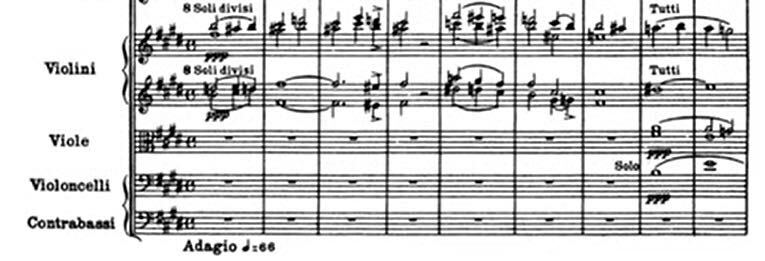
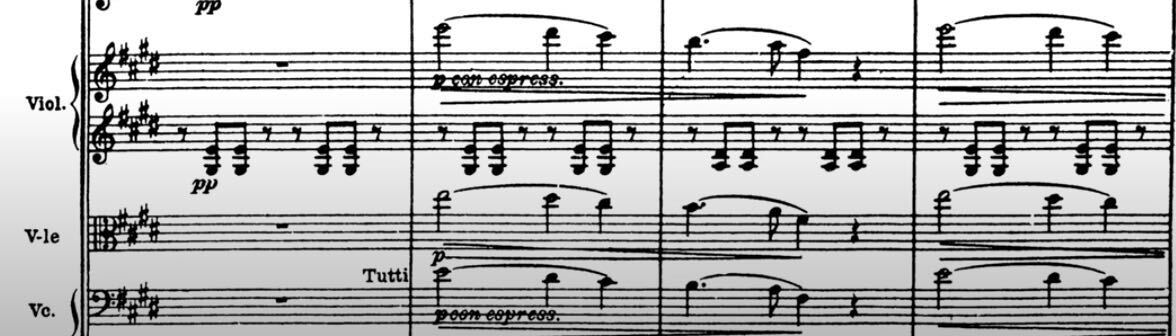
Compare the opening with the Prelude of Act III, marking Violetta’s final hours. The first melody is performed very slowly in an even higher register. Over the course of the piece, you can feel that the energy has been drained from the second theme — its phrases are broken and sighing, the orchestral texture is much thinner, and there is dissonance but no expressive peak. All of the hopeful nostalgia in the initial version is lost. The sonic world of the first melody takes over and the Prelude foreshadows Violetta’s imminent death. Under the expert direction of Daniel Barenboim, the West-Eastern Divan Orchestra conveys this contrast with remarkable sensitivity.
The vocal transformation
Violetta is torn apart by her love for Alfredo and the pressure of his father’s disapproval. The most dramatic moment of the opera arrives when Violetta breaks her own heart to save Alfredo’s social standing. Alfredo catches the heroine writing him a letter, at which point her musical phrases are halting and desperate, a deliberate contrast to his legato lines. Before Violetta’s full outpouring of emotion, the orchestral accompaniment builds frenetically with repeated melodic fragments and a rising harmonic sequence. “Amami, Alfredo” – “Love me, Alfredo” is sung as a fortissimo vocal declaration high in the soprano register, and the main melody of the Prelude’s second theme returns. Its expansive lyricism perfectly matches the lyrics: “Love me as I love you / Oh, Alfredo! I love you so much / Farewell!.” The soprano line depicts the pure heartbreak of Violetta’s predicament with breathtaking power, while the orchestral score beautifully amplifies the emotional peaks of her outburst. The role of Violetta is immensely challenging, requiring a coloratura soprano in the first act, a lyric soprano in the second, and a dramatic soprano in the third: the singer must blend technical prowess with theatrical flair.
Although the spotlight in La Traviata is consistently on the vocalists, it is the orchestra that illuminates the drama from within, magnifying every emotional shift. Unlike Bellini, who tended to employ the orchestra in a supporting role, Verdi casts the orchestra as a character in its own right, propelling the narrative and highlighting the inner turmoil of the protagonists.
