
Some inspiration for the New Year: a portrait of a true trailblazer…
This year, Florence Price’s music will be featured at Vienna’s prestigious New Year’s Concert with Rainbow Waltz (arr. W. Dörner), available to watch here.
From a forgotten attic to international stages, Florence Price’s revival tells a bigger story: how classical music is expanding its memory, its repertoire, and its sense of belonging.
View author's page
Reading time estimated : 8 min
Some inspiration for the New Year: a portrait of a true trailblazer…
This year, Florence Price’s music will be featured at Vienna’s prestigious New Year’s Concert with Rainbow Waltz (arr. W. Dörner), available to watch here.
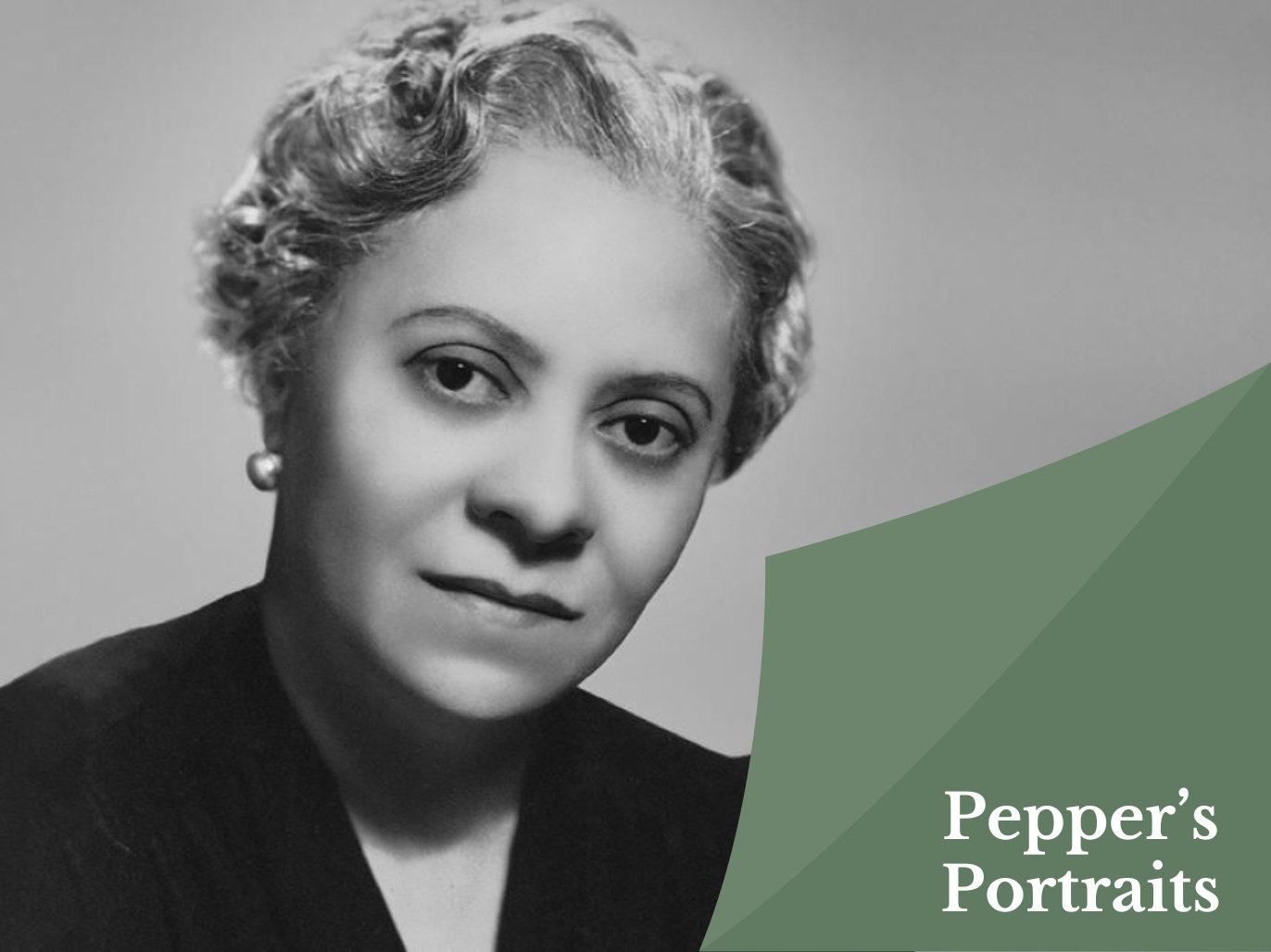
Composer, pianist and pioneer: Florence Price was the first African American woman to have a symphony performed by a major US orchestra. That was her First Symphony, premiered in 1933 by the Chicago Symphony Orchestra under Frederick Stock – this at the height of segregation.
With that social context in mind, it was quite a brave musical statement. While embracing hefty outer movements that channeled Western Romanticism, Price replaced the traditional third movement scherzo with a dance form that spoke more strongly to her roots. The African American Juba would prove a form to which she would return repeatedly, including in her string quartets; the juba had been a slave dance that used body percussion like stomping feet, clapping hands and slapping thighs to create a complex web of syncopated polyrhythms and call-and-response textures. On the other hand, the scherzo traces its lineage to the graceful minuet and so to the noble dances of white Western European courts and palaces: a world away from segregationist America. So, the Juba became a Price symphonic signature, boldly transplanting a black folk idiom into the concert hall; it was a proud assertion of identity at a time when black culture was being actively suppressed.
Price was born in Little Rock, Arkansas, in 1887; this was the heart of the segregated South, and a city later to gain notoriety for the 1957 Little Rock crisis that saw nine African American students prevented from entering a racially segregated school (resolved only by intervention from President Eisenhower himself).
The late 1800s saw a peak in racial lynching, and so not for the first time Price fled north. Aged fifteen, she moved to Boston to study at the New England Conservatory; there, she earned a diploma in piano and organ before moving back home until racial violence forced her to flee.
This time she moved to Chicago, where in 1927 she found work accompanying silent films as a cinema organist, while also writing songs for radio ads; such work surely promoted a tunefulness and awareness of audience that seeped into her concert writing, which often embraces singing melody, immediacy, and a sense of infectious joy.
Amazingly, much of our knowledge of Florence Price comes thanks to a recent discovery in a decrepit attic…
In 2009, Vicki and Darrell Gatwood were renovating an abandoned house in Illinois and stumbled across discarded stacks of paper in the loft. This tired old building had been Florence Price’s summer home for over five decades. The attic discovery brought to light a host of pieces long thought lost, including her Fourth Symphony, a piano quintet and two unpublished violin concertos. Cue much transcribing and musical reconstruction work, which has since sparked a major 21st-century revival of interest in a composer who has been dead since 1953.
One of the works discovered in said attic was her Second Violin Concerto, which you can watch Randall Goosby play alongside Ottawa’s National Arts Centre Orchestra under Alexander Shelley below. This is a late work written just months before Price died. She never heard it performed; indeed, it was only premiered in 1984! She had studied briefly with Roy Harris in 1946 at roughly the same time he was completing his own violin concerto, and both writers opted for a single-movement structure with a theme and variations. Yet her own folksy fingerprint remains, with bouncing dotted rhythms creating a sense of dance and play.
The confusing thing about this Price revival is that she was quite well-known in her lifetime. She existed in a famous cultural milieu in Chicago that also included the pianist-composer Margaret Bonds, poet Langston Hughes and the singer Marian Anderson (who became a key champion). But while Price’s work was performed often, little of her 300-plus pieces were published; this meant that after her death, her music virtually disappeared. Thanks to that 2009 attic discovery, though, Price has since become a regular in sheet music, on record and in concert halls; among pianists alone, notable modern champions include Samantha Ege, Lara Downes and Jeneba Kanneh-Mason.
The latter recorded Price’s Piano Concerto in One Movement with the Chineke! Orchestra for Decca Classics in 2023. Then at the 2025 Ruhr Piano Festival, Kanneh-Mason paired Price’s Fantasie Nègre (below) with William Grant Still, Beethoven and Debussy. It’s a piece that combines Western classical tropes with African American folk traditions; while it opens with brooding arpeggios reminiscent of many a romantic piano sonata, it gives way to a singing theme built on short melodic cells redolent of a folk song. It’s harmonised against a snaking chromatic line that creates harmonic spice, while sprawling arpeggio padding continues to show off a classical virtuoso; but at its emotional and structural centre is a soulful song. In the true meaning of a fantasy, there’s a sense of joyous improvisation, of spontaneous meditation on a theme; it’s a handy reminder that all music sings, and that improvisation has rarely been a stranger to classical music.
To me, Florence Price is leading the charge in an exciting re-evaluation of what ‘classical’ can mean.
Recently, I co-curated an anthology of piano pieces for Hal Leonard: ‘Music We Might Have Played’. Working with Andrew Eales and Jeneba Kanneh-Mason, we spotlight nineteen composers who we feel deserve greater recognition; written out of history on account of their gender, ethnicity or musical style, the book looks to recognise this exciting time of expanding concert programmes and appetite for variety, change and challenge. Hence, we include music by Cécile Hartog, Mélanie Bonis and Rentarō Taki; this is not to deny the power and beauty of Beethoven and Mozart, but to enrich it by acknowledging music for all its three-dimensional variety. Every musician is a neighbour; after all, Nina Simone was inspired into music by Bach.
The modern rediscovery of Florence Price is actually nothing new; the classical canon has always been continually redefined. For decades in the 1700s, you could mention ‘Bach’ and it might be assumed you meant CPE; for a time, his father was better known as an organist (as suggested by the shocking allegation his manuscripts were used as jampot covers!).
So, what is being challenged here? Perhaps the deification of certain composers and the ‘standardisation’ of concert programmes. Really this began in the 1800s, with the cult of Romanticism and its love of icons and figureheads; it can’t be a coincidence that Johann Sebastian Bach became such a revered figure in that century, or that Beethoven’s shadow led Brahms to take 21 years to write his own first symphony. Looking at classical concerts, these used to be eclectic affairs: a potpourri of operatic aria excerpts, solo instrumentals and ensembles. Only in the last 150 years, then, has the classical concert been formatted into something more transactional, and the ‘canon’ slimmed down to a comparative select few.
As society changes, so does our understanding of what classical music has been and can be. Florence Price is now a regular on concert programmes; this season, her music is being performed everywhere from Liège to Toronto, while in London alone HerEnsemble have brought it to Ronnie Scott’s Jazz Club and the Wigmore Hall have programmed her String Quartet No. 2 in a concert for toddlers and parents dubbed ‘For Crying Out Loud!’. Jazz musicians and toddlers aren’t exempt from the revival! Seven decades late – but luckily for us – Florence Price has finally hit the mainstream and found her spotlight. From the attic – to lofty heights…
