
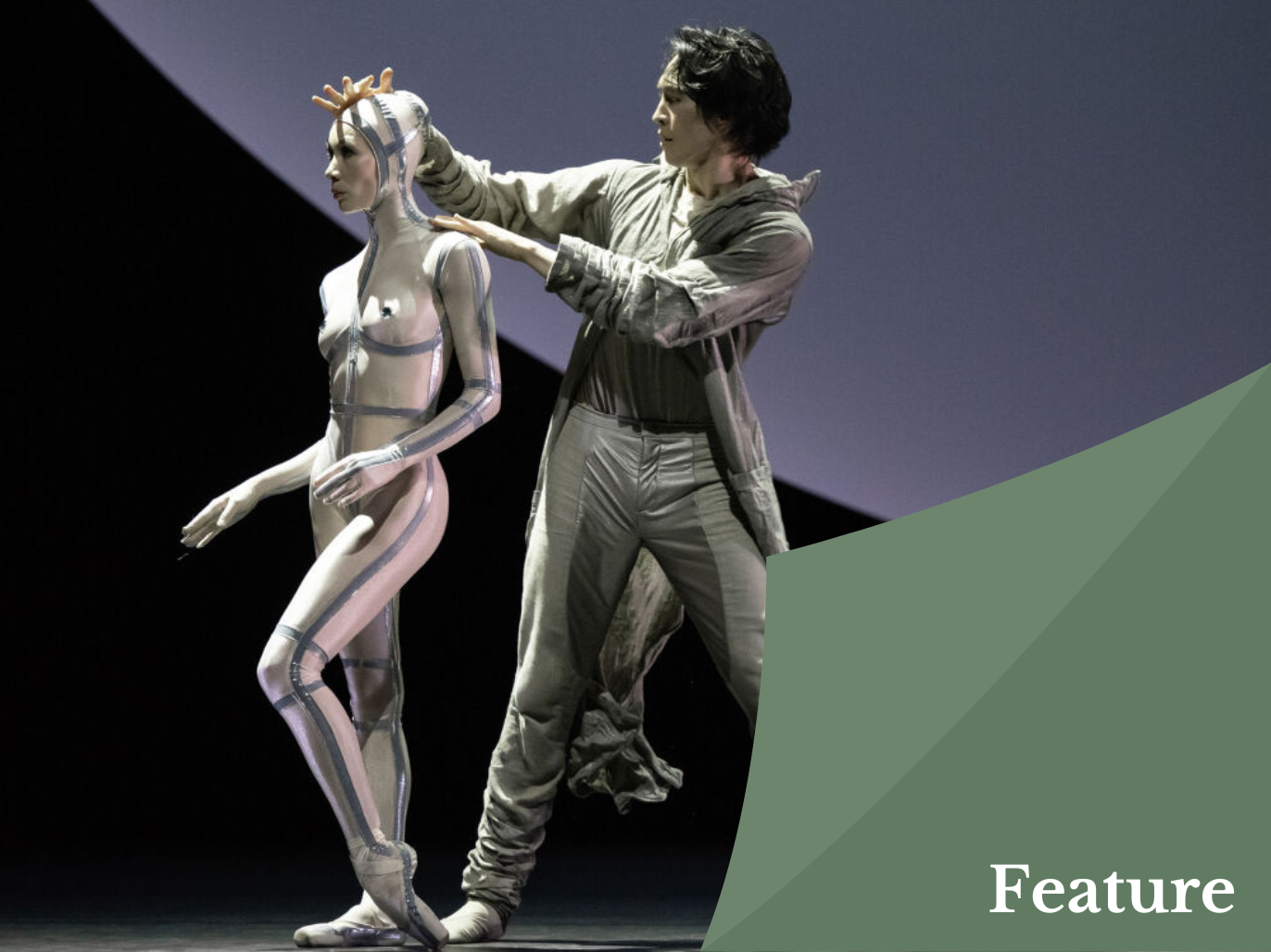
“Everything is becoming science fiction. From the margins of an almost invisible literature has sprung the intact reality of the 20th century”. So wrote JG Ballard in his 1971 essay, “Fictions of Every Kind”, and while 55 years ago that truth wasn’t always immediately obvious, in 2026, with the advent of Artificial Intelligence, it is. In fact, from virtual assistants to self-drive cars, AI is changing everyday work and play with such rapidity that even the most ostrich-like of personality types are feeling obliged to consider what it means for us all.
View author's page
Reading time estimated : 14 min
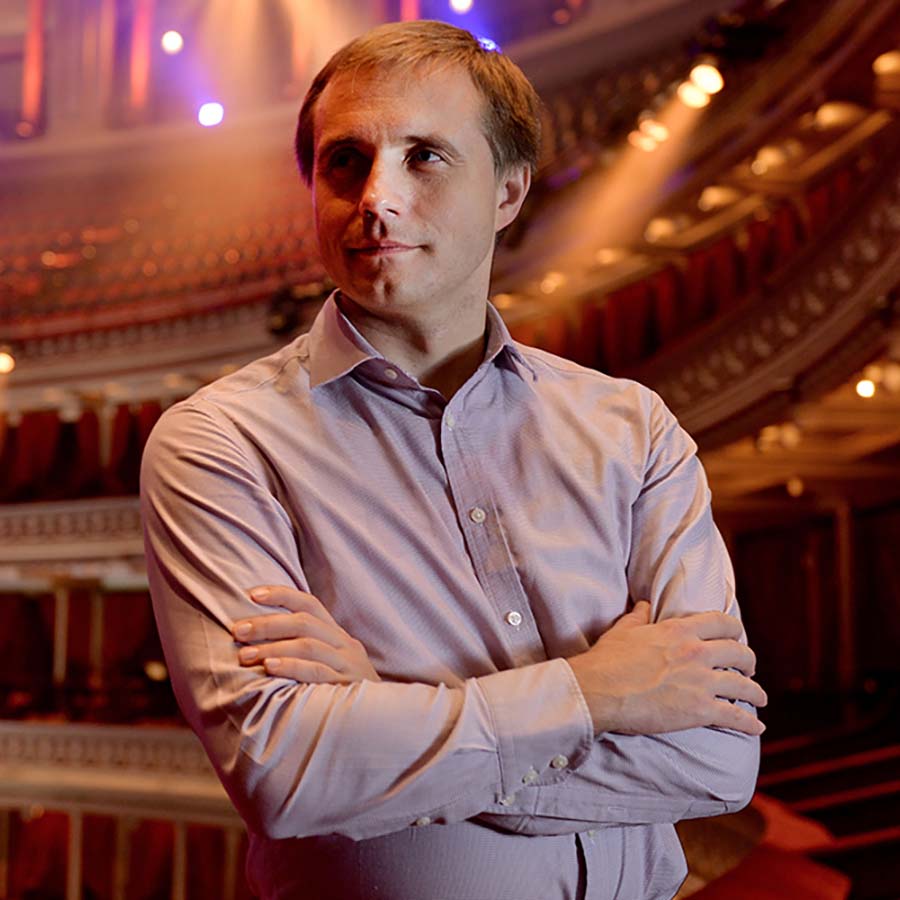
The world of classical music is no exception, and one person observing and predicting AI’s impact from multiple vantage points is Vasily Petrenko, who as Music Director of the Royal Philharmonic Orchestra has been digesting the results of the orchestra’s recent audience questionnaire on the topic. Of all this questionnaire’s findings, its most heartening (albeit perhaps unsurprising) one for performing musicians is that 78 percent of respondents believed live performance will be the area of the arts least impacted by AI. “We’re very far away from orchestras of robots,” smiles Petrenko, “and partially I think that’s because, while as musicians we all aim for excellence, we all as humans make mistakes, and AI so far has not been able to learn those little mistakes that make art”.
Behind the scenes meanwhile, AI is transforming the orchestra’s programming, operational and marketing work very much for the better. “With my programming, for instance” outlines Petrenko, “AI search engines are making it much easier now to discover repertoire and to find which pieces might work with others”. AI cataloguing and connectivity is also easier than ever before for the orchestral librarians to find and mark up the orchestral parts; and while the RPO doesn’t yet perform off screens rather than paper, “I think that more and more orchestras will in the future”. Then as for marketing, AI’s data-gathering abilities are being used to better know the tastes of ticket buyers, “so we can suggest concerts containing repertoire they probably don’t know but which we think they are likely to enjoy”.
AI is even helping to physically get the orchestra onstage. “It’s now so much easier for the orchestra managers to find stand-ins when a player has fallen ill, or additional players when a work requires larger forces” he describes; and when the orchestra’s January 2026 tour coincided with a snow storm that cancelled all flights, it was thanks to AI that the tour managers were able to book new flights and make alternative logistic arrangements at short notice for the 100-plus people. “Without the help of AI, this would have been impossible” he says. “As it was, we fulfilled all our concert engagements except for one cancelled due a state of emergency being declared.”
“Performing in front of people is something that can’t be faked.” – Anastasia Kobekina
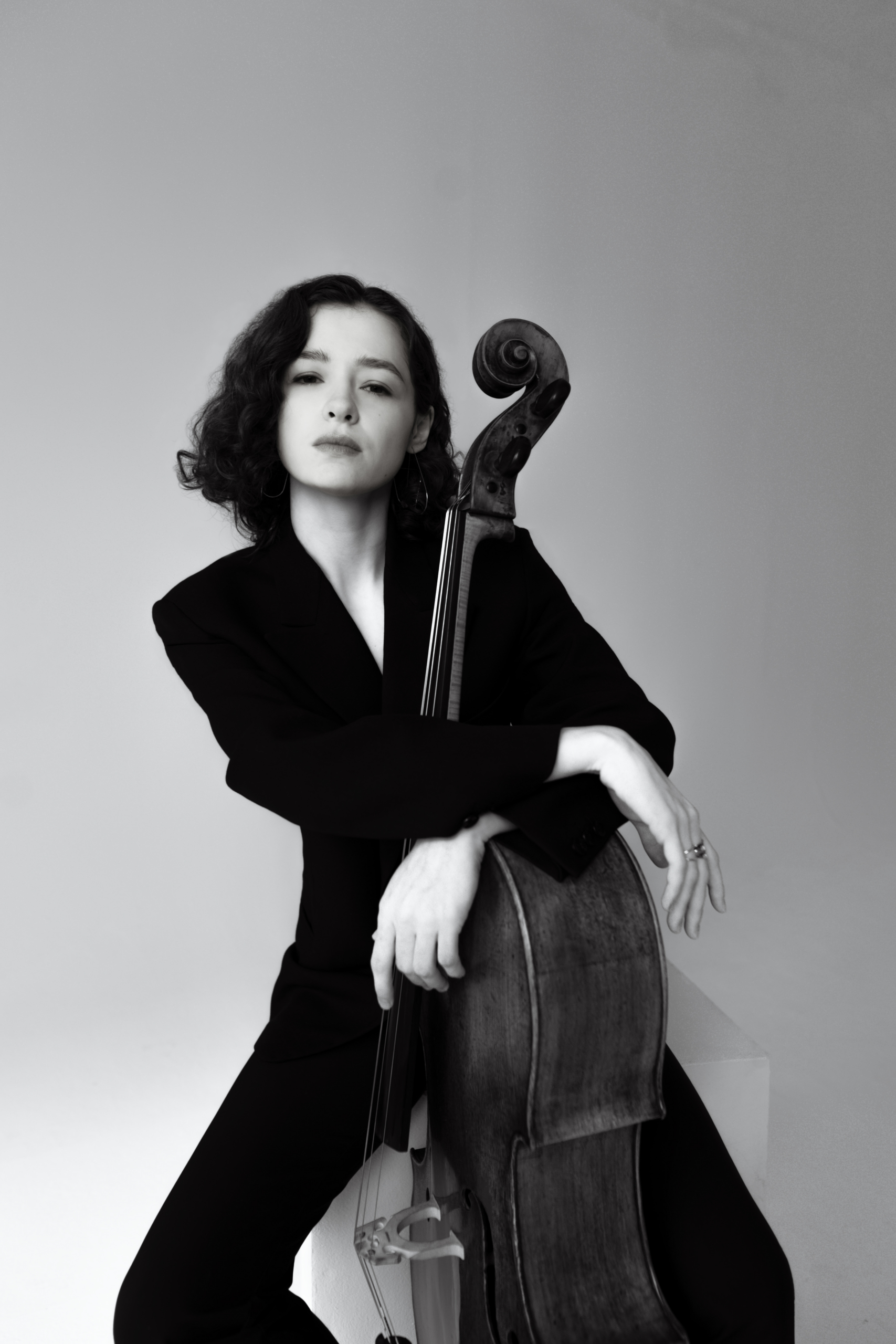
So far, so positive. Yet if there’s one thing that everyone is also realising, it’s that AI is bringing challenges as well as solutions. Ask cellist Anastasia Kobekina, and while she agrees that her own daily work as a concert soloist looks pretty AI-proof (indeed perhaps it is enhanced, AI has made it so easy to connect with fans on social media), she points out that the wider picture is more mixed. “AI is great for many things” she emphasises. “As for my work as a musician, I think that listening to an acoustic instrument is something that we’re only going to value and cherish more; performing in front of people is something that can’t be faked”. She continues, “I believe there will always be work for composers too, although maybe AI will be used more for TV series because of the volume being made nowadays. But something that is worrying me is copyright. I think AI does pose a danger in this realm, and I hope that actions will be taken soon”.
Indeed. While a tech company is yet to offer up an on-screen AI-generated classical personality such as “AI actor” Tilly Norwood, whose 2025 unveiling raised alarm for her having been created using performances farmed from uncredited real-life actors, AI-generated music mimicking composers and performers is increasingly being used and monetized on music streaming services, and without copyright law having yet determined whether training AI models on others’ recordings and compositions amounts to illegal copyright infringement; and if this weren’t bad enough, when AI-generated music can be calculated to exactly match the algorithms of AI-generated playlists, it’s taking up their royalty-earning spaces that otherwise would have been occupied by genuine artists with their human-composed music. Kobekina is also surely right about composers too, because while serious classical organisations are unlikely to stop commissioning major works from real composers, anyone composing classical-style jingles or wallpaper music will soon be out of a job if they’re not already, given AI music-generators now offer “professional classical compositions” in seconds.
“Of course it’s a bit scary” concedes pianist Lucas Debargue, “because music production nowadays is governed by marketing, and marketing has a big interest in exploiting AI for cynical ends; and if performing is indeed about playing the most perfect, technically flawless Beethoven rendition, then AI will win – and a stage will be reached where there are 10,000 versions of the same Beethoven sonata, with one percent difference of interpretation between them, at which point classical music itself will rightly disappear”.

Yet classical music’s salvation, Debargue continues, lies in the fact that it is not about calculation. “The magic of music”, he persists, “– where a single note can express despair, distress, love, hate, anger –, is about human beings communicating with each other about the depths and ambiguity of our human condition – about what it is to be alive and so powerful, and at the same time so vulnerable to being quickly wiped out by some illness or a bomb; and I don’t think all these subtleties can be so easily replaced by some technical invention”.
Music streaming isn’t even all cheat-friendly. After all, a filmed concert platform such as medici.tv may be digital, but its product is essentially live music. Plus, if you consider medici.tv’s recent AI-precipitated developments, it’s a tale of positive progress, and nowhere more so than with how it’s harnessing the increasing accuracy of AI translation software. From the subtitling of its filmed opera libretti to its documentaries, medici.tv has expanded from being available in French, English, and Spanish to offering content in 28 languages, thanks to a highly sophisticated bespoke translation process devised by its in-house tech team.
“The average 19th century opera is full of specialist, historical vocabulary” points out Chief Technical Officer Charles Bourgeaux. “For the first few translations, therefore, we would take a libretto for which we already had human-made translations in more than one language, allowing us to key into AI, ‘Translate this sentence into German, considering that in English it’s this, in Italian it’s this, and in French it’s this’. Human native speakers then reviewed and fine-tuned these AI-generated translations, resulting (as many as 10 iterations later) in an algorithm translating with such high precision that it can automatically translate further operas. So it’s a magical ratio of AI to Human.”
Similarly with the documentaries, AI provides a 95 percent accurate first draft, after which a human fixes the remaining five percent; and unlike in the wider world, where such a development will spell the end of a human’s job, classical music streaming has always operated under such financial constraints that AI is simply doing what otherwise could not have been done at all. “It’s allowing us to look at functionalities that we have wanted to do for years, but which were too risky on complexity or cost grounds,” enthuses Bourgeaux.
Speak to Grammy Award-winning music engineer and mixer Mark Willsher, though, and he’s unconvinced that AI spells the dawn of a new age of deceit in the classical recording studio. “With regard to all the corrective tricks you can pull,” he reasons, “we’ve already been here for some years now anyway. For instance, before a chamber music session, you might record someone playing each note of the piano in isolation, so that if a note ends up being missed when recording, it can be popped in later”.
More sophisticated still is tuning technology that can separate out a sound file so as to be able to sharpen or flatten a single note, or even change the whole tonality of a solo by lifting or lowering all the thirds. Inevitably with this, chamber forces make it simpler to isolate an audibly duff note, re-pitch it and put it back. However it is also possible with an orchestra: “It’s a multi-process endeavour that’s very, very time consuming,” qualifies Willsher, “so it’s not something you would ever want to rely on over just doing a patch. But especially for a live recording with an orchestra, where further pick-up sessions are going to incur tens of thousands of extra expense on venue, crew and players, it’s going to take me 10 or 12 hours, but it’s worth it in the absence of another option”.
“It’s so easy to get so obsessed with perfection that you take out things which are actually human and work” – Mark Willsher
And the reason why all the above hasn’t already been the death of authenticity, he argues, is because classical artists understand that releasing recordings suggesting a level of technical finesse that they’re unable to replicate live, can only end badly for them: “In pop music, things are so produced that there’s no expectation that what’s recorded is going to match what’s heard live. But with classical, people are listening to it as a performance that has been done, and if there is then a chasm between that and the live concert performance, it breaks that unspoken contract.”
Hence why Willsher is anticipating AI’s impact in the recording studio being not about false perfection but about achieving necessary accuracy at a faster pace. Of the above-mentioned multi-process endeavour to correct an orchestral musician’s wrong note, he says, “there is no doubt in my mind that with AI this work will be done faster”. Furthermore, a recent personal experiment during recording sessions for a TV series has got him excited about AI’s potential for catching mistakes before they even get to the edit suite. “It had been a project over which the score had been worked on by so many different people, leading to so many different, revised versions of the conductor’s score, that going into the final recording I was really concerned that something would be missed,” he recounts. “So I took the version of the score about to be recorded, along with the others, plus my own notes from discussions with the director, fed it all into an AI generative assistant, and asked whether there was anything I’ve missed, and in 20 seconds it had scanned the score, gone through all the documentation, and come back with three specific things that were missing in the recording document.” Willsher then double-checked that AI assessment manually, and while on the one hand he would have found those mistakes by himself, “it would have taken me several hours which at that point I didn’t really have”.
It goes without saying that recording core classical repertoire doesn’t come with the same issues of ink and revisions still being wet on the page, and with no-one having yet internalised how it’s all supposed to sound. Yet it’s not hard for Willsher to imagine how such a “safety-belt feature” could come into its own for the premiere recordings of brand new symphonies or concertos, or that the technology might progress to sounding an alert in the producer’s cubicle even as the musician played a wrong note, allowing for an instant patch. The danger, he muses, is that such a capability could also divert attention away from what really matters – “It’s so easy to get so obsessed with perfection that you take out things which are actually human and work”. Ultimately though, he is so fascinated by AI’s positive potential that his musings are even stretching as far as how it might feed into a live concert setting, “such as a soloist or ensemble playing a piece in duet with material being generated in real-time by AI”.
Certainly, the idea of bringing AI creation into the concert hall is an intriguing one. Another idea: when past centuries saw virtuosos from Handel to Liszt engage in onstage duels of virtuosity and invention before their audience declared a winner, could the 21st century bring something similar, pitting man against machine?
Speaking of which, to return to Petrenko and the RPO’s audience survey, amid the positives there was also one indisputably concerning finding. Responding to a question asking how they would make personal economies in the event of AI causing mass unemployment, “they said that the first things they would cut from their spending were travel and visits to the performing arts” he says. “Only later would they cut restaurants and other things. So despite thinking live performance will be less affected by AI, they are ready to stop coming – and this is very dangerous territory.”
For another dangerous paradox, consider that while on the one hand AI has brought to the masses unprecedented access to the greatest classical repertoire and musicians, its algorithms are designed to feed people what they already know via a constant stream of bite-size chunks – and you only have to look around you to see the effect this is having on society’s willingness and ability to engage with the new and the different, and on attention spans.
“I think that we are currently engaged in an ontological crisis to which the solutions can only be creative” – Lucas Debargue.
“If people will prefer reels to a Mahler symphony, you cannot force curiosity, and I think it would be worse to transform the treasure in an attempt to force it into people’s sensitivity. However, if we remember from where music comes and why – that it’s not just about relaxation and entertainment, but also about human pain, and transforming that into a message – then I think things will come right”, says Debargue.
In the meantime, given that AI’s perils are at least matched by its positive potential, and that the one option not on the table is to ignore it, we’d best all roll up our sleeves and set to work.
