
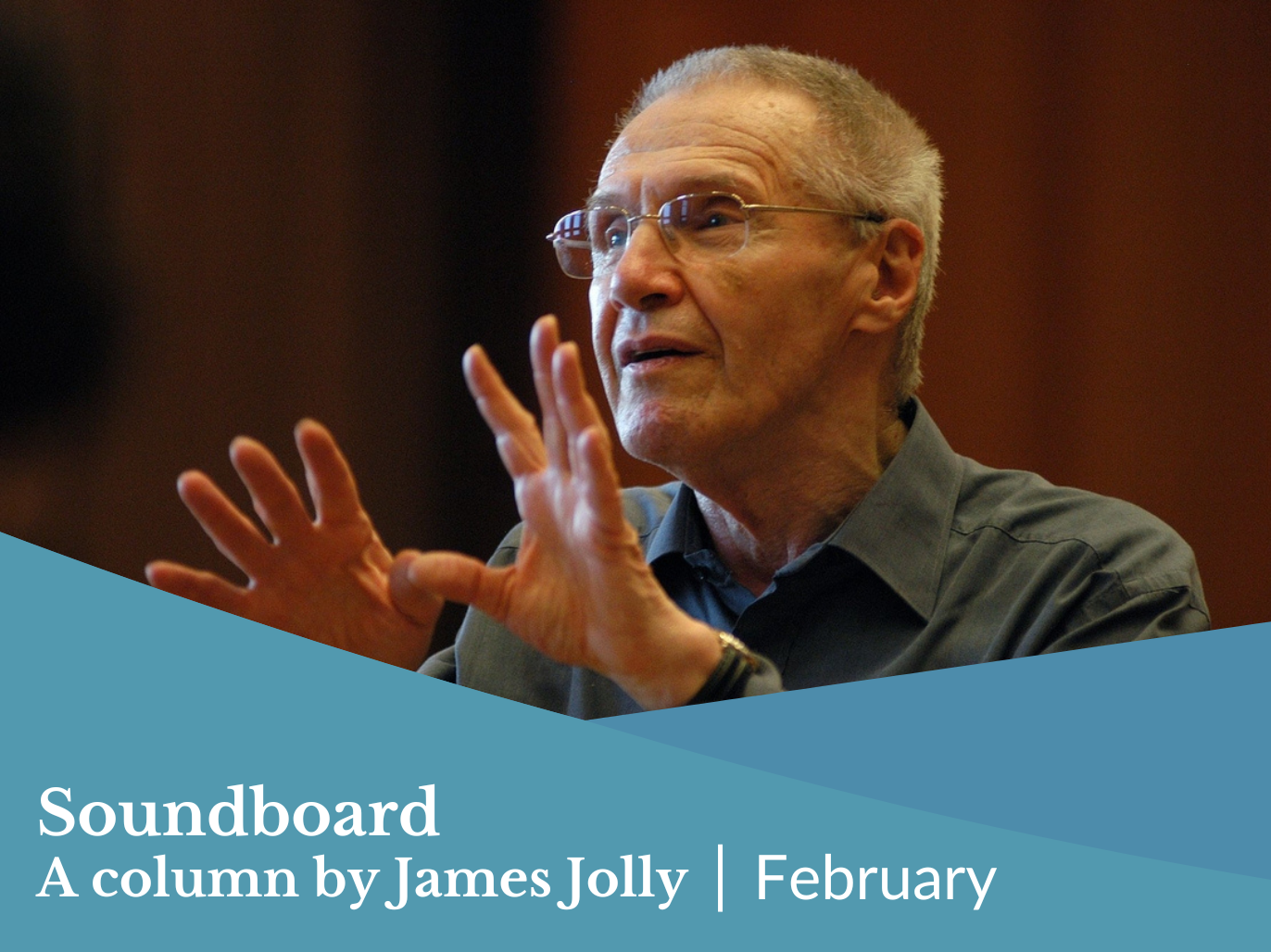
In the vast panorama of 20th- and 21st-century music, few figures are as singular and quietly influential as György Kurtág. As he approaches his 100th birthday on February 19, we have a rare chance not just to mark a centenary, but to reflect on a life of remarkable artistic integrity – a life that resisted easy categorisation, that cultivated extreme precision out of deep emotional truth, and that challenged both performers and listeners to rethink what music can say with the fewest possible means.
View author's page
Reading time estimated : 8 min
Born in Lugoj in the Banat region on the fringes of Romania in 1926, Kurtág’s earliest musical experiences were shaped by a diverse cultural crossroads. From a young age he showed an affinity for the piano, an intimacy with sound that would define his approach throughout his long career. After moving to Budapest in the mid-1940s and studying at the Franz Liszt Academy under teachers such as Sándor Veress and Ferenc Farkas, he embarked on a path that was personally idiosyncratic, historically informed and relentlessly attentive to detail.
Last year, for a Gramophone Podcast, I spoke to the baritone Benjamin Appl who had recorded an album of Kurtág’s music for Alpha Classics, juxtaposed with a selection of Schubert songs chosen by Kurtág, who acted as the recording’s producer and also played the piano for a couple of songs. Appl told me that he’d ‘heard of other musicians who had to stop after a few minutes because they couldn’t cope with the detailed work Kurtág really requires, and the demands he has’. After working together for many days, Appl was relieved – and honoured – when Kurtág’s wife, Márta, turned to the composer and said something to him in Hungarian. Kurtág then said to Appl, ‘Márta thinks you are our person’. But that didn’t prevent the composer from engaging in work with an intensity that would have exhausted a 30-year-old, let alone one of 99 years, often focusing on a single bar all morning. Kurtág, Appl recalled, sat there ‘like a young man, full of energy and ideas. And then in the afternoon, I come back and look forward to bar two. And he says to me, “Let’s start from the beginning again”.’
What sets Kurtág apart is not simply the longevity of his career – reaching a full century in itself is rare among composers – but the consistency of his artistic inquiry. From his earliest works through to compositions written in his late nineties, his music embodies a belief that every single note matters. This is not maximalist complexity or gratuitous experimentation: it is, rather, what many have called ‘concentrated expression’. Compact in form but vast in implication, his pieces are often tiny in scale but immense in emotional and intellectual depth.
Perhaps the most emblematic example is Játékok (‘Games’) – a sprawling, ever-expanding collection of miniatures for piano begun in 1973 and still growing. On the surface, these are pedagogical pieces – playful, sometimes whimsical – conceived originally as exercises for students. But over time they became an encyclopaedia of Kurtág’s musical language: fragments of witty reflection, gentle humour, occasional nods to Bach or Bartók, and metaphors for human relationships rendered in sound. Performers like Pierre-Laurent Aimard have championed these pieces, revealing how, in Kurtág’s hands, miniature forms can open out into worlds of expression. (medici.tv has a lovely taster of Játékok as part of a wonderful programme, Leif Ove Andsnes and Bertrand Chamayou perform piano duets in Düsseldorf, where they are juxtaposed with some of the greatest music ever written for two pianists at a single instrument, Schubert’s small but perfect output for that combination. I suspect Kurtág would greatly approve of his concert companion.)
You can witness some of this deeply personal musical philosophy on medici.tv right now in György Kurtág: Portrait, a documentary by János Darvas that captures the composer in a masterclass setting and offers glimpses of his pedagogical spirit. In the film, Kurtág’s engagement with young musicians feels less like instruction and more like shared exploration – a dialogue in which notation, gesture and thought all inform one another with crystalline clarity.
The path to Kurtág’s international recognition was neither swift nor conventional. It was only in the late 1970s and early 1980s that his music began to garner serious attention outside Hungary, with works such as Messages of the Late Miss R. V. Troussova making an impression in Paris under Pierre Boulez and Ensemble Intercontemporain in 1981. Since then, his output – whether orchestral works like Stele, chamber music, song cycles, or, eventually, opera – has been performed at major festivals and halls across the world, and his voice has become part of the contemporary canon.
One of the most striking things about Kurtág’s oeuvre is its breadth of emotional terrain. His music can be intensely introspective, brutally honest, whimsical, elegiac and even humorous. He is influenced by an astonishing range of sources – from Bach and Bartók to Messiaen; from the writers Hölderlin and Kafka to the playwright Samuel Beckett, whose work inspired his opera Fin de partie (‘Endgame’), premiered at La Scala in Milan in 2018.
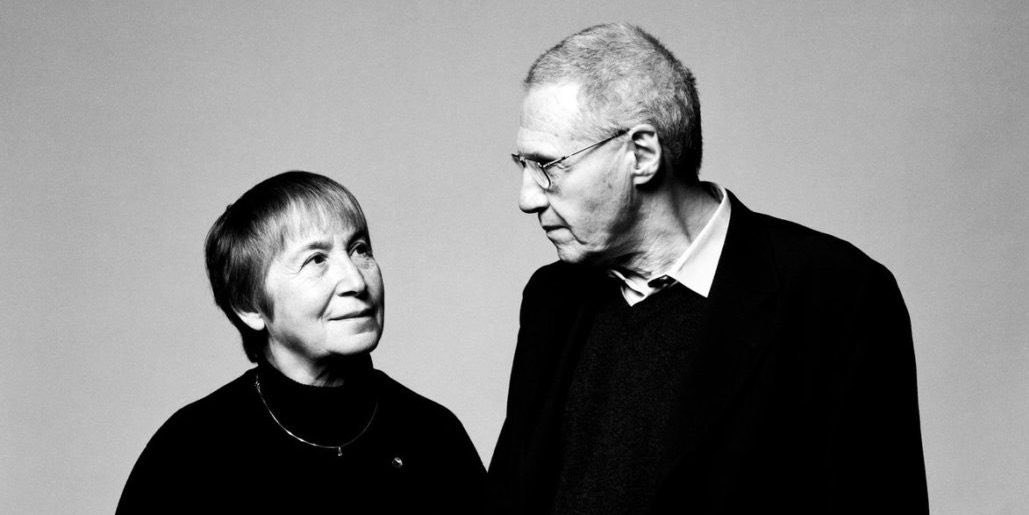
Kurtág’s long marriage to the pianist Márta Kurtág (née Kinsker) – his lifelong artistic partner until her death in 2019 – was central not just to his personal life but to his creative identity. Together they toured, performed and gave life to many of the pieces he wrote for piano four-hands. Their musical partnership, and the loss of Márta, are woven throughout the emotional texture of his later works and recordings.
This centenary year sees a remarkable outpouring of events, performances and tributes around the world. In Budapest, the Kurtág100 Festival celebrates not just his landmark birthday but the full sweep of his artistic journey, with concerts featuring cornerstone works performed by leading artists and ensembles, and the premiere of his latest opera Die Stechardin with Concerto Budapest, a work that centres on the love of Georg Christoph Lichtenberg (1742-99), the German polymath – mathematician, physicist, philosopher and writer – for Maria Dorothea Stechard, and by extension surely celebrates Kurtág’s own love for his late wife.
Yet, perhaps the truest testament to Kurtág’s influence is the way his music invites performers and audiences alike to reconsider their relationship with sound itself. There’s something almost Zen in the way his music uses absence as presence, where silence and space are as crucial as the notes on the page. As one commentator put it, Kurtág is always ‘in quest of musical truth’ – not in a literal sense of representation, but in the pure, distilled expression of human experience.
For listeners new to his work, this can at first be disorienting: his musical language does not unfold in long symphonic gestures or predictable forms, but in shards, whispers, aphorisms and sudden illuminations. Yet those who stay with him find that his music speaks with a rare kind of intimacy – a voice that seems to work inside your awareness, asking questions as much as it offers answers.
In celebrating György Kurtág’s 100th birthday, we are not merely marking the longevity of a composer. We are acknowledging a life dedicated to the idea that music – in its most concentrated, conscientious form – can still be a conduit to deep, personal revelation. Whether through the tiny universes of Játékok, the austere beauty of song cycles, or the monumental encounter of opera, Kurtág’s work remains an invitation to pause, listen and let each sound matter.
