
A Style of One’s Own: What Classical Musicians’ Clothes Say on Stage

What should classical musicians wear on stage? From Dalia Stasevska to Yuja Wang, Andrew Mellor examines how fashion, individuality, and representation are reshaping the look of performance.

View author's page

By Andrew Mellor

Reading time estimated : 10 min

It’s always fun to catch up with conductor Dalia Stasevska, a guaranteed breath of fresh air. I was talking to her a few days ago about that particular time around 2020, prompted by world events, when we all started to think more deeply about who is represented in arts, culture and the media – and why.  

It was this idea of widening representation that nudged Dalia into exploring the music of Ukraine, where she was born but has never lived. It led her to look more deeply into forgotten composers from the country and to start to plan performances of their music (this was before Russia’s 2022 invasion). 

It just goes to show: awakenings can take many forms, and any invitation to re-think and redress is also an invitation to think differently from the crowd. Diversity isn’t about championing one idea or group. Often, it’s about looking for the group, sector or individual about whom nobody is talking.

I’ve been thinking about this recently with regard to a silent transformation that has been visited upon the concert stage in recent years – the way musicians dress. There are some telling developments occurring here, but often we miss their real significance and true relevance. 

A New Era

Some might say the classical music world is ruled by conservatism. Others might argue that, in a wider music scene driven by quasi-imperialist market forces in which everything must please the masses, classical music is actually far more bold, interesting and aesthetically restless than its commercial counterpart. 

Either way, the classical music world has never quite looked the part. When I started out in the industry nearly 25 years ago, an already-ancient debate was rumbling about whether male members of the orchestra I worked for should wear tailcoats on stage. Back then, suggesting the ditching of tailcoats was seen as radical. Now, even The Philadelphia Orchestra has done it. 

I remember the Chief Conductor of the orchestra I worked for, the inspiring Douglas Boyd, railing with anger about his male musicians having to wear clothes “from another century” that made them look like waiters. You could tell from the way he conducted Beethoven, that Dougie believed in the modernity – the contemporality – of everything he did. 

Initially, I subscribed to his way of thinking. Perhaps I still do, but in a far less prescriptive way. I’m fine watching an orchestra in tailcoats just as I’m fine watching one not wearing them. I like it that orchestras can look different to one another – like the Vienna Philharmonic does, with its non-gender-specific grey waistcoats and free-for-all (but still grey) trousers and ties. What I want is for an orchestra to look presentable – to know that it’s showbusiness they’re in and that it’s not always just the notes that count. 

Plenty of orchestras that have ditched tailcoats have failed to replace them with something better (though some have). We’ve seen orchestras try to look more modern, only to look more scruffy and less visually cohesive. (To see a nifty solution to the tailcoat problem, though admittedly not deployed by performers, go to a show at the Latvian National Opera and Ballet in Riga and check out the uniforms worn by the Front of House staff – a chic, contemporary, unisex take on an old classic).

When I conducted an early music group in my twenties, I wanted to create a sense of “united diversity” by getting its members to wear not just black but anything black, even a tracksuit if they wanted. I drilled it into them, but it didn’t really work. Sure, they all turned up for a concert in black. But each one looked as if they’d dressed for a job interview. It all seemed just a bit too formal for what we were trying to do. 

The day before I wrote this, I was watching the Danish National Symphony Orchestra in rehearsal. For a few hours, I gazed upon a sea of different colour and style clothes partly induced by a transitional time of year in which temperatures can be balmy or chilly. A chum and neighbour of mine who plays percussion was sporting a shiny bright pink jacket. The concertmaster had a t-shirt with a word emblazoned across it, mostly obscured by the shirt she had on over the top (I could only make out the letters “o” and “u”, but was intrigued as to what the word might be). The conductor, Fabio Luisi, wore all black, including an immaculately fitting black shirt topped-out with a black bow tie. That man has style. 

A rehearsal view of Gustavo Dudamel and the Simón Bolívar Youth Orchestra in informal, day-to-day dress.

Would it have been more interesting for the audience to see the orchestra give its concert dressed like this? Under some circumstances, perhaps. But it might also have sucked some of the atmosphere out of the occasion. Would it have enhanced or undermined the idea of unity through performance, if all 110 musicians were wearing something different? That’s an interesting question. 

In 2021, the London Chamber Orchestra announced that it was ditching a dress code for its musicians completely. Its CEO commented that the orchestra was encouraging individual musicians ‘to reflect the culture they identify with and how they interpret the occasion for which they are performing’.

Reading that, I couldn’t help but feel for the musicians themselves, having to sift through their wardrobes to find yet another presentable outfit that was clean, pressed, representative of their culture and the multiple works potentially included in a single concert while also fitting the season, the venue and the athleticism of playing an instrument. You could forgive them for being desperate to get back into tailcoats or black dresses. 

I haven’t seen the LCO perform recently (though you can catch a glimpse of it, complete with musicians wearing their own clothes below). Fundamentally, I applaud its decision. More practically, I worry that on some nights the orchestra might look a little chaotic or random – not sufficiently curated, with clashes and misjudgments. We’re not all great at making calls on what to wear, even when there’s just one of us, and there’s a reason people appearing on stages, on TV chat shows or even presenting the news tend to be dressed by others. 

Self-Expression

More importantly, I understand where the LCO’s decision came from – most obviously, the fact that musicians from almost every other genre who are not in costume express themselves on stage partly through what they wear. 

In the realm of classical music, this has become particularly obvious when seeing soloists perform. Frustratingly, our reaction to what soloists wear has tended to reveal much about our prejudices and preconceptions as audiences. 

I remember in the mid noughties, when Jean-Yves Thibaudet arrived on the scene playing piano concertos in bright, androgynous haute-couture. It immediately led to rumblings of suspicion about his credentials as an artist. That seemed very odd, given his clear confidence in self-expression through clothes was signaling the very opposite – a highly creative streak.

Women have had to deal with this far more than men. When Yuja Wang started to perform in clothes that reflect her character, the reactions ran the full gamut of misogyny – from surprise that she could manage to play in certain outfits (she could) to the belief that those outfits were somehow too much (or, more literally, too little). The latter seemed to ignore the principle that people should be allowed to dress for themselves rather than for the sexual gratification of others. It was bizarre, the extent to which a performer’s choice of clothes was considered either a provocation, a distraction or some sort of cynical marketing conspiracy.

The truth was a lot simpler: a new generation of brilliant musicians have emerged who want to wear what they like. It was a simple case of musicians being more ordinary – more like their societies and peers – in everything but their exceptional talent. 

For musicians like Yuja Wang, Cameron Carpenter and Alice Sara Ott, dress is a natural form of self-expression. Anyone of their generation being asked to step onto a stage and perform in front of a few thousand people will stop to consider little things like fashion, self-expression, body confidence and perhaps a dash of artistic flair.

If we’re starting to move on at last – to stop judging people by what they’ve decided to wear, and to see their clothes as personal choice, an extension of their expressive artistry and not something necessarily intended to induce a reaction in us – then we have this generation of musicians to thank (perhaps with a little help from the likes of the trailblazing Martha Argerich). Listening to Yuja Wang’s playing, it’s almost unthinkable to imagine her dressed as an accountant. She plays with edge, danger and brilliance. That’s how she chooses to dress. Go figure.

From the Front

In that regard, conductors, appropriately, have led from the front. Dalia has refused to conform to what conductors have traditionally been expected to wear – even what women conductors have been expected to wear. In an interpretative sense, her performances do the same. They are hers, and only hers.  

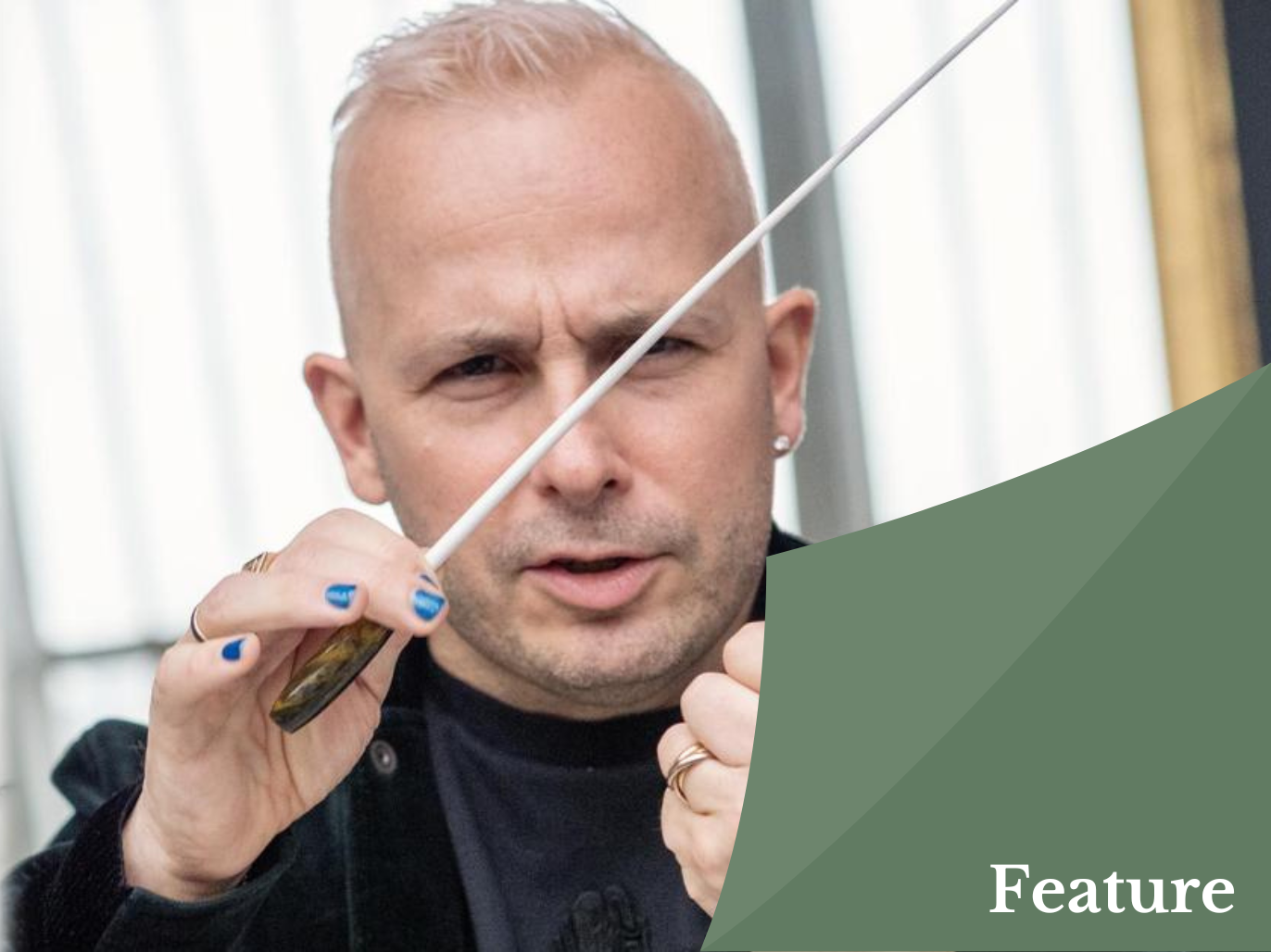
Yannick Nézet-Séguin reminds us that it isn’t just women conductors who have an opportunity to shift the style dial, wearing non-blacks to conduct in the pit at the Metropolitan Opera, sporting his new signature black nail varnish and dressing notably down in rehearsal and when not on duty (he once asked me where I got my sneakers, a moment about which I remain inordinately proud). 

I find it bizarre when an artist’s choice of clothes is dismissed as frivolity, distraction or some sign of disrespect or distraction. Listen to Yuja Wang play, and it’s clear nothing whatsoever is distracting her from the music. Hear Yannick conduct, and there is no sense of style over substance. Perhaps what they have in common is that they bring their own characteristics to the music, just as they do their dress. 

Isn’t it just more interesting to see artists wearing different, expressive clothes? So-called “classical” music embraces six-centuries-worth of artistic fashion. There’s a good argument we need to hear a more diverse representation of that journey in the music being sung and played – and to see a more diverse range of musicians singing and playing it. Breaking the fashion barrier will surely help with that, and there are plenty more examples of it being done all over medici.tv. 

Written by Andrew Mellor

Journalist and critic

Andrew Mellor is a British writer, critic, and broadcaster based in Copenhagen. After studying music at the University of Liverpool, he began his career with the Manchester Camerata and the London Philharmonic Orchestra before training as a journalist at Classic FM magazine and Gramophone. Since moving to Denmark in 2015, he has become a leading voice on Nordic music and culture, contributing regularly to Opera and Opera Now.

A regular critic for the Financial Times and a presenter for medici.tv and the Danish Broadcasting Corporation, Andrew Mellor also writes extensively for orchestras, festivals, and record labels around…

View author's page