
As medici.tv’s Chief Content Officer I spend a lot of time thinking about classical music—and a lot of time on the internet. Here’s my selection of the top five news items you need to see this week if you want to stay in the know.
View author's page
Reading time estimated : 4 min
Will Gustavo Dudamel “save” classical music? (NYT)
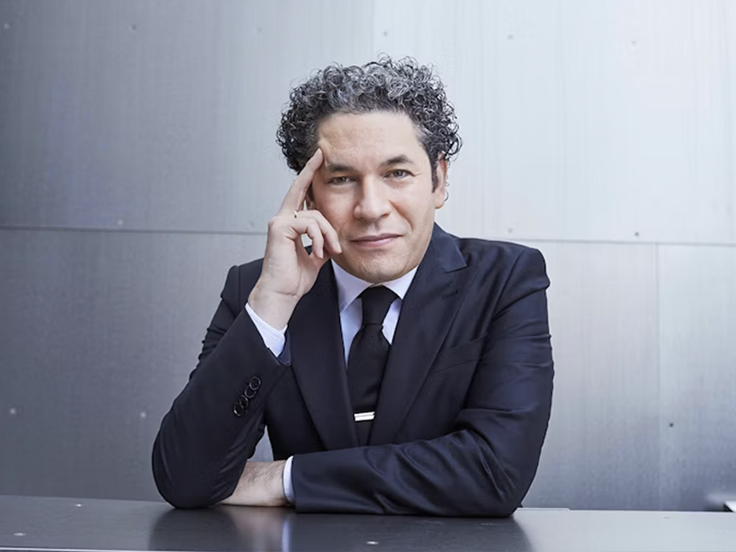
Gustavo Dudamel has landed in New York to officially start his tenure at the helm of the New York Philharmonic and the local press is buzzing. The NYT dedicated an episode of its popular podcast The Daily to his arrival, complete with a provocative title (“Classical Music is in Crisis. Gustavo Dudamel is Here to Save It”) and comparisons to Leonard Bernstein.
New York’s Classical Elite in Fashion Spread (Vogue)
Dudamel’s arrival was also celebrated in Vogue with an elaborate editorial fashion shoot featuring musicians from the Juilliard School and members of the New York Philharmonic, and an in-depth profile that sees the Maestro get philosophical about his new job: “It’s important to show that classical music, ballet, all of these art forms are alive… It’s our responsibility as a new generation of artists to understand that we cannot be lazy.”
The economic reality of a career in classical music (The Guardian)
In a thoughtful op-ed for The Guardian, conductor and composer Robert Ames makes an effective and impassioned statement about who is able to afford a career in classical music today and what it costs us as a society when only a certain class of people have access to the industry. “If the people who make it through the industry’s elite training programmes increasingly come from similar economic backgrounds, classical music doesn’t just look narrower; it thinks narrower. It hires, programmes and talks to that small group of people, then acts surprised when people call it elitist. Some will say I’m encouraging the lowering of standards. In fact, I want higher standards. If we care about excellence, why would we only search for it among people whose families can afford the training and to subsidise the years of professional uncertainty that follow?”
A strike in San Francisco (San Francisco Standard)
The hall was already full of eager audience members when the musicians of the San Francisco Opera announced a strike just 35 minutes before the curtain was set to rise on a performance of Simon Boccanegra this weekend. Unlike the financial uncertainty affecting institutions across the country, “both sides have acknowledged that the opera isn’t in a financial crisis—at least not by conventional measures, considering how ticket sales, subscriptions, and donations are all trending upward… The problem is that neither side can agree on what that means for orchestra pay.” The San Francisco Standard has all the details on the tense contract negotiations that have led to multiple cancellations in just a few days of striking.
@operamamas highlights the complex balance an operatic career and motherhood
I was thrilled to discover the Instagram account @operamamas, created by soprano and new mom, Elsa Dreisig. The account covers everything from logistical tips, like how to travel to your gigs with a baby in tow, to philosophical discussions about how motherhood changes your relationship to performing and artistry. A fantastic and much-needed addition to the social media landscape!
