Soula Parassidis: “Callas Blew the Lid Off Modern Music Theater”

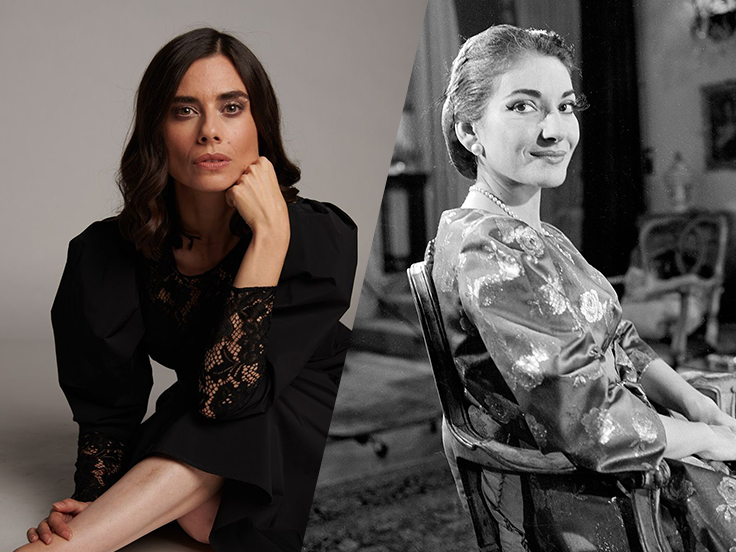
Fifty years after her death, Maria Callas remains one of the most influential and debated figures in opera. Soprano Soula Parassidis revisits the myths, rivalries and artistic choices that shaped the legend of La Divina.

View author's page

By Editorial Team

Reading time estimated : 6 min

50 years after Maria Callas’s death, her voice, artistry and legend continue to provoke fascination—and debate. To mark the anniversary, we asked soprano Soula Parassidis to join us for a special themed 5 Questions interview revisiting some of the mythology surrounding La Divina: her role in the revival of bel canto, the rivalry with Renata Tebaldi, her relationship with the stage, and the qualities that made her artistry so singular.

Rather than simply retracing the familiar story, Soula looks at Callas from the perspective of a singer herself, questioning what was real, what was amplified by the press, and what made Callas’s impact so enduring.

Was Callas really essential to the bel canto revival?

Yes, but she didn’t do it alone, certainly. You know, there were creatives around her that also had a vested interest in this repertoire, given that she was so proficient. What she did was show that bel canto wasn’t just beautiful singing, but it could also be a very compelling form of music theater and drama.

It’s like she struck a match, so that Montserrat Caballé, Joan Sutherland and Beverly Sills could take the torch and run with it.

Callas is known more for impact on artistry and interpretation than her voice. Was her voice really as imperfect as some critics claim?

Let’s make one thing perfectly clear: her voice was singular and instantly recognizable! So we cannot separate the voice from the performer, not one bit.

Furthermore, I would say she blew the lid off modern music theater interpretation. She set the standard for all of us. I’d be curious to see her opinion of how far it’s gone today in certain instances, but I do think we can attribute this phenomenon of lyric singers also being phenomenal actors on stage to Callas…

I think sometimes we get really hung up on the idea that a star must be technically perfect in every sense. Why does a star become a star? I think it’s because of the emotional reaction they elicit in someone, whether good or bad. I’m sure some people even went to the theater to be amazed—or even a little outraged in a way—by things that they experienced or provoked and challenged. Maria Callas certainly did that, and she continues to do that today. 

I remember even myself, as I was learning vocal technique, I couldn’t fully understand. It was like, what am I listening to? There’s a wobble on the top, the chest voice and the middle voice sound bottled… There are certain things which are ugly. But then there’s this amazing coloratura ability. I was wondering, who is this woman? Everybody says she’s great, and why can’t I get there?…

As a young singer, it held me back for a long time. And then I realized how Maria Callas possessed this profound instrument to open up a revelation of the composer that one can only access by genius. And I forgot all that I had thought. The function of art is to hold up a mirror and, and reflect some part of humanity—sometimes it’s also ugly.

For many, Norma is Callas’s signature role. Is it really the best one that captures her artistry?

For me personally, maybe because of how I discovered Callas and how I grew up, it’s Tosca.

But if we’re just speaking artistically, technically, certainly Norma wins the prize: this role calls on the complete package of a singer and nobody’s really excelled in it like her, given her ability to infuse so much drama and pain into it—which it truly needs.

On May 2nd, 1965, at the Théâtre des Champs-Élysées, Maria Callas performed “Casta Diva” from Bellini’s Norma, bordering on the sublime. However, a few days later, at the Opéra de Paris, the Divina appeared as a shadow of herself and quit after the fifth performance, at the beginning of the second act.

In 1958, during a gala event at the Palais Garnier to mark Callas’s debut in France, she performed Tosca alongside Tito Gobbi, giving, at the height of her career, a performance of “Vissi d’arte” that was impossible to miss.

Was the famous Callas-Tebaldi rivalry really as fierce as we think it was?

Certainly there were cancellations and there were issues with her vocal production, but I think “unstable” is not the best word to use, because it is more a psychological judgment.

Certainly she had big disputes in the press and tensions or difficulties that were known by the public. I suppose, as her instrument diminished, she may have also been losing a place where she felt really in control of herself, but I wouldn’t say she was looked on as unreliable. It was just more turbulent and difficult.

We also have to take her whole career into consideration. She had ten good years, but then the vocal decline took place publicly after these major triumphs, and it couldn’t have been easy. So I think she strategically canceled things knowing they weren’t going to work the way she wanted to.

Bonus question: did you watch the recent film, Maria?

I tried. I watched for about 15 minutes, and, you know, that’s what came across to me, this ultimate sadness, and I couldn’t finish it. I started to feel the heartbreak—maybe that was the intention, but I was just overcome.

And the performances were beautiful, as far as I could push myself to watch. I guess everybody latches onto a certain part of who she is or who she was. Personally, I don’t want to remember her like that. I want to remember someone who was so touched by divine genius—to me, that’s her truest essence.

Written by Editorial Team

medici.tv

View author's page