
As medici.tv’s Chief Content Officer I spend a lot of time thinking about classical music—and a lot of time on the internet. Here’s my selection of the top five news items you need to see this week if you want to stay in the know.
View author's page
Reading time estimated : 5 min
Cultural institutions scrambling to adapt to Kennedy Center’s surprise closure (NYT)
Trump’s announcement earlier this month about the Kennedy Center’s sudden closure has left many American cultural institutions scrambling. As the venue is set to close this summer for two years of construction, the NYT spoke with representatives from the Kennedy Center, the National Symphony Orchestra, and other impacted ensembles to learn how staff are coping and coming up with alternative plans to keep their seasons alive. They also spoke to representatives from other institutions who have dealt with major closures in recent years about the long-term impact and crucially, how to maintain audience and donor engagement during this critical period.
Classical music is center stage at the Milano-Cortina Olympic Games
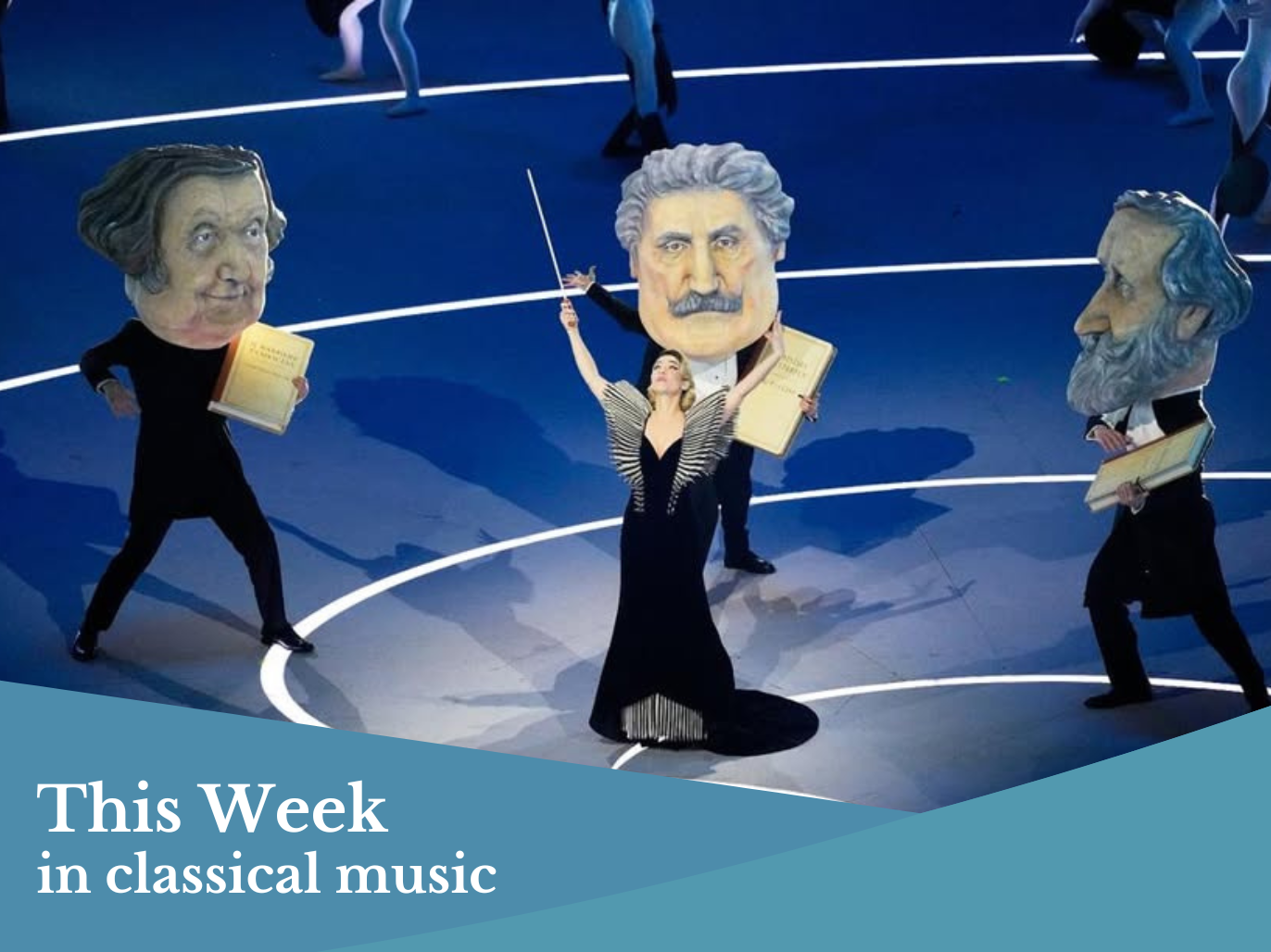
The Milano-Cortina Olympic Games kicked off last week and classical music has featured heavily during the first few days of the competition! The Opening Ceremony alone included classical legends Cecilia Bartoli, Andrea Boccelli, and Lang Lang, plus a trio of bobblehead-inspired marionette figures representing Verdi, Rossini, and Puccini—a striking image that was one of the most buzziest moments of the evening. Composer Andrea Farri, who is responsible for scoring the games, wrote an interesting opinion piece for Classical Music UK about his desire to blend Italy’s legendary classical tradition with “contemporary language.” Iconic pieces by Rachmaninoff and Stravinsky also starred in the Team Figure Skating event this weekend—keep an eye out next week for a piece on the role of classical music in figure skating.
Get into the Olympic spirit right now with one of the most recognizable themes in all of sporting history: John Williams’s Olympic Fanfare and Theme, composed for the 1984 LA Games:
Ballet companies get into the Superbowl spirit (Instagram)
The other major sporting event of the weekend was of course Superbowl LX. Classical music made a minor appearance in Bad Bunny’s halftime performance in the form of a small string orchestra onstage, but I’d like to draw your attention to the Boston Ballet and the Pacific Northwest Ballet’s Superbowl-themed repartee on
Ran Arthur Braun, opera’s biggest stunt coordinator (Operawire)
I missed Operawire’s fascinating interview with operatic stunt coordinator Ran Arthur Braun when it came out in late December but am certainly glad to have stumbled upon it now! Braun has collaborated with most of the world’s biggest houses (including La Scala, the Salzburg Festival, the Royal Opera, the Paris Opera) on stunts that include underwater feats, aerial work, pyrotechnics, and more…
New study shows that newborns can anticipate rhythms at just a few days old (Classic FM)
A new peer-reviewed study out of Italy “proves newborns’ ability to rely on rhythmic statistical regularities to generate musical expectations” — but that the same is not necessarily true of melodic expectations. The authors believe this suggests that rhythm is likely a biological predisposition, present at birth. Read Classic FM’s summary here, or dive into the full academic article here.
