
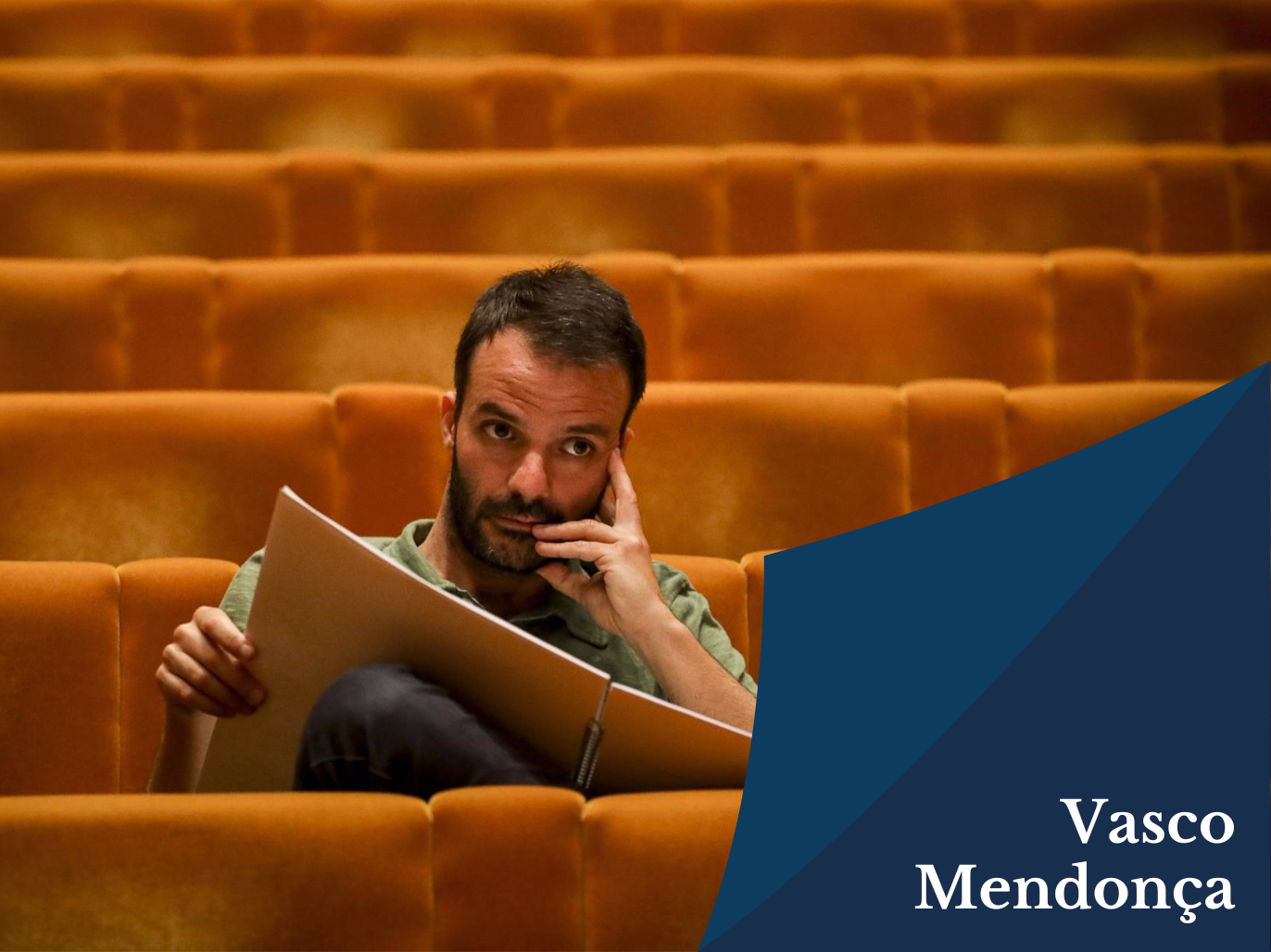
Contemporary opera is notoriously difficult to define. For composer and presenter Vasco Mendonça, the art form is “vital, surprising, and diverse, continuing the longstanding human tradition of telling stories through song.” He is careful to highlight that it doesn’t represent “a single homogenous thing,” but a “duplicity of approaches and aesthetics.” Opera—the Italian word for “work”—combines music, drama, literature, and stage design to create a multi-dimensional artistic experience that transports the audience into a new reality while holding a mirror to their own. Its origins go back to seventeenth-century Italy.
View author's page
Reading time estimated : 10 min
The Transformation of Opera
On February 24th, 1607, the courtroom doors of the Duke of Mantua’s Palace opened to reveal the first performance of Claudio Monteverdi’s L’Orfeo, now regarded as the world’s first operatic masterpiece. Based on the Greek myth of Orpheus, the work was primarily performed in the style of recitar cantando—speaking in song—and established the genre’s musical foundations. Over four centuries later, Monteverdi’s opera still enjoys widespread popularity. “We haven’t changed all that much in 400 years,” reflects Mendonça. “Many of our fundamental concerns remain the same. We still fear death, we still long for love, and we still struggle to co-exist in societies.” While this accounts for the enduring popularity of seventeenth-century opera, there’s no denying that the art form continues to evolve in the modern day.
“What I think has changed is the form that the aforementioned concerns take. Today, we ask questions that simply didn’t exist before, like what is the philosophical relationship between digital eternity and immortality? How do we navigate love in a world where identity is increasingly fluid? How do we preserve empathy, tolerance, and mutual respect in modes of communication that often undermine them, such as social media?”—Mendonça emphasizes that these questions demand contemporary forms and contemporary voices. If the art form does not continue to evolve with the times, it risks “becoming a tired jukebox endlessly replaying old hits.”
The Key Characteristics and Public Reception of Contemporary Opera
Contemporary opera showcases the extraordinary advances of musical language in the twentieth and twenty-first centuries. Highly sophisticated orchestration, unexpected harmonic worlds, and intricate rhythmic structures characterize the genre, and Mendonça highlights that the human voice remains central. “It’s crucial that we listen to how living artists reflect on our current reality,” he says, expanding on the importance of contemporary opera. “The digital world, surveillance capitalism, livestream violence: these themes are very specific to our time. At the same time, we should remember that some contemporary works will become tomorrow’s operatic classics. Imagine being able to attend the premiere of Don Giovanni or Parsifal or to hear the composers speak about these works. The immediacy and sense of witnessing something being born is one of the greatest privileges of listening to contemporary creations.”
Reactions to contemporary opera diverge in the musical world. As opera unites text, staging, costumes, and lighting, Mendonça generally feels that musicians approach it with openness and enthusiasm. However, the art form still carries the stigma associated with the word “contemporary”—especially in the most traditional institutions—which can assume a departure from traditional technical skill and an overreliance on avant-garde concepts. Many also believe that contemporary opera requires prior knowledge of the repertoire, and the genre is often perceived as obscure, elitist, and even disconnected from the present world. In his new series, OPERA. NOW, Mendonça dissolves these claims by revealing the magnificent world behind eight contemporary operas and demonstrating their lasting impact.
OPERA. NOW—The New Series
Contemporary opera—and contemporary music more broadly—often sits outside of the cultural radar, even for people with a general interest in the arts. It was this realization that motivated Mendonça to create a documentary series on contemporary opera. “There are many reasons that the genre often remains unexplored, of course,” he contemplates, “but it doesn’t have to be this way. I felt that there was real public interest in presenting contemporary opera to a non-specialist audience. In the process, why not open it up to new listeners?”
Mendonça’s goal was to present a broad view of modern creations. Contemporary opera is one of the most innovative art forms: it employs immersive technology, challenges classical tropes, and creates groundbreaking sonic worlds. Thanks to its highly experimental nature, the genre encompasses a vast contrast of styles. Mendonça chose to focus on composers who processed music history in a very personal way and who resisted being placed in stylistic boxes. “I wanted true originals. To avoid overwhelming the audience, I limited the selection to works with recognizable features: composer-led projects, strong presence of lyrical voice, a libretto, and somewhat traditional staging. But within this framework, I asked myself: which works might still be performed and discussed in thirty or forty years? It’s a longer list than six, but these six were really high up on it.”
OPERA. NOW takes the viewer on a personal and immersive journey into the world of twenty-first century opera, from the rehearsal room to the stage. Filming across two years, Mendonça explains that the series needed to be accessible without sacrificing rigor. It also needed to offer an entry point for a curious general audience, while illuminating key themes for more experienced viewers. His hope is that both newcomers and seasoned opera goers will find something interesting and meaningful in its content.
A Holistic View of Contemporary Opera
The haunting atmosphere of Into the Little Hill, the devastating power of Innocence, the whimsical storytelling of Alice in Wonderland… Mendonça provides a behind-the-scenes perspective into the creation of iconic contemporary operas. Their storylines are brought to life through beautiful animations and footage from world-class productions. Different aspects of creation are explored: Mendonça interviews composers, stage directors, and singers to paint a complete picture of each production. Barbara Hannigan explores her most poignant scenes in Hans Abrahamsen’s The Snow Queen while Philip Venables reveals the multi-layered nature of Denis and Katya. “To be honest, I definitely stepped outside of my comfort zone as a composer to take on the roles of scriptwriter and director. Doing this as well as speaking with fellow musicians about our shared love for the art form was the cherry on top. It was like being home: many of these composers are my friends, so we were actually two colleagues just talking about something we both love so much. I have a profound interest in theatre and drama too, so talking to librettists, performers, and directors was wonderful. It felt very comfortable.”
In each episode, Mendonça explores the resonance of the opera’s themes, whether it’s the shattered humanity of Fin de Partie or the self-emancipation of Ophelia. “Composers today are still proving that the heart of opera—the extreme expression of what it means to be human—still beats as furiously as ever,” he says in the sixth episode. As a composer, he demonstrates this point himself. His most recent contemporary opera The Girl, The Hunter, and The Wolf premiered at the Dutch National Opera in 2022. Although the operas in the series are predominantly for an adult audience, his own was made for children. “I really wanted to address the social tribalism we see around us today, but I wanted to do this while respecting young audiences by not being condescending. I think children are among the most perceptive and sophisticated listeners—they’re also a difficult audience because you can’t explain your way around the music. Either you catch their interest or you don’t. We created a reverse version of Little Red Riding Hood in which the wolf is kind and persecuted because he looks different. It has been an incredibly rewarding experience. It’s been translated and performed all over Europe, and the post-performance Q&A sessions with children were really fun.” One thing is increasingly clear: contemporary opera can be accessible to everyone.
Recommendations and the Future of Contemporary Opera
If you’re new to contemporary opera, Mendonça recommends Unsuk Chin’s Alice in Wonderland, George Benjamin’s Written on Skin, and Saariaho’s Innocence as starting points. “Pay close attention to the kinds of vocal expression each composer develops,” he says. It’s also worth analyzing the texture of the music—what instruments and voice parts can you hear? How do they contribute to the atmosphere? Notice how the staging enhances the story and how the complex characterization adds psychological depth to the piece. “If you feel intimidated by contemporary opera, know that there is no need to be. Leave behind the noise and prejudices surrounding it: simply go and watch one. Whilst you’re there, instead of asking ‘what is all this weird stuff?’, ask if there’s a method to the madness. In other words, take the piece seriously and grant it some of your time and attention. I’m confident you’ll be surprised and perhaps even amazed.”
In the final episode of the series, Mendonça states that the only certainty about the future of opera is that it’ll bring things we’re not ready for, in forms that we cannot predict. This is the distinctive power of contemporary opera: it will always defy artistic boundaries. “We won’t stop performing or producing operas, whether they’re in a grand opera house, a busy capital, or in a small square in a remote village,” he says. “I think we have no other option but to continue telling stories to each other through song. It’s in our nature and I think that won’t ever change for as long as we live.”
