
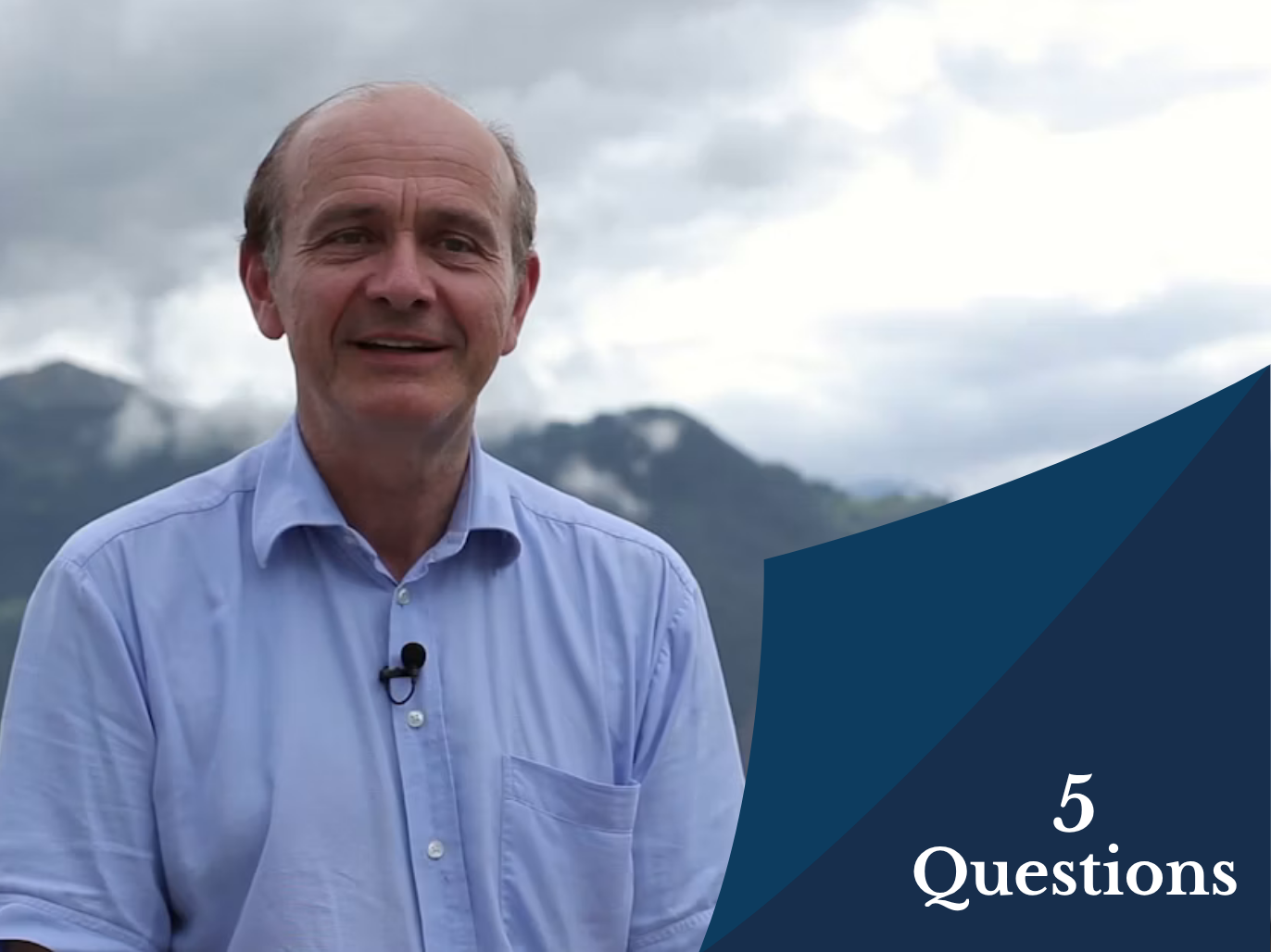
Gábor Takács-Nagy: “The conductor’s mission is to inspire the orchestra”

At Verbier, Gábor Takács-Nagy reflects on his fondest memories from the festival, his relationship with the orchestra from rehearsals to the stage, and the importance of conducting with heartfelt sincerity.

View author's page

By Editorial Team

Reading time estimated : 4 min

What have you learned from working with so many different orchestras?

As I worked with many different orchestras, it became more and more clear to me—through my mistakes, stupidities, how I worked with them—that the conductor’s mission is to inspire them. It’s helping them, and giving them confidence, because they’re playing, not you.

And if they feel that you’re trusting them during the concert, they will give more. And if they feel that everything is coming honestly from your heart, they will maybe forgive your weaknesses, and they will give their strength.

What makes a rehearsal truly productive?

How deeply you can inspire them, touch them with your words and gestures. Letting them play as much as you can, not talking unnecessarily too much. But when you talk, it has to be clear and inspirational.

I read somewhere that Goethe said that if somebody is telling him something new, it has to be simple and short, because it was already complicated and long enough inside of him. I have a tendency to talk a little bit too much to orchestras, so I should always think about Goethe.

Is there a Verbier moment that has stayed with you?

Many, many moments have stayed with me, of course, with Verbier.

One of these moments is when I’m going on the stage, looking at the Verbier Festival Chamber Orchestra play. Looking at them in the eyes, I feel so much humanity. I feel this is a fantastic place for us. It’s the energy, the beauty of the nature around, and the great artists and friends here. It’s Christmas for me in July to be here.

What personal rituals do you have when you are here in Verbier?

Taking with me on the stage the guardian angel which I got from my daughter. It’s a small one — it’s always with me. 

Sometimes I get up at four o’clock in the morning to look at the scores. I get so excited and quite energized here. I need less sleep here than anywhere else. You won’t believe it, but for instance, yesterday we did Dvořák’s New World Symphony and other pieces. And two days earlier, I got up at 2:30 to work on them. Of course, I went back at five o’clock to sleep until eight, but it’s something special here.

And with the orchestra, before we take the stage, we do this so-called hugging. We’re making a circle and we’re shouting. And it gives us togetherness, friendship, energy, it liberates us. We learned it in 2010. We watched the Spain–Holland football World Cup final in the Montfort pub here. And before the extra time, we saw that the Spanish players were hugging each other and shouting something. And we decided, why not do this two days later, or three days later, in our concert? And we felt magical things.

And I’m very proud and happy that the Verbier Festival Junior Orchestra does it now, because I did it with them last year. And they’re saying it’s magical.

What would you like your Verbier legacy to be?

I hope that when I won’t be with the Verbier Festival Chamber Orchestra anymore as an artistic director, they’re taking on the same kind of spirit and playing from the heart, touching people, and I’m sure it will be. I hope something which we started will keep the sound approach, and I’m sure it will. 

Written by Editorial Team

medici.tv

View author's page