
As medici.tv’s Chief Content Officer I spend a lot of time thinking about classical music—and a lot of time on the internet. Here’s my selection of the top five news items you need to see this week if you want to stay in the know.
View author's page
Reading time estimated : 4 min
Should a school shooting be turned into an opera? (Vulture)
As the Met Opera takes on Kaija Saariaho’s Innocence this month, Justin Davidson wonders in Vulture magazine whether a school shooting is appropriate subject matter for an opera. “For 400 years, opera’s business has been the aestheticization of pain,” he writes, and both the piece and the production are excellent—yet the result is “an opera that to me feels deeply, unfixably wrong.” A thought-provoking read and interesting counterpoint to the oft-cited argument that the way to fix opera is to focus on contemporary stories and problems.
Opera training meets health care (Classic FM)
Classic FM reported this week on the English National Opera’s “ENO Breathe” program, which sees professional opera singers of the ENO lead small group training sessions with patients suffering from ongoing respiratory issues linked to long Covid. Created in partnership with the Imperial College Healthcare NHS Trust, the program is being expanded after a successful pilot program in January. The sessions include both breathing and vocal exercises designed to improve breath control and reduce anxiety.
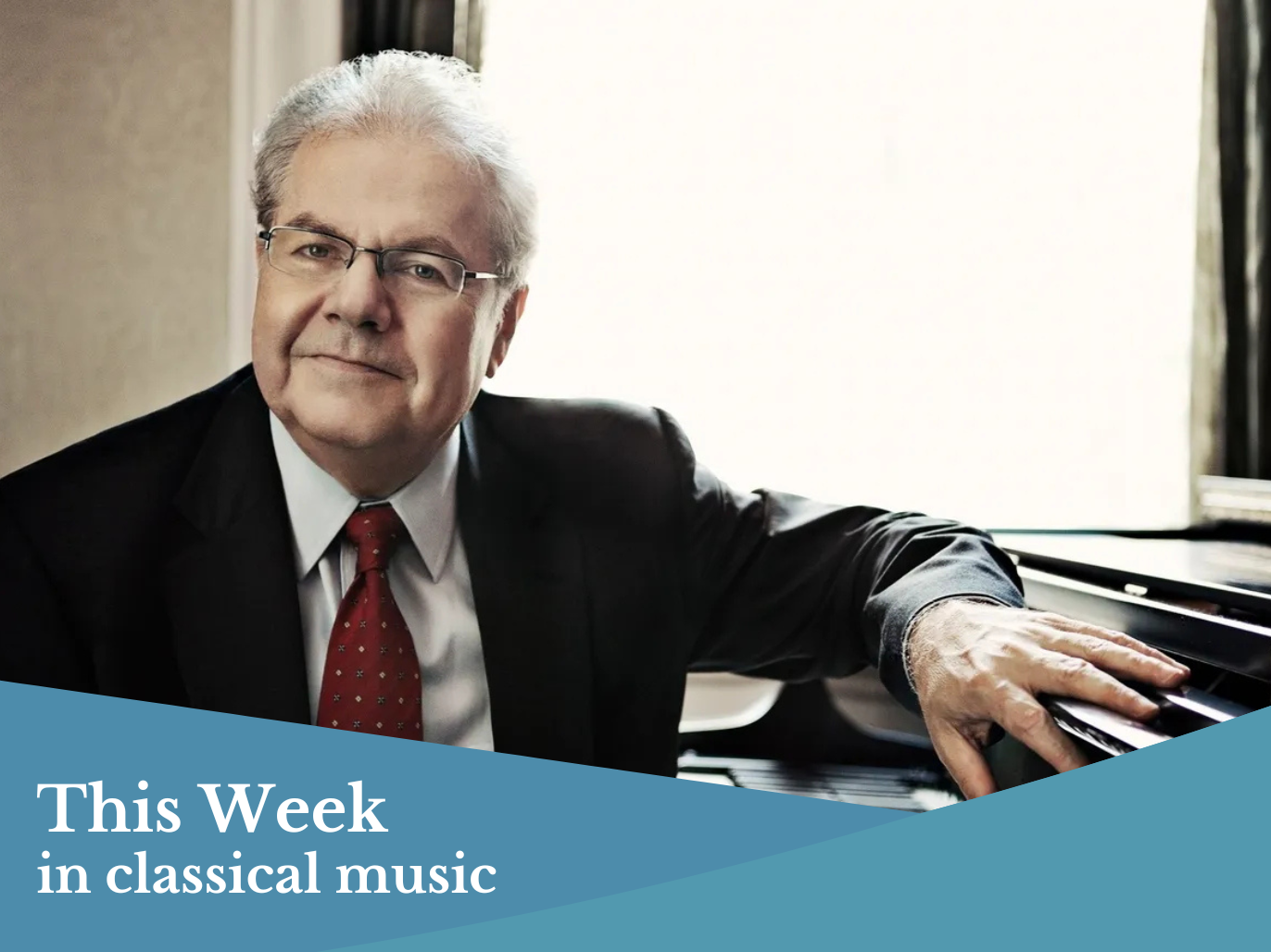
New podcast: Classical Music Happy Hour with Emanuel Ax
Have you checked out pianist Emanuel Ax’s new podcast? “Classical Music Happy Hour” launched last month and the first set of episodes are fantastic. Ax is a genial host and much of the podcast feels like a fun glimpse into a relaxed chat between colleagues. I particularly enjoyed hearing him discuss the politics of choosing encores with Yuja Wang in the first episode: is it ok to play something flashy after a Beethoven concerto? Is it over-the-top to play multiple encores or will audiences be frustrated with just one…?
We were thrilled to stream Ax’s brilliant performance of Beethoven’s third piano concerto in Montreal just a couple of weeks ago and it’s still available to watch now. (You’ll have to click through to see what he chose for his encore though!)
The audio description making opera more accessible (Royal Opera)
I loved this look at one way the Royal Opera is working to make performances more accessible through audio descriptions. In this Instagram post, audio describer Alice Gilmore takes us behind the scenes as she works on a live performance of Verdi’s Rigoletto. Gilmore describes what’s happening on stage, including the set design, the costumes, the positioning and movement of the singers, with the goal of helping blind and partially-sighted audience members experience the full detail of the production in real time.
Martin Luther, key player in music history (The Guardian, BBC)
In the Guardian this week and in a very exciting new BBC Radio 3 series, Gillian Moore explores the influence of Martin Luther and the values of the Protestant Reformation on music history, focusing in particular on Lutheran hymns, which prioritized memorable tunes, simple block-chord harmonies, and texts in everyday German: “This is music that anybody could sing at home, in the street, in school. Church music was no longer an elaborate art form performed at people by monks and scholars.”
