
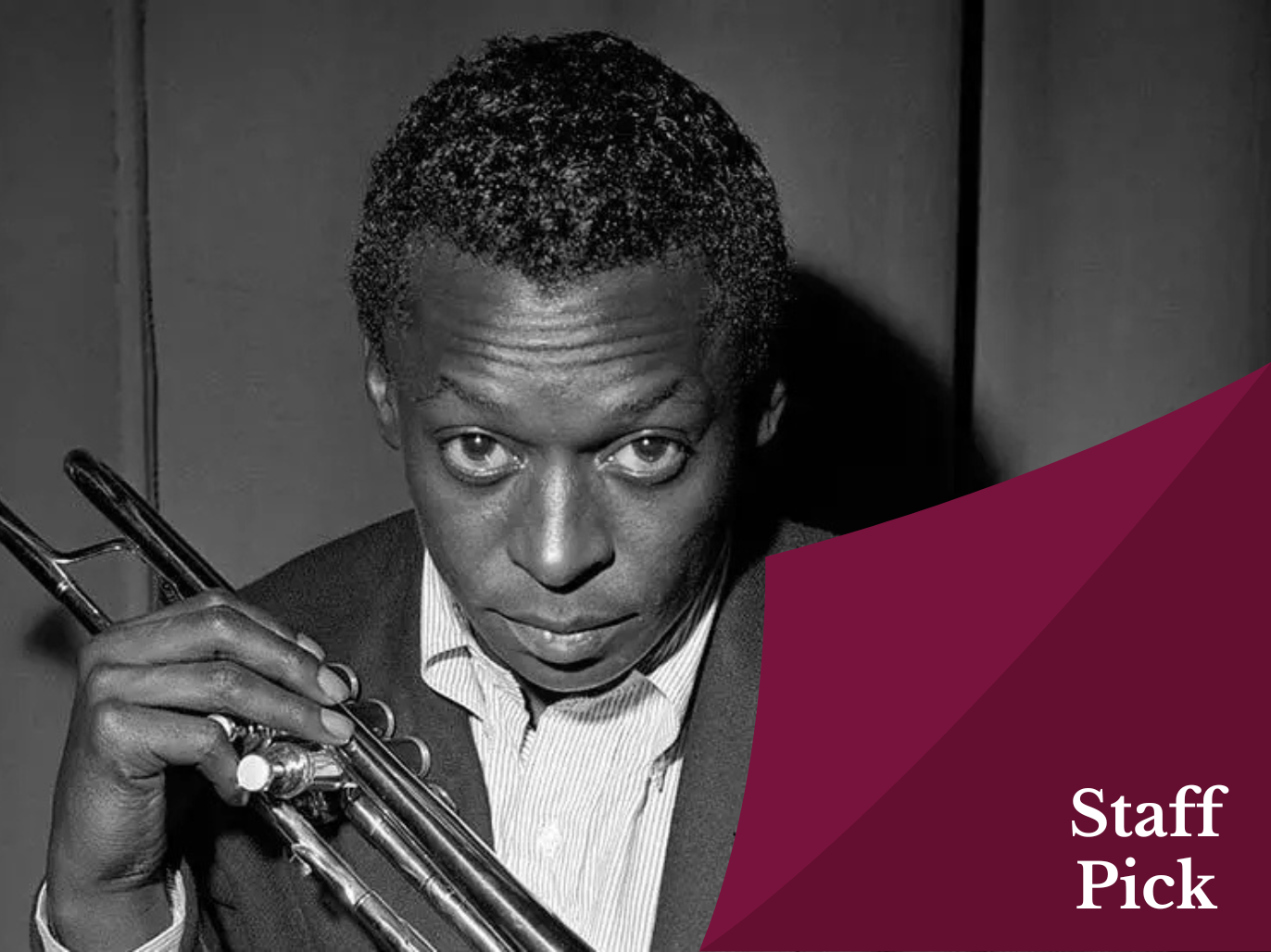
How do you perform an iconic jazz standard from the heyday of the 1960s New York jazz scene — one recorded in just two takes by six top-of-their-game musicians — and make it your own? Is it still possible to bring something new to one of the most influential jazz compositions of all time? That’s what I wondered when I realized that the medici.tv catalogue has multiple renditions of Miles Davis’s “All Blues” from his legendary album Kind of Blue (1959).
View author's page
Reading time estimated : 5 min
Now widely considered one of the greatest albums of all time, Kind of Blue is loved for its comforting, calm, smooth sound, accentuated by the harmonic beauty of the album’s exploration of modes* (at least that’s certainly why I love it!). “All Blues,” perhaps the best-known composition on the album, is a twelve-bar blues composition in which a consistent drum beat and bass line accompany a series of trumpet and saxophone solos, interspersed with a recurring “head” or “chorus.” Having studied the piece at school and listened to it countless times since, I know it well and was intrigued to see how different jazz artists put their spin on it…
Two pianos: Herbie Hancock and Friedrich Gulda (1989)
First up is the one and only Herbie Hancock: pianist, singer, and 14-time Grammy-winning jazz legend who performed in the Miles Davis Quintet with the man himself for five years. Here, he treats us to a mesmerizing arrangement of “All Blues” for two pianos, which he plays alongside fellow jazz legend Friedrich Gulda at the 1989 Salzburg Festival. The two pianists keep to the smooth, momentum-led feel of the original, all the while displaying their virtuosity in alternating solos and injecting the piece with their own brand of groovy jazz.
Jazz piano improv par excellence, by the one and only Herbie Hancock
Electric Guitar: Pat Martino (2014)
Next up is guitarist Pat Martino’s “All Blues” on guitar, accompanied by electric organ and drums. If you’re looking for smooth-jazz-meets-funky-guitar ad libs, this one’s for you. Martino’s personality and playing style come through in his added ornaments and masterfully improvised embellishments. Pat Bianchi’s keyboard solo adds a unique, modern touch to the standard, with its virtuosic energy and unmistakeably electronic sound.
Pat Martino’s smooth, almost sultry electric guitar version
Jazz quartet: Pony Poindexter at The Blue Note (1967)
Third is a lively rendition by four musicians in Showtime at The Blue Note in 1967 in Brussels. Recorded just eight years after Kind of Blue was released, this more “traditional” version — closer in form and instrumentation to Davis’s original than the others discussed here — takes us right back to the modal jazz club scene of the 1960s. Alongside drums, bass, and piano, Pony Poindexter on soprano sax leads this spirited, energetic version at a much faster tempo; his high-pitched, soulful solos bring unrelenting power and momentum to this four-minute jazz frenzy.
One of the most lively, up-tempo versions of “All Blues” you’re likely to hear!
Scat singing: Dianne Reeves (2025)
Last up is Dianne Reeves’s life-giving performance at the 2025 Montreal International Jazz Festival — I can’t watch it without a smile on my face! Guitarist Romero Lubambo opens with Miles’s oh-so-catchy opening riff, peppered — much to Dianne’s amusement — with a few of his own ad libs. Reeves follows, scat singing the chorus with her deep, soothing timbre and delicate vibrato. She then adds in some of the “All Blues” lyrics written by Oscar Brown Jr. in 1963 (and widely used since in sung versions by the likes of Dee Dee Bridgewater and Ernestine Anderson), before singing from her own heart about her love for performing, her support for a recent protest, and her ardent wish to spread a message of peace. Her commanding stage presence and beautiful message make this version one of my favorites, and I’m sure Miles Davis would love to see that his music is still a source of inspiration and positive influence over 60 years later.
Dianne Reeves infuses “All Blues” with her faultless timbre and infectious positive energy
*Modality in music refers to the use of specific patterns of notes based on certain scales, as opposed to major or minor keys, for example.
